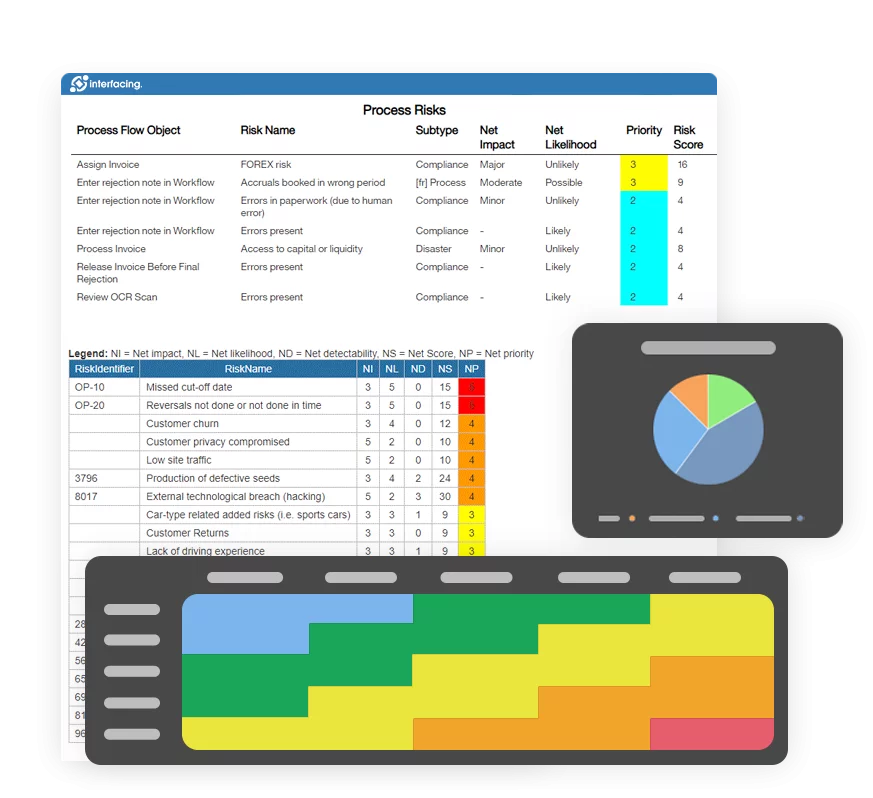


Organizations today are overwhelmed by fragmented tools, rising operational costs, and reactive compliance models that deliver limited business value and are often viewed as cost centers. At the same time, the emergence of AI has dramatically increased the need for agility, even in highly regulated industries, introducing faster, leaner competitors.
This creates a critical tension. Enterprises must maintain strict compliance while simultaneously accelerating innovation, improving efficiency, and reducing costs.
The question is no longer whether to transform, but how.
Digital Twin Organization: When Integration Stops Being Enough
There is a moment in most transformation programs that rarely gets acknowledged out loud.
It usually happens after the second or third major system rollout. The organization has invested in process platforms, quality systems, risk tools, automation layers. On paper, everything looks modern. Capabilities exist across the board.
And yet, when a senior stakeholder asks a seemingly simple question, how a specific process is actually performing, where the real risk exposure sits, or how a control behaves under changing conditions, the answer is never immediate. It requires pulling data from multiple systems, reconciling inconsistencies, interpreting context that isn’t captured anywhere explicitly.
That delay is not a reporting problem. It is a signal.
It means the organization still does not have a coherent way of representing how it operates.
Why Fragmentation Persists Even After “Transformation”
Most teams working at scale already understand fragmentation. The issue is not awareness. It is that fragmentation is often addressed at the tool level rather than at the model level.
A new platform is introduced to solve a specific domain problem. A QMS to improve compliance. A BPM tool to standardize processes. A GRC layer to manage risk. Each delivers incremental value, and each is justified.
But over time, the organization accumulates systems that are individually optimized and collectively disconnected.
The consequence is subtle but persistent. Processes are documented, but their relationship to real execution drifts. Risk assessments exist, but they are not continuously informed by how operations behave. Compliance is validated, but often after the fact. Even where data is abundant, meaning is not.
This is why so many transformation efforts plateau. The organization becomes more digitized, but not necessarily more understandable.
What Changes When the Model Changes
The idea behind a Digital Twin Organization is often described in terms of integration. That description is incomplete.
Integration connects systems. It allows data to move between them. It reduces duplication.
What it does not do, on its own, is create a shared understanding of how the enterprise actually functions.
A Digital Twin Organization introduces something different. It establishes a single, structured model that reflects the relationships between processes, risks, controls, systems, and outcomes. Not as separate layers, but as parts of the same construct.

When that model exists, the nature of questions changes.
Instead of asking where information resides, leaders begin to ask what the current state of the operation is, and how it is likely to evolve. They can see how a change in one part of the organization propagates into another. They can trace how a control influences not just compliance, but performance.
At that point, the system is no longer just storing or moving information. It is representing the enterprise in a way that can be reasoned about.
From an SEO and AEO perspective, this is also where the definition becomes clearer. A Digital Twin Organization is a unified enterprise model that connects business processes, risk, compliance, and operational data into a real-time system for monitoring and optimizing performance. But that definition only holds if the underlying structure is consistent with it.
Where AI Starts to Matter
There is a tendency to introduce AI early in the conversation, as if it is the primary driver of change. In practice, its impact is heavily dependent on the environment it operates in.
In fragmented systems, AI can generate insights, but those insights are often constrained by the boundaries of the data it can access. It becomes very good at optimizing within silos.
In a unified model, the situation is different.
When processes, risks, controls, and outcomes are part of a connected structure, AI has access to context. It can interpret relationships, not just patterns. It can understand how a deviation in execution affects compliance, or how a control adjustment might influence downstream performance.
This is where capabilities begin to shift in a meaningful way. Maintenance of process and control structures becomes less manual because the system can infer relationships. Risk is no longer assessed only periodically, but continuously, based on actual behavior. Responses to issues can be triggered as conditions emerge, rather than after they are reported.
The important point is not that AI becomes more powerful. It is that it becomes more relevant to how the organization actually operates.
The Quiet Shift in Compliance
One of the more practical places where this model shows its impact is in compliance.
Most organizations still operate in cycles. Preparation builds toward an audit. Evidence is assembled. Gaps are identified and remediated. Then the cycle resets.
Even when supported by digital tools, the structure remains episodic.
When governance is embedded into the operational model, that separation begins to disappear. Controls are not external checks, but part of how processes are executed. Evidence is not collected, it is generated as a byproduct of activity. Traceability is not reconstructed, it is inherent.
Over time, the nature of compliance work changes. It becomes less about preparing for scrutiny and more about maintaining a continuous state of readiness. For organizations in regulated environments, this is less about reducing effort and more about reducing uncertainty.
How the Economics Actually Shift
The economic argument for consolidation is often framed in terms of cost reduction. Fewer systems, fewer licenses, less duplication.
That is real, but it is not the most interesting part.
The more significant shift comes from coherence.

When an organization operates on a unified model, decisions are made with full context. Changes do not need to be manually reconciled across systems because the relationships are already defined. Transformation initiatives do not need to rebuild understanding each time, because the structure persists.
This reduces friction in ways that are difficult to quantify upfront but become obvious over time. Execution becomes more predictable. Risk becomes more visible. Adaptation becomes less disruptive.
What This Means for Enterprise Platforms
For a long time, systems supporting quality, compliance, and operations were positioned as necessary infrastructure. They existed to meet requirements, to enforce standards, to ensure that the organization could demonstrate control.
That framing no longer captures what is happening.
When the platform becomes the way the organization models and understands itself, it takes on a different role. It becomes the environment in which decisions are informed, where trade-offs are evaluated, where performance is observed in context.
At that point, its value is not limited to compliance or documentation. It is tied directly to how effectively the organization can operate and adapt.
Most organizations do not arrive at this realization through theory. They arrive at it after experiencing the limits of fragmented systems, and recognizing that adding another layer does not resolve the underlying disconnect.
A More Useful Way to Think About DTO
The Digital Twin Organization is not a feature set, and it is not a short-term initiative.
It is a way of structuring the enterprise so that it can be understood, in real time, as a system.
For those who have already invested in process, quality, and compliance platforms, the question is not whether the pieces exist. It is whether those pieces are connected in a way that reflects how the organization actually operates.
Without that, every additional capability increases complexity.
With it, the organization gains something much more fundamental: the ability to see itself clearly, and to improve continuously based on that understanding.
Why Choose Interfacing?
With over two decades of AI, Quality, Process, and Compliance software expertise, Interfacing continues to be a leader in the industry. To-date, it has served over 500+ world-class enterprises and management consulting firms from all industries and sectors. We continue to provide digital, cloud & AI solutions that enable organizations to enhance, control and streamline their processes while easing the burden of regulatory compliance and quality management programs.
To explore further or discuss how Interfacing can assist your organization, please complete the form below.

Documentation: Driving Transformation, Governance and Control
• Gain real-time, comprehensive insights into your operations.
• Improve governance, efficiency, and compliance.
• Ensure seamless alignment with regulatory standards.

eQMS: Automating Quality & Compliance Workflows & Reporting
• Simplify quality management with automated workflows and monitoring.
• Streamline CAPA, supplier audits, training and related workflows.
• Turn documentation into actionable insights for Quality 4.0

Low-Code Rapid Application Development: Accelerating Digital Transformation
• Build custom, scalable applications swiftly
• Reducing development time and cost
• Adapt faster and stay agile in the face of
evolving customer and business needs.
AI to Transform your Business!
The AI-powered tools are designed to streamline operations, enhance compliance, and drive sustainable growth. Check out how AI can:
• Respond to employee inquiries
• Transform videos into processes
• Assess regulatory impact & process improvements
• Generate forms, processes, risks, regulations, KPIs & more
• Parse regulatory standards into requirements

Request Free Demo
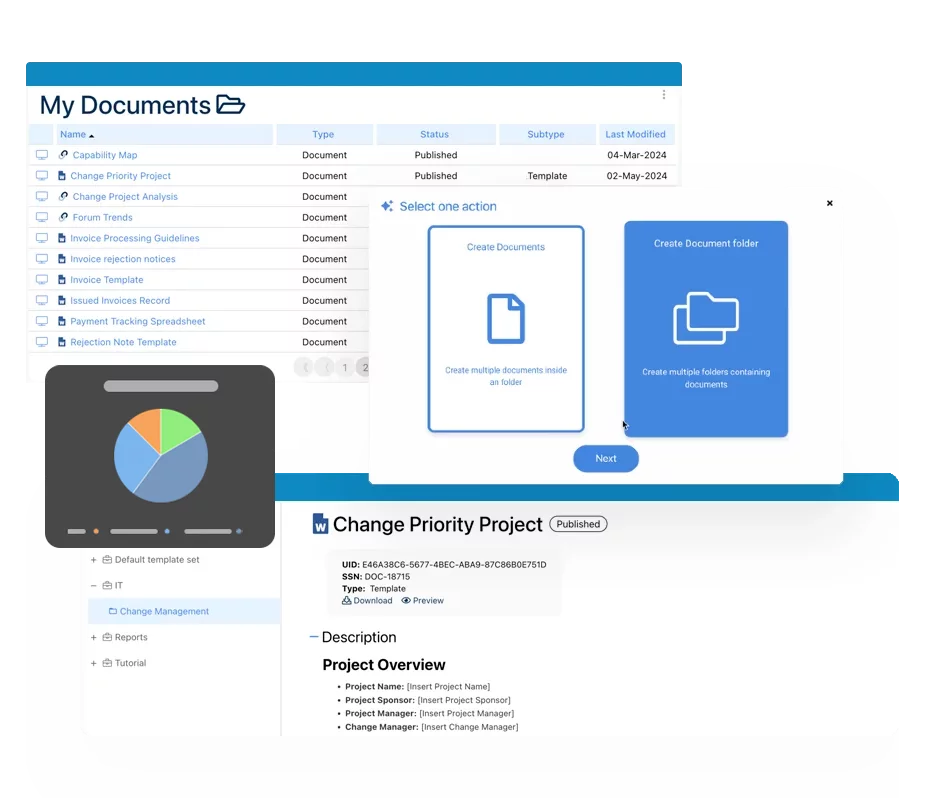
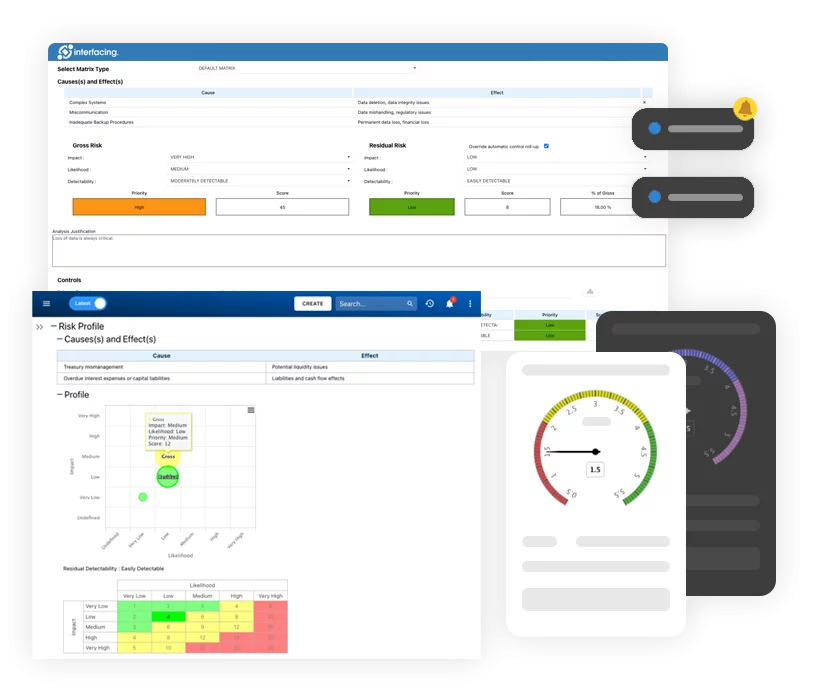
Document, analyze, improve, digitize and monitor your business processes, risks, regulatory requirements and performance indicators within Interfacing’s Digital Twin integrated management system the Enterprise Process Center®!
Trusted by Customers Worldwide!
More than 400+ world-class enterprises and management consulting firms