Interfacing

shape-img shape-img

Governed Operating Model

Please Select contact form.

Integrated, AI-powered audit management to evaluate processes, verify controls, assess resilience, and ensure continuous compliance across your enterprise.

Governing complexity in regulated enterprises

Interfacing is designed for large, regulated enterprises operating under continuous audit, compliance, and governance pressure.

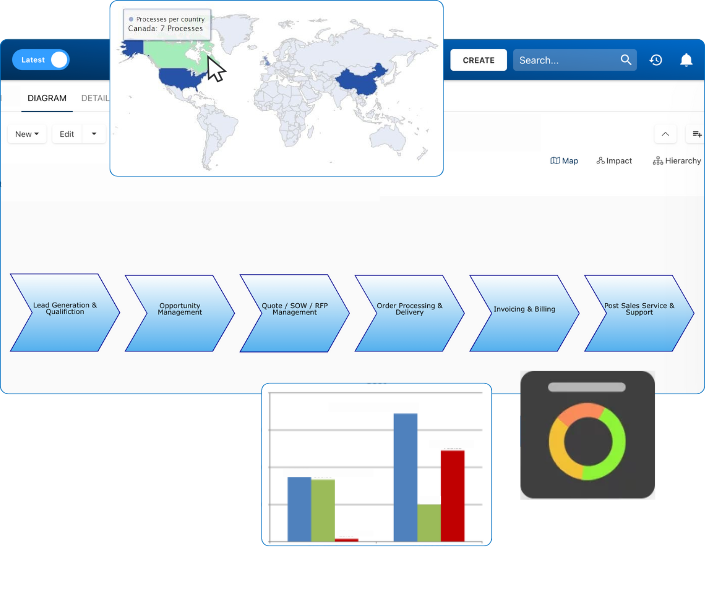
It helps organizations govern complexity by connecting business processes, risks, controls, and compliance requirements into a single operating model. This allows leaders to understand not just what is happening, but where risk, accountability, and regulatory impact reside when change occurs.

Interfacing uses AI-assisted capabilities to support discovery, impact analysis, and insight across the operating model. AI does not replace decision-making. All outputs remain explainable, traceable, and defensible under audit, with accountability retained by the organization.

The result is a governed, enterprise-wide view of operations where transformation, compliance, and risk management are managed together, not in isolation.

Why complexity becomes ungovernable

In most large organizations, complexity is not the problem.
Disconnected management is.

Processes live in BPM tools.
Risks sit in registers.
Controls are documented elsewhere.
Quality events are tracked after the fact.
AI is introduced as an accelerator, not a governed capability.

Each system may work in isolation. Under audit, regulatory change, or operational disruption, they fail together.

When something changes, a regulation, a process redesign, a supplier issue, leaders are forced to manually reconstruct impact, ownership, and compliance exposure. This is where organizations lose traceability, miss dependencies, and struggle to defend decisions.

Governance breaks not because controls are missing, but because relationships are invisible.

What a governed operating model is

A governed operating model is a connected representation of how an organization actually operates, maintained as a living system.

It explicitly links:

  • Business processes and procedures

  • Roles, responsibilities, and ownership

  • Risks and controls

  • Policies, standards, and regulatory obligations

  • Quality events, audits, and corrective actions

  • Supporting systems, data, and documentation

Instead of managing these elements separately, they are governed in context, as part of the same operational fabric.

This model is designed to support:

  • Continuous audit readiness

  • Regulatory change impact analysis

  • Clear accountability

  • Controlled transformation

Governance is not layered on top.
It is built into the operating model itself.

Where AI fits, and where it does not

AI plays a role in a governed operating model, but that role is explicitly bounded.

Within Interfacing:

  • AI assists with discovery, pattern identification, and impact analysis

  • AI helps surface relationships and changes across the operating model

  • AI supports insight, not autonomous execution

AI does not:

  • Make regulatory decisions

  • Replace human accountability

  • Operate without traceability

  • Generate outcomes that cannot be explained under audit

Every AI-assisted output remains:

  • Explainable

  • Traceable

  • Reviewable

  • Defensible

This distinction is critical in regulated environments, where speed without governance increases risk rather than reducing it.

How this model supports core disciplines

A governed operating model does not replace BPM, QMS, or risk management.
It connects them.

Business Process Management (BPM)

Processes are governed within their regulatory and risk context, not documented in isolation. Ownership, controls, and downstream impact are explicit.

Quality Management (QMS)

Quality events, audits, CAPAs, and training are connected to the processes and risks they affect, enabling proactive quality management rather than reactive remediation.

Risk and Compliance

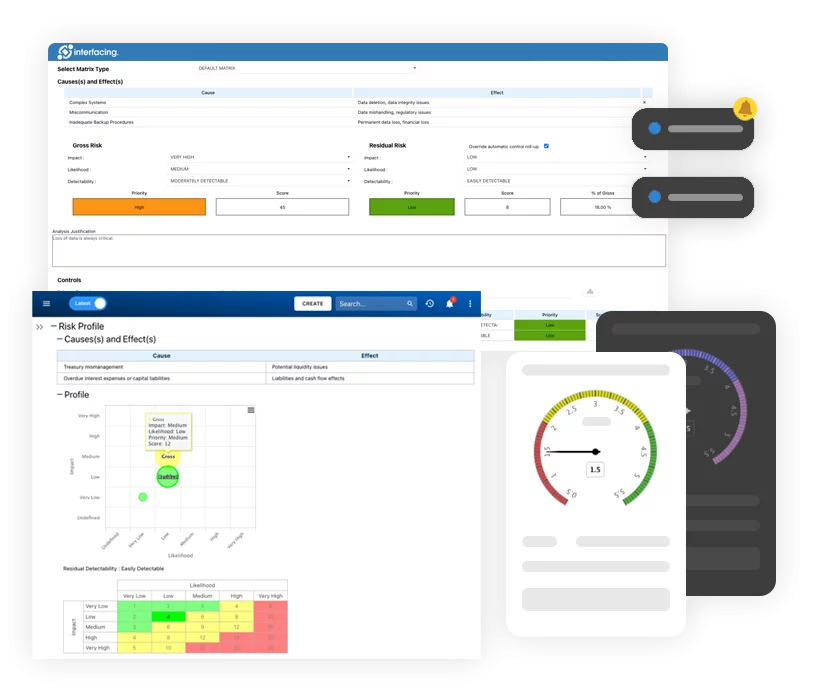
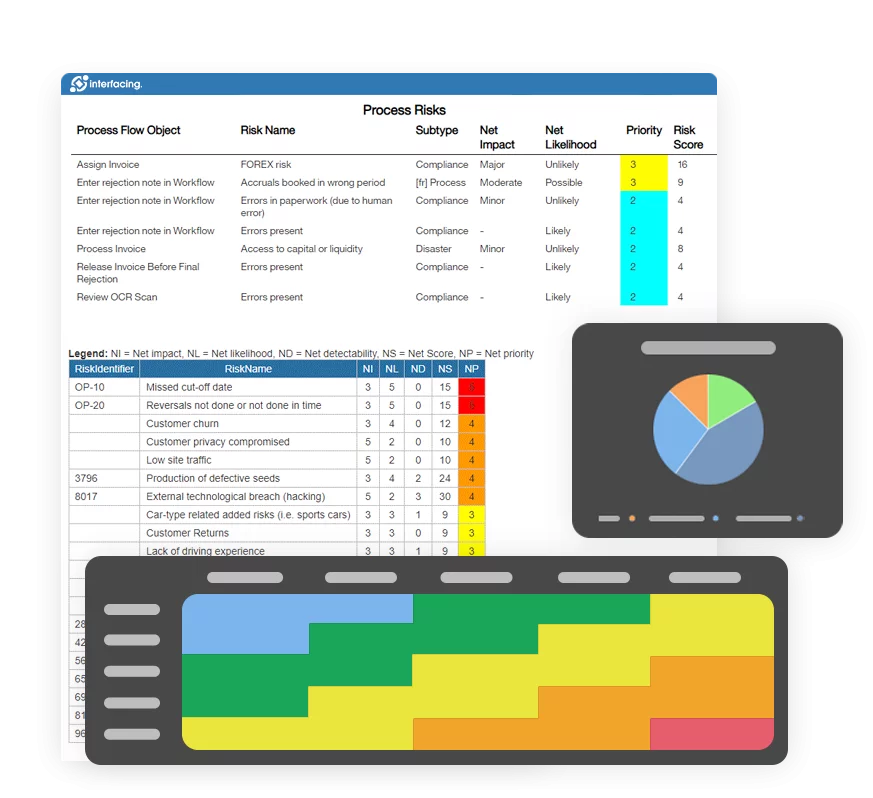
Risks are assessed at the process level, controls are contextual, and regulatory obligations are linked directly to execution. Compliance becomes continuous, not episodic.

Business Continuity and Change

When disruption or change occurs, impact is assessed across the full operating model, reducing surprises and improving response confidence.

Each discipline operates as part of a single governed system, not as parallel initiatives.

Why this matters under audit and regulatory change

Auditors do not ask whether you have documentation.
They ask whether you can defend decisions.

A governed operating model enables organizations to:

  • Demonstrate traceability from regulation to execution

  • Show clear ownership and accountability

  • Explain how AI contributed to insight without replacing judgment

  • Respond to regulatory change with confidence, not guesswork

This is what turns governance from a reporting exercise into an operational capability.

A foundation, not a feature

The governed operating model is not a module.
It is the foundation that allows transformation, automation, and AI to occur without compromising trust.

Everything Interfacing delivers, BPM, QMS, risk management, AI-assisted insight, operates within this model.

That is how complexity is governed, not just managed.

Learn how this governed operating model is applied across BPM, QMS, risk, and compliance.

Why Choose Interfacing?


With over two decades of AI, Quality, Process, and Compliance software expertise, Interfacing continues to be a leader in the industry. To-date, it has served over 500+ world-class enterprises and management consulting firms from all industries and sectors. We continue to provide digital, cloud & AI solutions that enable organizations to enhance, control and streamline their processes while easing the burden of regulatory compliance and quality management programs.

To explore further or discuss how Interfacing can assist your organization, please complete the form below.

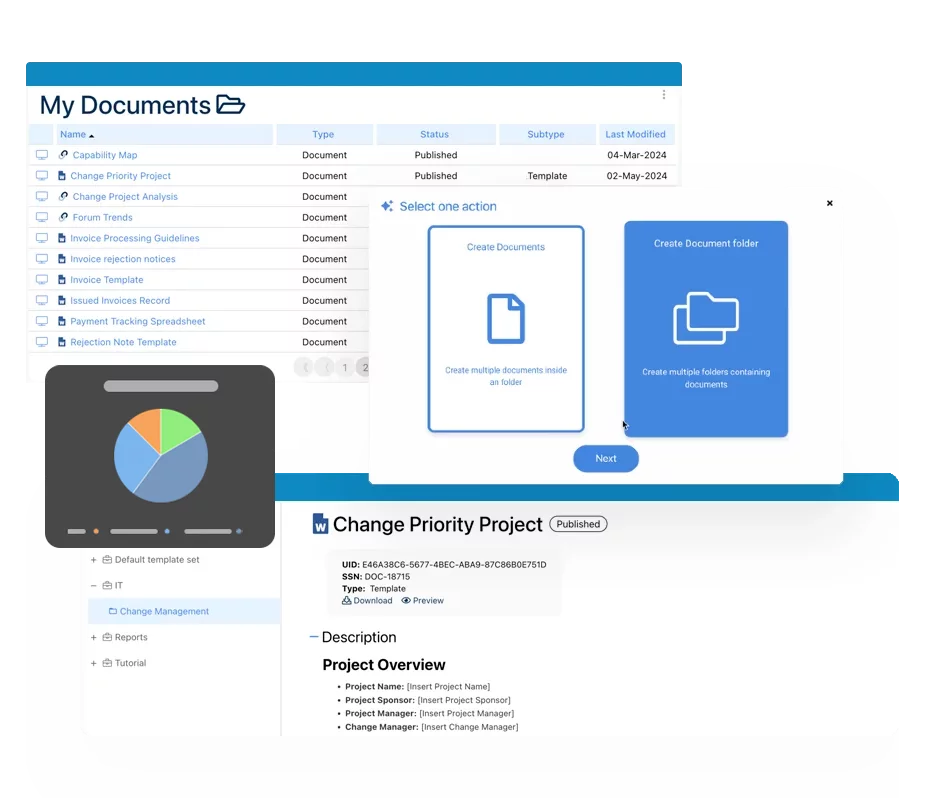
Documentation: Driving Transformation, Governance and Control

• Gain real-time, comprehensive insights into your operations.
• Improve governance, efficiency, and compliance.
• Ensure seamless alignment with regulatory standards.

eQMS: Automating Quality & Compliance Workflows & Reporting

• Simplify quality management with automated workflows and monitoring.
• Streamline CAPA, supplier audits, training and related workflows.
• Turn documentation into actionable insights for Quality 4.0

Low-Code Rapid Application Development: Accelerating Digital Transformation

• Build custom, scalable applications swiftly
• Reducing development time and cost
• Adapt faster and stay agile in the face of evolving customer and business needs.


AI to Transform your Business!

The AI-powered tools are designed to streamline operations, enhance compliance, and drive sustainable growth. Check out how AI can:
• Respond to employee inquiries
• Transform videos into processes
• Assess regulatory impact & process improvements
• Generate forms, processes, risks, regulations, KPIs & more
• Parse regulatory standards into requirements


Learn more about EPC's AI Use Cases
CONTACT US

Request Free Demo

Document, analyze, improve, digitize and monitor your business processes, risks, regulatory requirements and performance indicators within Interfacing’s Digital Twin integrated management system the Enterprise Process Center®!
Trusted by Customers Worldwide!

More than 400+ world-class enterprises and management consulting firms