

Quality 4.0 is supposed to transform compliance into a data-driven, intelligent function. Yet many organizations are investing heavily in analytics, automation, and AI, only to see the same audit findings and operational issues persist. The problem is not the ambition, it is the foundation. Most Quality 4.0 initiatives are missing a critical layer that determines whether insight actually leads to control.
The Promise of Quality 4.0
Quality 4.0 was never about digitizing documents. It was about fundamentally changing how organizations understand and manage quality.
The vision is compelling. Real-time data replaces static reports. Predictive analytics anticipate deviations before they occur. AI-assisted tools surface patterns that humans would otherwise miss. Quality leaders gain visibility across processes, systems, and sites, allowing them to move from reactive compliance to proactive performance.
It is no surprise that this model resonates so strongly with modern quality transformation leaders. The pressure to increase speed, reduce risk, and maintain compliance across increasingly complex operations has made traditional, document-centric QMS approaches unsustainable.
But there is a disconnect between what Quality 4.0 promises and what organizations actually experience.
Where the Model Quietly Breaks Down
Most Quality 4.0 initiatives are built on a simple, reasonable assumption. If you can see more, you can control more.
That logic holds in theory. It breaks in execution.
Organizations today are not lacking data. They are surrounded by it. Dashboards update in real time. Alerts surface deviations faster than ever. AI tools highlight patterns that would have taken weeks to uncover.
And yet, the same issues persist. The same deviations repeat. The same audit findings reappear.
The reason is subtle but critical.
Visibility does not create control. It only exposes the absence of it.
A deviation flagged in a dashboard does not tell you where it originated in the process. It does not clarify which control failed, or whether a control even existed in that context. It does not assign accountability in a way that drives action.
What organizations end up with is awareness without resolution. They can see the problem clearly, but they are no closer to fixing it in a durable way.
This is the blind spot that most Quality 4.0 strategies never address.
The Missing Layer, Governance Inside the Operating Model
Quality does not operate in isolation. It is not a system, a module, or a dashboard. It is an embedded capability within the organization’s operating model.
That operating model includes:
- processes that define how work is executed
- risks that threaten outcomes
- controls that mitigate those risks
- roles that own accountability
- systems and documents that support execution
When these elements are disconnected, quality becomes reactive. Issues are detected after the fact, and responses are fragmented.
When they are connected, quality becomes operational. Deviations can be traced to their source. Controls can be evaluated in context. Decisions can be executed with full visibility into impact.
This is why leading organizations are shifting toward a unified, governed approach where all operational elements exist within a single, connected model. Instead of managing quality as a layer on top of operations, they embed it directly into how the organization runs.
This aligns with the concept of a governed operating model, where processes, risks, controls, and compliance are integrated into a single source of truth rather than scattered across disconnected tools.
Why Most Quality 4.0 Initiatives Stall
When these initiatives stall, it rarely looks like failure from the outside. Systems are implemented. Data flows. Reports are generated. Leadership sees activity and assumes progress is being made.
The breakdown happens quietly.
Data is aggregated across systems that were never designed to work together. Quality lives in one environment, process definitions in another, risk frameworks somewhere else entirely. Each layer provides its own perspective, but none of them share a common operational context.
Ownership becomes equally fragmented. Responsibility exists on an org chart, but not within the execution of work itself. When something goes wrong, the organization can identify that it happened, but not who truly owns the conditions that allowed it to happen.
AI, in this environment, only accelerates the problem. It produces more insight, faster, but without the structural foundation to translate that insight into coordinated action.
What appears to be a technology gap is, in reality, a structural one.
Organizations have digitized their visibility, but not their operating model.
Reframing Quality 4.0, From Intelligence to Execution
To move forward, organizations need to stop thinking of Quality 4.0 as an intelligence layer and start seeing it as an execution model.
The difference is not semantic. It is operational.
An intelligence-driven approach focuses on observing what is happening. It measures, analyzes, and reports. It assumes that better information will naturally lead to better outcomes.
An execution-driven approach starts from a different premise. It assumes that outcomes only improve when the structure of work itself is governed.
In that model, data is not the centerpiece. The operating model is.
Processes are defined with clarity, not just documented. Risks are embedded within those processes, not managed in isolation. Controls are not abstract requirements, they are active mechanisms within the flow of work. Ownership is not assigned after the fact, it is built into how work is executed.
When these elements are connected, insight no longer sits on the sidelines. It becomes part of the system that drives action.
This is where Quality 4.0 begins to deliver on its original promise.
How Interfacing Helps
Interfacing approaches this challenge from a different starting point.
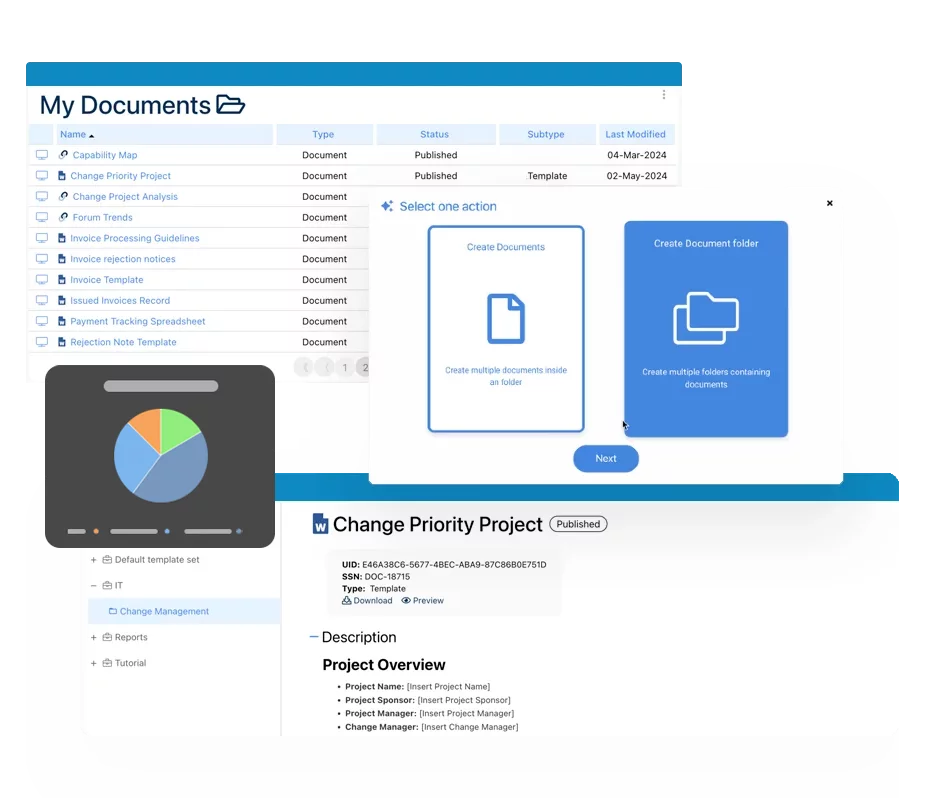
Rather than treating quality, risk, and compliance as separate domains that need to be integrated after the fact, the platform is designed around a single, governed operating model from the outset. Processes, controls, risks, roles, and documentation are not managed in parallel systems. They exist within the same structure, continuously aligned with how the organization actually operates.
This changes the role of technology.
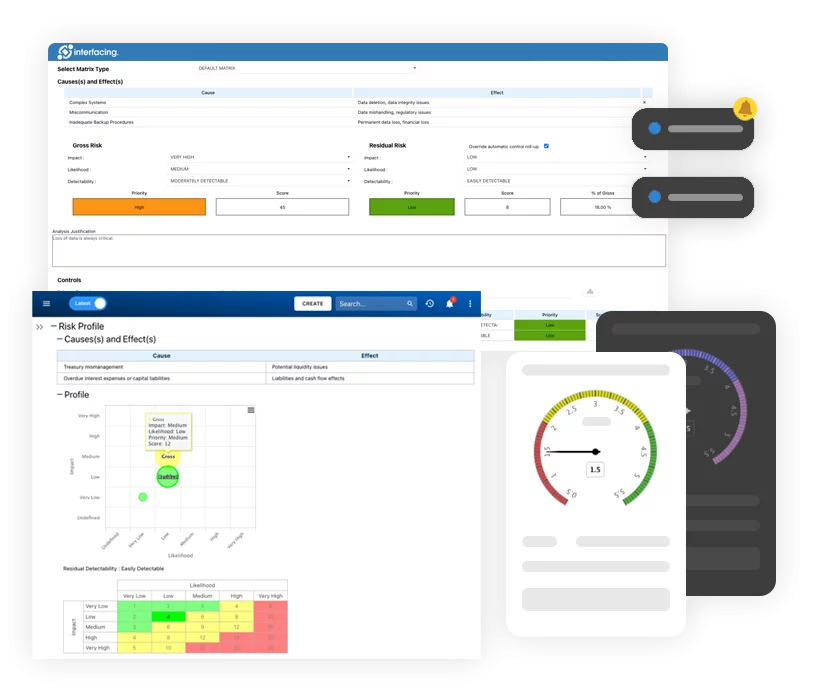
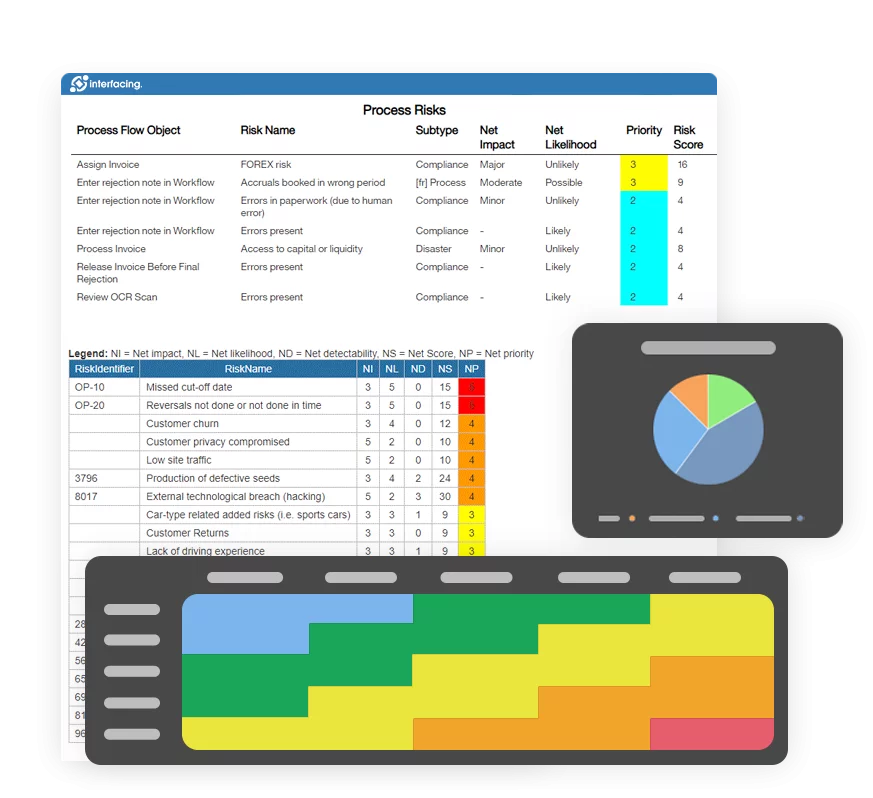
Instead of generating disconnected insights, the system provides context. When a deviation occurs, it is immediately tied to the process that produced it, the control that failed to prevent it, and the roles responsible for addressing it. The impact of any change can be understood before it is implemented, not after the consequences appear.
AI plays a supporting role in this model. It enhances visibility and helps interpret complex relationships, but always within a governed framework where decisions remain traceable and explainable.
The result is not simply better information. It is the ability to act on that information with confidence and control.
Final Thoughts
Quality 4.0 is not failing because the vision is flawed. It is failing because most implementations stop at visibility.
Until organizations address the structural gap between insight and execution, they will continue to see the same issues repeat, regardless of how advanced their analytics become.
The real transformation happens when quality is no longer observed from the outside, but managed from within the operating model itself.
Why Choose Interfacing?
With over two decades of AI, Quality, Process, and Compliance software expertise, Interfacing continues to be a leader in the industry. To-date, it has served over 500+ world-class enterprises and management consulting firms from all industries and sectors. We continue to provide digital, cloud & AI solutions that enable organizations to enhance, control and streamline their processes while easing the burden of regulatory compliance and quality management programs.
To explore further or discuss how Interfacing can assist your organization, please complete the form below.

Documentation: Driving Transformation, Governance and Control
• Gain real-time, comprehensive insights into your operations.
• Improve governance, efficiency, and compliance.
• Ensure seamless alignment with regulatory standards.

eQMS: Automating Quality & Compliance Workflows & Reporting
• Simplify quality management with automated workflows and monitoring.
• Streamline CAPA, supplier audits, training and related workflows.
• Turn documentation into actionable insights for Quality 4.0

Low-Code Rapid Application Development: Accelerating Digital Transformation
• Build custom, scalable applications swiftly
• Reducing development time and cost
• Adapt faster and stay agile in the face of
evolving customer and business needs.
AI to Transform your Business!
The AI-powered tools are designed to streamline operations, enhance compliance, and drive sustainable growth. Check out how AI can:
• Respond to employee inquiries
• Transform videos into processes
• Assess regulatory impact & process improvements
• Generate forms, processes, risks, regulations, KPIs & more
• Parse regulatory standards into requirements


Request Free Demo
Document, analyze, improve, digitize and monitor your business processes, risks, regulatory requirements and performance indicators within Interfacing’s Digital Twin integrated management system the Enterprise Process Center®!
Trusted by Customers Worldwide!
More than 400+ world-class enterprises and management consulting firms