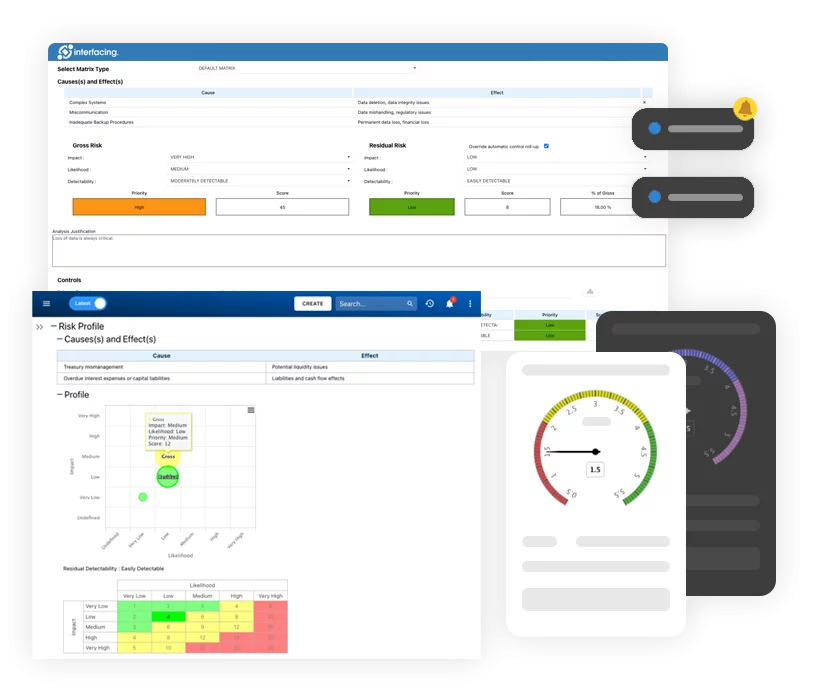
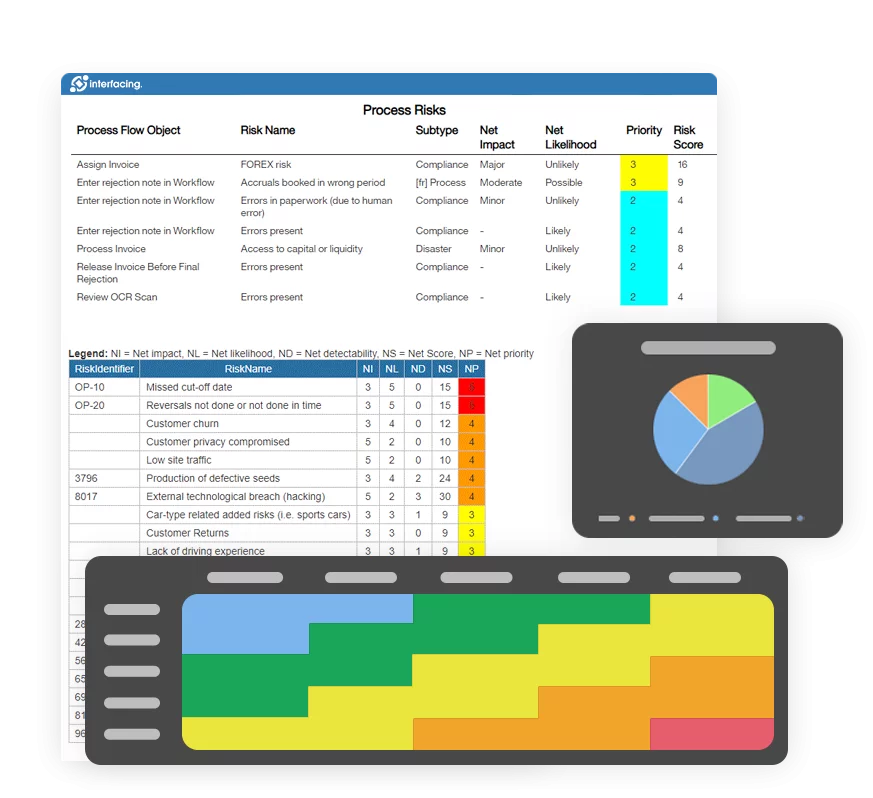


Many organizations believe they have traceability because documents, approvals, and audit records exist somewhere in the business. The real challenge is proving how those records connect across processes, risks, controls, CAPAs, training, and operational execution. An integrated management system closes that gap by turning fragmented compliance evidence into governed operational traceability.
How an Integrated Management System Enables Traceability
Most organizations believe they have traceability because they have documentation.
The SOP exists. The audit trail exists. The approval exists. The training records exist. The CAPA exists.
But when an auditor, regulator, or operational leader asks how those elements connect across execution, many organizations quickly discover they are working across fragmented systems that were never designed to operate together.
That is where traceability begins to break down.
In regulated and operationally complex industries, traceability is no longer just about proving that a document was approved or a workflow was completed. Organizations increasingly need to demonstrate how processes, controls, risks, approvals, training, corrective actions, and operational changes connect across the enterprise in a governed and accountable way.
This is why many organizations are moving toward a governed Integrated Management System (IMS) approach designed to unify process, quality, risk, compliance, and operational execution within a single operational framework.
The Real Problem Is Operational Fragmentation
Many compliance and quality initiatives still treat traceability as primarily a document management problem.
That assumption creates operational blind spots very quickly.
A controlled document repository may confirm that procedures are versioned and approved, but it often cannot explain how operational activities, controls, approvals, risks, workflows, and downstream impacts relate to one another during execution.
This becomes especially visible during:
- audits
- CAPA investigations
- regulatory inspections
- process changes
- supplier disruptions
Â
Organizations often discover they are managing:
- processes in BPM tools
- documents in separate repositories
- risks in spreadsheets
- workflows in disconnected applications
Â
Individually, those systems may function adequately. Collectively, they create fragmented governance and disconnected operational visibility.
As a result, audit preparation frequently turns into a manual reconstruction exercise where teams spend weeks collecting screenshots, approvals, revision histories, spreadsheets, and evidence from systems that do not share operational context.
The issue is rarely a lack of information.
The issue is the absence of governed operational relationships between that information.
Traceability Depends on Connected Operational Context
This distinction matters because operational traceability is fundamentally different from static recordkeeping.
Modern organizations need to understand not only what happened, but also:
- where it happened
- why it happened
- who approved it
- what controls were involved
- what downstream processes were impacted
Â
Without connected operational context, organizations struggle to maintain consistent accountability across process execution, quality management, risk governance, compliance oversight, and operational change management.
An integrated management system addresses this problem by connecting operational relationships directly inside the governance model itself. Processes, risks, controls, SOPs, approvals, workflows, audit trails, CAPAs, and training activities become interconnected components of a governed operational environment rather than isolated records spread across separate applications.
This changes how organizations manage audits, investigations, and operational governance.
Instead of manually reconstructing evidence across disconnected systems, organizations can navigate operational relationships directly through a centralized repository where traceability is embedded into execution itself.
An IMS Makes Operational Relationships Traceable
An integrated management system changes traceability because operational relationships become connected directly inside the governance model itself.
Processes no longer exist separately from risks, controls, SOPs, approvals, workflows, audit trails, CAPAs, and training activities. Instead, those elements become part of a governed operational environment where execution and accountability remain continuously connected.
For example, a process revision can automatically trigger governed approvals, employee acknowledgements, retraining workflows, downstream impact reviews, and updated audit records. CAPAs and audit findings can be linked directly back to operational processes, controls, and responsible stakeholders, creating clearer visibility into root cause and execution accountability.
This operational connectivity allows organizations to move beyond static document management toward continuously traceable operational execution.
Why Audit Readiness Is Evolving Into Continuous Accountability
Traditional compliance strategies were largely designed around periodic audit preparation.
That operational model is becoming increasingly difficult to sustain.
As organizations scale across regions, systems, suppliers, and regulatory frameworks, maintaining traceability through spreadsheets, disconnected repositories, and reactive evidence collection creates growing operational risk.
Regulators increasingly expect organizations to demonstrate continuous governance rather than temporary audit preparation.
This changes the role of traceability significantly.
Traceability is no longer just about proving compliance after the fact. It becomes part of how organizations maintain operational accountability continuously across change management, process execution, risk mitigation, approvals, and corrective actions.
This is where integrated governance models provide substantial operational advantages.
A governed IMS enables organizations to maintain ongoing visibility into:
- revision histories
- process ownership
- approval workflows
- digital signatures
- training acknowledgements
- CAPA execution
- downstream operational impacts
Â
The operational result is important.
Organizations spend less time reconstructing evidence and more time improving operational execution quality.
CAPA Effectiveness Depends on Operational Traceability
Many organizations experience recurring audit findings not because they lack CAPA systems, but because they struggle to connect corrective actions back to operational root causes.
A deviation may be documented properly.
A corrective action may be assigned and closed.
Yet the same issue often reappears because the organization never fully understood how the operational relationships behind the issue were connected.
Without process-aware traceability, organizations frequently address symptoms while underlying operational gaps remain unresolved.
This is one reason modern quality management initiatives increasingly emphasize process-centric governance rather than isolated quality workflows. Operational traceability allows organizations to connect CAPAs directly to:
- affected processes
- related controls
- impacted roles
- approval chains
- training obligations
- downstream operational dependencies
That level of visibility is difficult to achieve when process, quality, risk, compliance, and workflows are managed independently.
AI Improves Visibility, But Governance Still Matters
AI-assisted systems are accelerating operational visibility across process discovery, document analysis, anomaly detection, and impact analysis.
But AI alone does not create accountability.
In regulated environments, organizations still require:
- explainability
- governed approvals
- auditability
- controlled execution
- operational accountability
Â
This is why governance-first organizations increasingly position AI as an assistive capability rather than an autonomous decision-maker.
Interfacing’s positioning consistently focuses on AI-assisted operational intelligence designed to improve visibility, traceability, impact analysis, and execution oversight while preserving explainability and governed accountability.
That distinction becomes increasingly important as organizations attempt to modernize operations without weakening compliance governance.
Why Operational Traceability Is Becoming Strategic
Operational traceability is rapidly evolving beyond a traditional compliance requirement.
It is becoming a foundational operational capability tied directly to:
- audit resilience
- operational transparency
- enterprise accountability
- process standardization
- business continuity
- digital transformation
- risk governance
Â
Organizations operating within highly regulated environments cannot scale effectively while process execution, quality governance, risk oversight, compliance activities, documentation, and workflow execution remain fragmented across disconnected systems.
The organizations adapting successfully are typically the ones building governed operational environments where traceability exists continuously across execution, not only during audits.
How Interfacing Helps
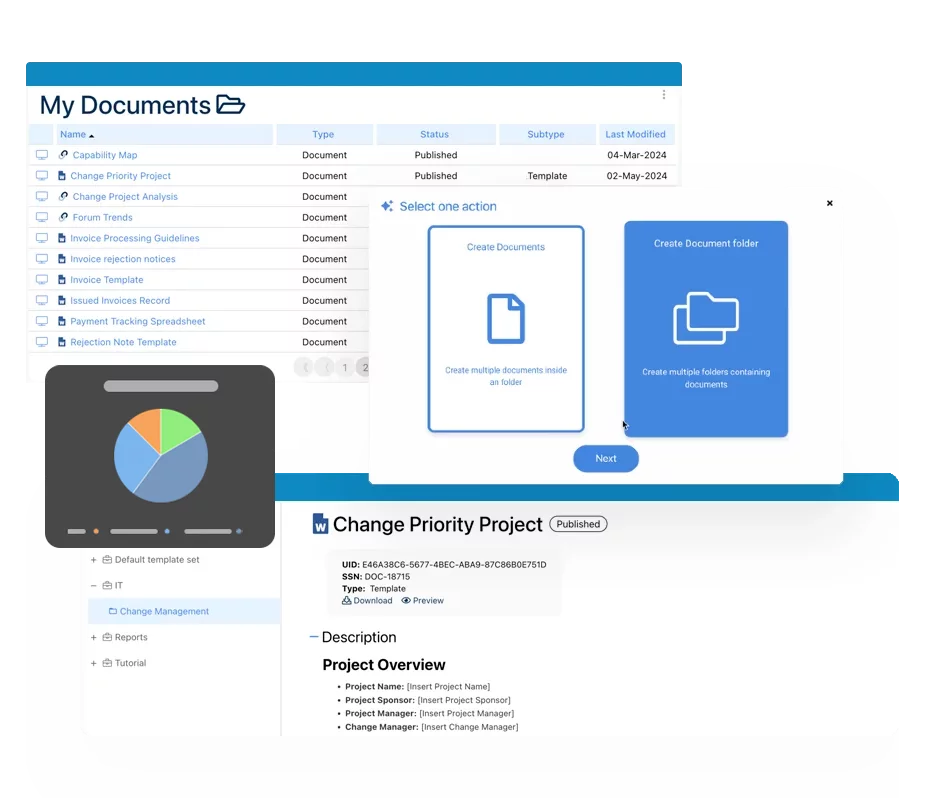
Interfacing provides an AI-assisted Integrated Management System (IMS) designed to establish governed operational traceability across process, quality, risk, compliance, and execution.
Rather than treating BPM, QMS, GRC, document control, workflow automation, audit management, and operational governance as separate initiatives, Interfacing centralizes them within a connected operational repository where relationships remain continuously traceable.
This allows organizations to connect:
- SOPs directly to operational processes and controls
- CAPAs and audit findings to operational root causes
- approvals, revisions, and training into governed lifecycle workflows
- process changes to downstream impact visibility and operational accountability
Â
The platform combines process management, eQMS, risk governance, audit management, workflow automation, low-code execution, business continuity, regulatory intelligence, and document governance within a unified operational environment.
Operationally, this means organizations can maintain traceable evidence across workflows, approvals, revisions, training, controls, and execution activities without relying on disconnected systems and manual reconstruction efforts.
Interfacing also supports AI-assisted document parsing, process discovery, impact analysis, and operational intelligence while preserving explainability, governed approvals, and continuous auditability.
The result is not simply better audit preparation.
It is a more governed, operationally accountable, and resilient enterprise environment.
Why Choose Interfacing?
With over two decades of AI, Quality, Process, and Compliance software expertise, Interfacing continues to be a leader in the industry. To-date, it has served over 500+ world-class enterprises and management consulting firms from all industries and sectors. We continue to provide digital, cloud & AI solutions that enable organizations to enhance, control and streamline their processes while easing the burden of regulatory compliance and quality management programs.
To explore further or discuss how Interfacing can assist your organization, please complete the form below.

Documentation: Driving Transformation, Governance and Control
• Gain real-time, comprehensive insights into your operations.
• Improve governance, efficiency, and compliance.
• Ensure seamless alignment with regulatory standards.

eQMS: Automating Quality & Compliance Workflows & Reporting
• Simplify quality management with automated workflows and monitoring.
• Streamline CAPA, supplier audits, training and related workflows.
• Turn documentation into actionable insights for Quality 4.0

Low-Code Rapid Application Development: Accelerating Digital Transformation
• Build custom, scalable applications swiftly
• Reducing development time and cost
• Adapt faster and stay agile in the face of
evolving customer and business needs.
AI to Transform your Business!
The AI-powered tools are designed to streamline operations, enhance compliance, and drive sustainable growth. Check out how AI can:
• Respond to employee inquiries
• Transform videos into processes
• Assess regulatory impact & process improvements
• Generate forms, processes, risks, regulations, KPIs & more
• Parse regulatory standards into requirements


Request Free Demo
Document, analyze, improve, digitize and monitor your business processes, risks, regulatory requirements and performance indicators within Interfacing’s Digital Twin integrated management system the Enterprise Process Center®!
Trusted by Customers Worldwide!
More than 400+ world-class enterprises and management consulting firms