Interfacing

sales@interfacing.com

Many organizations believe a digital twin creates control because it visualizes processes, systems, and operational relationships. But visibility alone does not prove governance. Without connected ownership, risk, controls, compliance evidence, and change accountability, a DTO becomes another diagram instead of a trusted operating model. Interfacing helps close that gap by turning disconnected process and compliance data into governed operational intelligence.

A Digital Twin of an Organization Without Governance Is Just a Diagram

Most organizations pursuing a Digital Twin of an Organization (DTO) are not actually building an operational twin.

They are building visibility layers.

That distinction is becoming increasingly important as enterprises invest heavily in process mining, operational intelligence, AI-assisted analytics, and transformation programs intended to modernize how the organization operates. The problem is that many DTO initiatives still approach the challenge as a modeling exercise rather than a governance challenge.

At first, the results appear promising. Leadership gains better visibility into processes. Dashboards begin exposing operational bottlenecks. Process relationships become easier to visualize. Teams finally see how departments interact across the enterprise.

But eventually, a more difficult reality begins to surface.

The organization may understand how work flows, yet it still struggles to govern change, enforce accountability, coordinate operational decisions, or maintain synchronization between documentation, controls, compliance obligations, and execution.

That is the point where many DTO initiatives quietly stall.

Visibility Alone Does Not Create Operational Control

One of the most common assumptions in digital transformation is that operational visibility naturally improves governance.

It does not.

An organization can visualize thousands of processes and still lack operational control over how those processes evolve, who owns them, which risks they introduce, or how downstream dependencies are affected when changes occur. This becomes particularly dangerous in highly regulated environments where even small operational modifications can ripple across quality systems, audit evidence, policies, approvals, training obligations, supplier controls, and compliance requirements.

This is why many organizations discover that their DTO environment becomes increasingly difficult to maintain over time.

The issue is not the modeling itself. Most modern DTO platforms can generate sophisticated operational maps and dashboards. The problem is that the organization continues governing execution outside the DTO through spreadsheets, disconnected workflows, manual approvals, email chains, siloed documentation repositories, and fragmented operational ownership structures.

Eventually, the model stops reflecting reality.

At that point, the DTO becomes observational rather than operational.

The Real Purpose of a DTO Is Operational Interdependency

The strongest DTO strategies are not focused primarily on visualization.

They are focused on understanding operational interdependency.

That means understanding how one operational change affects every connected layer of the organization. A policy revision may trigger updates to procedures, training requirements, risk evaluations, approval workflows, operational controls, audit evidence, or supplier obligations. A process modification may impact regulatory mappings, system permissions, escalation paths, performance measurements, or business continuity plans.

Most organizations underestimate how difficult it becomes to coordinate those relationships once operational complexity increases across multiple business units, geographies, systems, and regulatory environments.

This is where the definition of DTO is evolving beyond traditional process architecture. Analyst definitions increasingly describe DTO platforms as orchestration environments capable of connecting operational models, resources, systems, governance structures, performance intelligence, risks, controls, and AI-assisted analysis into a unified operating model.

That shift matters because it changes the role of the DTO entirely.

The DTO is no longer simply documenting how the organization operates.

It is helping govern how the organization changes.

Why Governance Becomes the Foundation of Explainable AI

The rapid expansion of AI inside operational environments is exposing this weakness even further.

Many organizations are now layering AI-assisted analytics, recommendations, and automation capabilities on top of disconnected operational ecosystems that were never designed to support explainable governance. The result is that AI can identify patterns or anomalies, but the organization still struggles to understand ownership, downstream impacts, operational dependencies, or regulatory consequences tied to those recommendations.

In highly regulated industries, that creates enormous risk.

AI recommendations without operational traceability quickly become difficult to defend during audits, investigations, inspections, or governance reviews. Organizations may know that a recommendation was generated, but they cannot always explain which processes, controls, policies, risks, or operational dependencies influenced the outcome.

This is why governed DTO models are becoming increasingly important.

A governed DTO provides the operational context necessary for AI-assisted insight to remain traceable, explainable, and accountable. Instead of AI functioning as an isolated intelligence layer, it becomes connected to the organization’s actual operating model and governance lifecycle.

That distinction is critical for organizations attempting to modernize without sacrificing operational control.

Why Many DTO Initiatives Lose Momentum After Discovery

The early stages of DTO initiatives are often successful because discovery creates immediate visibility. Process mining reveals operational variation. Dashboards expose inefficiencies. Operational relationships become easier to understand. Executive leadership gains a stronger view of the enterprise.

But visibility alone rarely sustains transformation.

The real challenge begins after discovery, when organizations attempt to operationalize change continuously across the enterprise. This is where disconnected governance models begin creating friction. Changes are approved in one system while documentation remains outdated in another. Training acknowledgements become disconnected from process revisions. Compliance requirements evolve faster than operational controls can adapt. Process intelligence becomes fragmented across multiple tools owned by different departments.

Over time, operational entropy returns.

The DTO may still exist visually, but it no longer reflects operational reality with enough accuracy to drive governance decisions confidently.

This is one of the reasons Integrated Management Systems (IMS) are becoming increasingly relevant in DTO strategy discussions. Instead of treating processes, controls, risks, SOPs, workflows, governance, and operational intelligence as separate initiatives, a governed IMS connects them within a unified operational repository capable of sustaining synchronization continuously.

How Interfacing Helps Organizations Move Beyond Visualization

Interfacing approaches the Digital Twin of an Organization differently from vendors that focus primarily on process visualization, isolated process mining, or disconnected operational analytics.

At its core, a DTO should function as a governed operational model capable of connecting how the organization operates, changes, measures performance, manages risk, maintains compliance, and responds to disruption. That requires far more than dashboards or process diagrams. It requires a unified operational architecture capable of maintaining synchronized relationships across the enterprise.

This is where Interfacing’s Integrated Management System (IMS) and Enterprise Process Center (EPC) platform become strategically important.

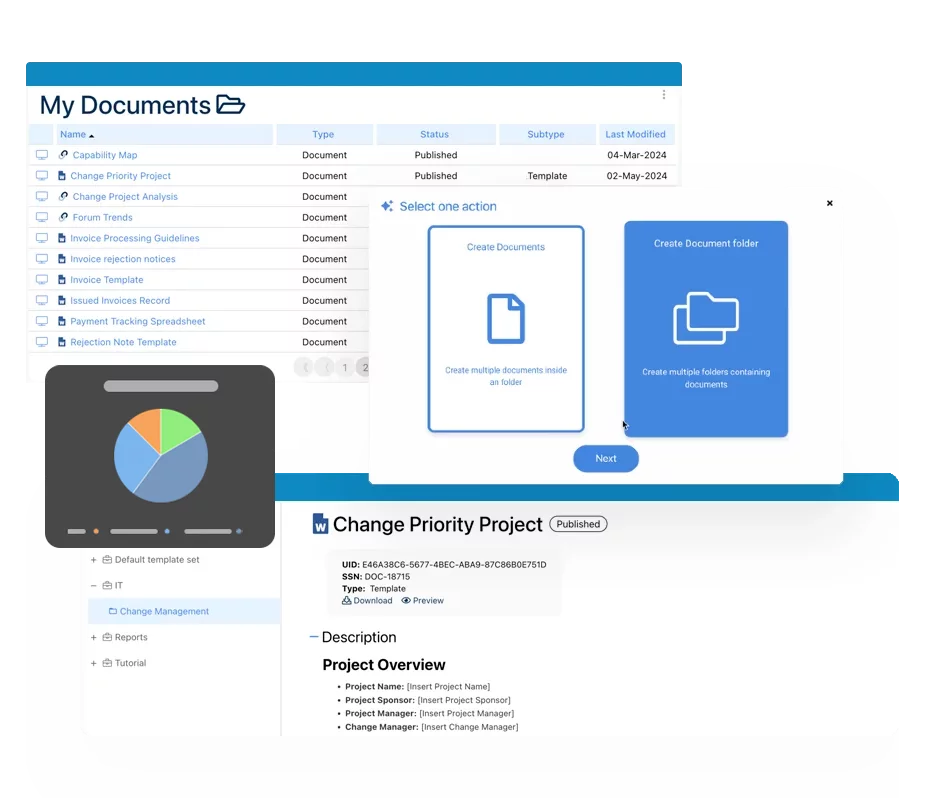
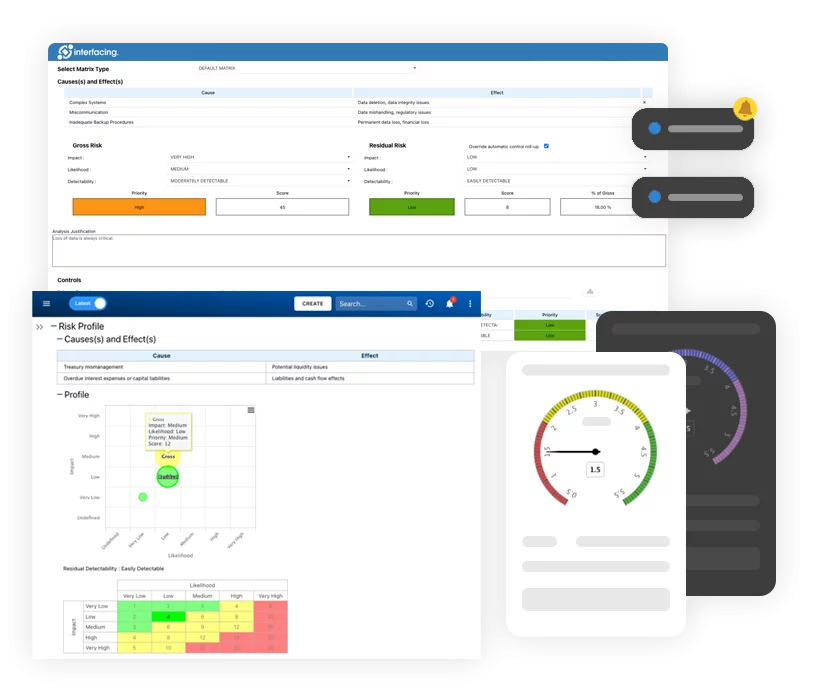
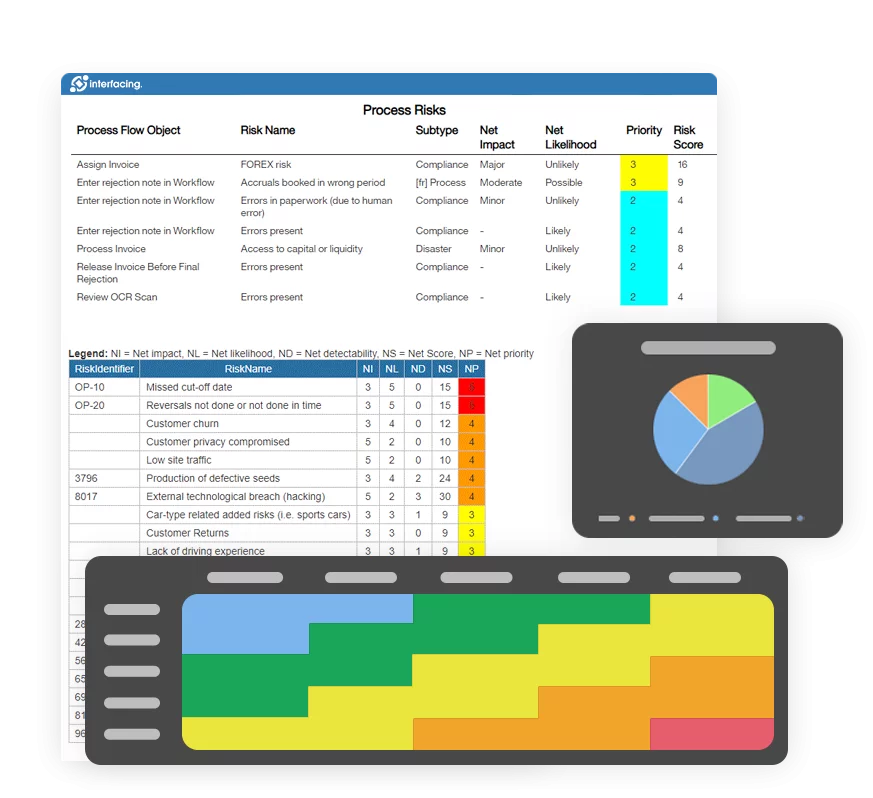
Rather than treating processes, controls, SOPs, risks, workflows, applications, audit evidence, policies, training records, and operational intelligence as separate systems managed independently across departments, Interfacing connects them within a centralized governed repository designed to function as a living operational model.

This allows organizations to move beyond static documentation and fragmented operational visibility toward continuous operational synchronization.

For example, when a process changes inside the DTO environment, Interfacing can help organizations understand downstream impacts across related controls, compliance obligations, operational procedures, audit evidence, training requirements, applications, risks, business continuity plans, and governance workflows. Instead of manually coordinating operational updates across disconnected systems, organizations gain a connected operational ecosystem capable of maintaining traceability and governance alignment continuously.

This becomes especially important in highly regulated industries where organizations must demonstrate not only that controls exist, but also how operational decisions, approvals, policies, risks, and execution activities remain connected over time.

Interfacing’s DTO approach also supports AI-assisted operational intelligence in a governed and explainable manner. Rather than positioning AI as a black-box automation layer, the platform uses AI-assisted analysis to help organizations identify operational dependencies, process gaps, compliance impacts, and governance risks while preserving traceability and accountability throughout the operating model. This governance-first approach is particularly important for organizations operating under continuous audit, regulatory, or operational resilience pressures.

Unlike standalone modeling tools that often become outdated after initial transformation efforts, Interfacing’s DTO capabilities are designed to remain operationally connected to day-to-day governance activities. Workflow approvals, process ownership, digital signatures, audit trails, operational KPIs, compliance relationships, business continuity structures, and risk controls remain synchronized within the same operational repository rather than fragmented across multiple disconnected platforms.

The result is not simply a better process diagram.

It is a governed Digital Twin of the Organization capable of supporting operational resilience, explainable AI, compliance traceability, transformation governance, and continuous improvement from a single connected operating model.

The Future of DTO Is Governance, Not Just Visualization

The market conversation around DTO is still heavily focused on visibility, dashboards, and operational discovery.

Those capabilities matter.

But over time, organizations are realizing that visibility without governance creates a different kind of operational risk. The organization may understand its operational landscape better than before, yet still lack the ability to coordinate, govern, synchronize, and operationalize change consistently across the enterprise.

A true Digital Twin of an Organization should not simply describe how the organization operates.

It should help govern how the organization evolves.

Without that capability, even the most sophisticated DTO eventually becomes disconnected from operational reality.

And once that happens, it stops being a digital twin.

It becomes a diagram.

Why Choose Interfacing?


With over two decades of AI, Quality, Process, and Compliance software expertise, Interfacing continues to be a leader in the industry. To-date, it has served over 500+ world-class enterprises and management consulting firms from all industries and sectors. We continue to provide digital, cloud & AI solutions that enable organizations to enhance, control and streamline their processes while easing the burden of regulatory compliance and quality management programs.

To explore further or discuss how Interfacing can assist your organization, please complete the form below.

Documentation: Driving Transformation, Governance and Control

• Gain real-time, comprehensive insights into your operations.
• Improve governance, efficiency, and compliance.
• Ensure seamless alignment with regulatory standards.

eQMS: Automating Quality & Compliance Workflows & Reporting

• Simplify quality management with automated workflows and monitoring.
• Streamline CAPA, supplier audits, training and related workflows.
• Turn documentation into actionable insights for Quality 4.0

Low-Code Rapid Application Development: Accelerating Digital Transformation

• Build custom, scalable applications swiftly
• Reducing development time and cost
• Adapt faster and stay agile in the face of evolving customer and business needs.


AI to Transform your Business!

The AI-powered tools are designed to streamline operations, enhance compliance, and drive sustainable growth. Check out how AI can:
• Respond to employee inquiries
• Transform videos into processes
• Assess regulatory impact & process improvements
• Generate forms, processes, risks, regulations, KPIs & more
• Parse regulatory standards into requirements

Learn more about EPC's AI Use Cases
CONTACT US

Request Free Demo

Document, analyze, improve, digitize and monitor your business processes, risks, regulatory requirements and performance indicators within Interfacing’s Digital Twin integrated management system the Enterprise Process Center®!

Trusted by Customers Worldwide!

More than 400+ world-class enterprises and management consulting firms