A Digital Twin of an Organization loses trust the moment people stop believing it reflects operational reality. That usually happens quietly, after process changes, undocumented exceptions, disconnected controls, or outdated ownership begin drifting away from the model itself. Once leaders, auditors, or operational teams question whether the DTO is current, confidence in every downstream insight, decision, and compliance assumption starts to erode.
When a Digital Twin of an Organization Loses Trust
A Digital Twin of an Organization is supposed to create operational confidence.
It promises something most enterprises have struggled to achieve for decades: a connected understanding of how the organization actually functions across processes, systems, controls, roles, policies, workflows, and operational dependencies.
That promise is what makes DTO initiatives so attractive to leadership teams. The idea of creating a living operational model capable of exposing downstream impacts, improving visibility, supporting governance, and enabling AI-assisted insight sounds like the natural evolution of digital transformation.
But there is a problem that many organizations quietly encounter after the initial enthusiasm fades.
The model slowly stops reflecting reality.
Not because the platform failed.
Not because the technology was insufficient.
And not because the organization lacked data.
Trust begins to erode because the business itself continues evolving faster than the DTO evolves with it.
A process changes in one department but the operational dependency is never updated. A regional team creates a workaround to accelerate execution. A compliance procedure is modified locally without being synchronized globally. An automation initiative changes workflow behavior while ownership mappings remain tied to the previous operational structure.
Individually, these changes seem manageable.
Collectively, they create operational divergence between the organization and the model that was supposed to represent it.
That divergence is the real risk.
The Difference Between Visibility and Operational Trust
One of the biggest misconceptions surrounding Digital Twin of an Organization initiatives is the belief that visibility automatically creates understanding.
It does not.
An organization can visualize thousands of operational relationships and still fail to understand how change impacts downstream execution. Many enterprises have already invested heavily in process repositories, architecture layers, process mining initiatives, governance libraries, and operational dashboards. Yet despite all this visibility, they still struggle with audit inconsistency, fragmented governance, disconnected process ownership, and operational drift across the enterprise.
The issue is not the absence of information.
The issue is the absence of synchronization.
A DTO only becomes trustworthy when governance, execution, ownership, controls, workflows, and operational change remain continuously connected. Without that alignment, the DTO gradually becomes less representative of how the organization actually operates.
And once people begin questioning whether the DTO reflects reality, trust in every downstream insight becomes more fragile as well.
Operational Drift Happens Quietly
Most organizations do not experience a single catastrophic governance failure that suddenly invalidates their DTO.
Operational drift develops gradually.
A process owner changes without updating governance relationships. A regional team bypasses part of a workflow to accelerate execution. A compliance procedure evolves locally while the enterprise model continues reflecting the old operational structure. A system integration changes process behavior while downstream controls remain tied to previous assumptions.
None of these situations appear severe individually.
But collectively, they create divergence between documented operations and real execution.
That divergence becomes extremely difficult to manage in large enterprises because operational complexity grows faster than manual governance practices can sustain. Over time, employees stop relying entirely on the DTO because they recognize that operational knowledge increasingly exists outside the model itself.
Teams begin validating information through:
- email threads,
- spreadsheets,
- disconnected approvals,
- undocumented tribal knowledge,
- and local operational workarounds.
Â
At that point, the DTO may still exist technically, but it no longer functions as a trusted operational intelligence layer.
It becomes a reference artifact instead of a governed operating model.
Why This Problem Becomes More Dangerous With AI
AI is making DTO trust significantly more important.
Many organizations are now layering AI-assisted operational intelligence on top of DTO environments to improve process visibility, evaluate operational impacts, identify anomalies, and support governance decisions. The assumption is that AI will improve organizational understanding by helping enterprises process operational complexity faster than humans alone.
But AI systems inherit the quality of the operational context supporting them.
If the DTO itself no longer reflects operational reality, AI-assisted recommendations begin amplifying fragmented assumptions across the enterprise.
An AI system may recommend operational changes without understanding downstream compliance implications. It may surface process optimizations based on outdated ownership structures. It may identify efficiency improvements that unintentionally conflict with governance requirements or risk controls.
The issue is not AI itself.
The issue is disconnected operational truth feeding increasingly intelligent systems.
This is why explainability and governed operational context are becoming critical requirements for enterprise AI initiatives. Organizations operating in regulated environments cannot rely on AI-assisted insights that are disconnected from real operational execution.
A Trusted DTO Must Continuously Evolve
One of the reasons many Digital Twin of an Organization initiatives lose momentum is because organizations unconsciously treat the DTO like a project milestone instead of a living operational environment.
Once the initial modeling effort is completed, many enterprises shift their focus toward maintaining the platform rather than maintaining operational alignment within the platform. Over time, the DTO begins reflecting how the organization operated during implementation rather than how it operates today.
But organizations do not stand still.
Processes evolve as business priorities shift. Governance structures adapt to regulatory pressure. Operational ownership changes across departments and regions. Workflows are modified to improve efficiency. Systems integrations alter how information moves through the enterprise. New controls are introduced while older assumptions quietly become outdated.
A trusted DTO must evolve alongside all of those changes continuously.
This is where many organizations begin recognizing that the long-term success of a DTO depends less on visualization sophistication and more on governance maturity. The organizations generating the most value from Digital Twin initiatives are rarely the ones building the most visually impressive operating models. They are the organizations capable of maintaining synchronization between operational reality and the model representing it.
That distinction becomes increasingly important as enterprises grow more complex and operational change accelerates. The future value of a Digital Twin of an Organization will depend heavily on whether the DTO can continue reflecting real execution behavior as the business itself evolves over time.
How Interfacing Helps Organizations Maintain DTO Trust
Interfacing approaches the Digital Twin of an Organization as a governed operational ecosystem rather than a disconnected visualization initiative or standalone process repository.
Many organizations attempting to build DTO capabilities still operate with fragmented environments where processes, SOPs, controls, workflows, risks, systems, and governance activities exist across separate platforms that rarely stay synchronized over time. The result is operational fragmentation masked by isolated visibility layers. Teams may see individual parts of the organization, yet still struggle to understand how operational changes impact the enterprise as a connected system.
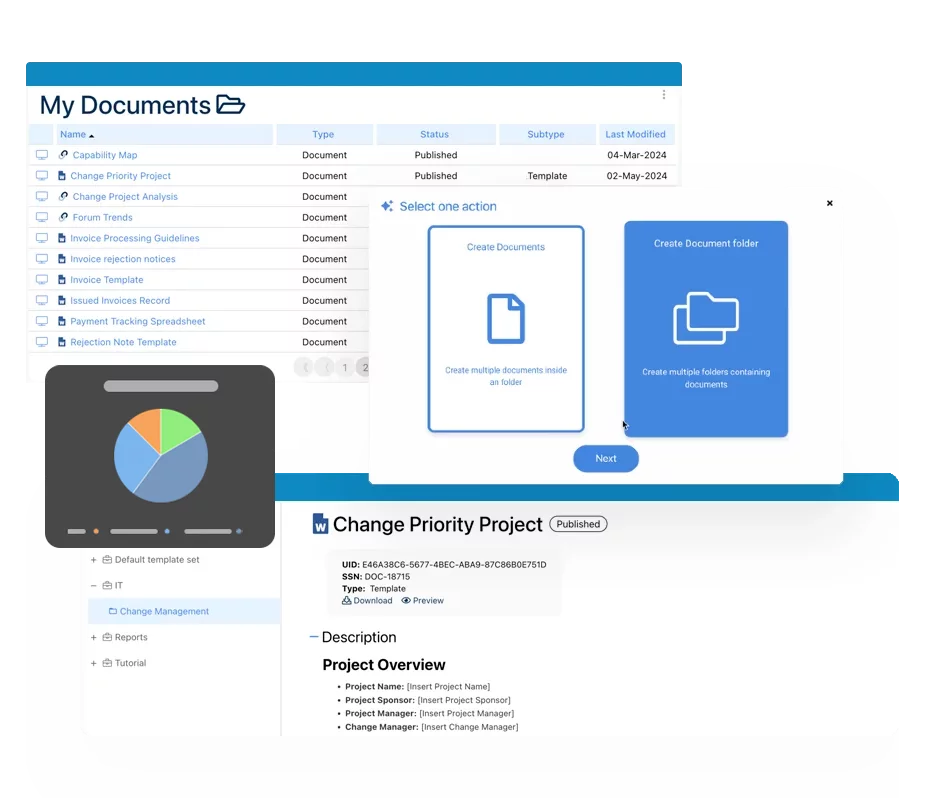
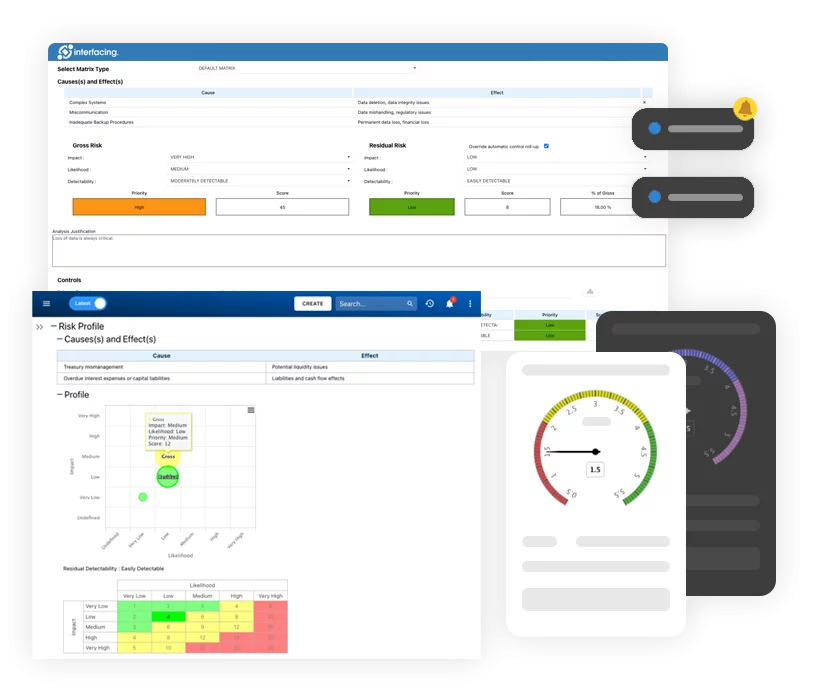
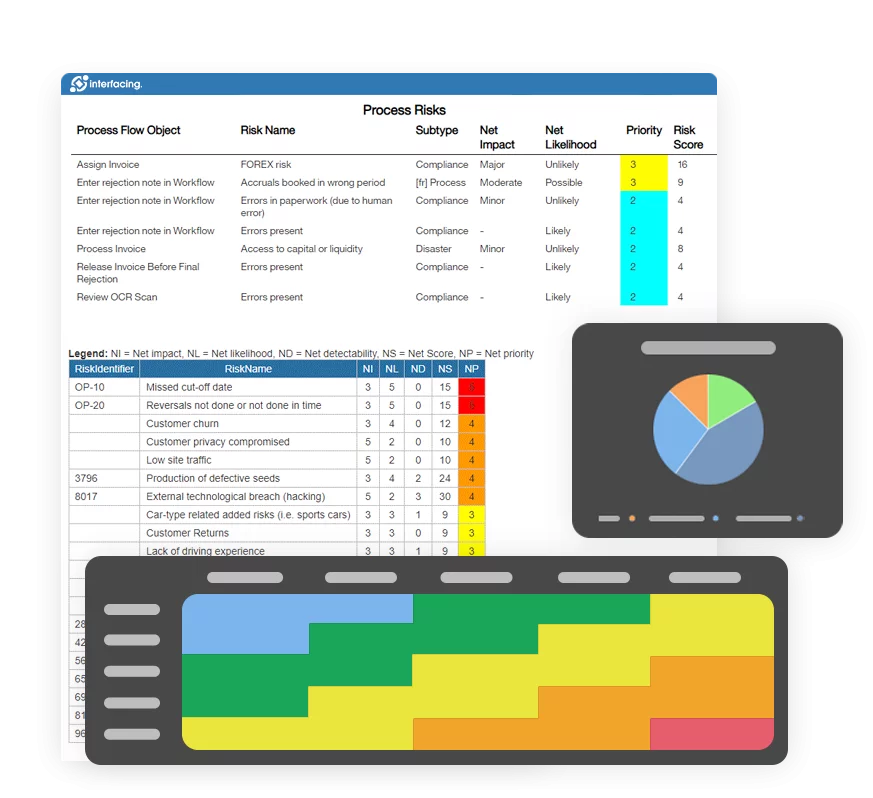
Interfacing addresses this challenge through a centralized operational repository designed to maintain synchronization across the enterprise as operational conditions evolve. The Interfacing Integrated Management System (IMS) connects:
- processes and workflows,
- governance structures and approvals,
- controls and risk frameworks,
- SOPs and compliance documentation,
- operational ownership and responsibilities,
- training and audit readiness,
- KPIs and operational intelligence,
- and AI-assisted impact visibility
Â
inside a unified environment built to support continuous operational alignment.
Â
This creates far more than process visibility alone.
As organizations evolve, Interfacing helps maintain traceable relationships between operational changes and downstream dependencies. A modification to a process can immediately expose related impacts across:
- controls,
- approvals,
- SOPs,
- workflows,
- training requirements,
- operational ownership,
- and compliance obligations.
Â
Rather than relying on disconnected teams to manually identify those relationships, the DTO maintains connected operational context across the enterprise.
This becomes especially important in highly regulated industries where organizations must continuously demonstrate that operational execution, governance, and compliance structures remain aligned over time. Interfacing’s governance-first approach helps reduce operational drift by ensuring the DTO evolves alongside real business execution rather than becoming a static reference model disconnected from reality.
Interfacing also supports AI-assisted operational intelligence within governed enterprise context. Instead of applying AI to fragmented operational data spread across disconnected repositories, organizations can layer AI-assisted discovery, analysis, and impact visibility on top of a connected operational model designed to preserve:
- explainability,
- traceability,
- accountability,
- and governance visibility.
Â
Rather than positioning the Digital Twin of an Organization as a static diagram of enterprise operations, Interfacing approaches DTO as a living operational intelligence layer capable of continuously adapting as governance structures, operational processes, systems, and business realities evolve over time.
Why Choose Interfacing?
With over two decades of AI, Quality, Process, and Compliance software expertise, Interfacing continues to be a leader in the industry. To-date, it has served over 500+ world-class enterprises and management consulting firms from all industries and sectors. We continue to provide digital, cloud & AI solutions that enable organizations to enhance, control and streamline their processes while easing the burden of regulatory compliance and quality management programs.
To explore further or discuss how Interfacing can assist your organization, please complete the form below.

Documentation: Driving Transformation, Governance and Control
• Gain real-time, comprehensive insights into your operations.
• Improve governance, efficiency, and compliance.
• Ensure seamless alignment with regulatory standards.

eQMS: Automating Quality & Compliance Workflows & Reporting
• Simplify quality management with automated workflows and monitoring.
• Streamline CAPA, supplier audits, training and related workflows.
• Turn documentation into actionable insights for Quality 4.0

Low-Code Rapid Application Development: Accelerating Digital Transformation
• Build custom, scalable applications swiftly
• Reducing development time and cost
• Adapt faster and stay agile in the face of
evolving customer and business needs.
AI to Transform your Business!
The AI-powered tools are designed to streamline operations, enhance compliance, and drive sustainable growth. Check out how AI can:
• Respond to employee inquiries
• Transform videos into processes
• Assess regulatory impact & process improvements
• Generate forms, processes, risks, regulations, KPIs & more
• Parse regulatory standards into requirements

Request Free Demo
Document, analyze, improve, digitize and monitor your business processes, risks, regulatory requirements and performance indicators within Interfacing’s Digital Twin integrated management system the Enterprise Process Center®!
Trusted by Customers Worldwide!
More than 400+ world-class enterprises and management consulting firms