

Interfacing

sales@interfacing.com
Low-code platforms are increasingly marketed as “AI-built,” promising applications generated automatically from prompts or forms. That promise sounds efficient, but in enterprise and regulated environments, it is deeply misleading.
The real future of low-code is not auto-generation; it is AI-assisted design that preserves governance, intent, and accountability.

AI-Assisted Low-Code Is Being Framed the Wrong Way

The current narrative around AI and low-code is dominated by speed. Build faster. Deploy instantly. Generate applications automatically. While this framing resonates with innovation teams under pressure to deliver quickly, it ignores a more fundamental reality. Most enterprise failures are not caused by slow development, they are caused by loss of control.

Auto-generation assumes that application logic, validation rules, compliance constraints, and operational context can be inferred correctly without human oversight. In practice, this assumption rarely holds. Especially in regulated industries, where processes are audited, validated, and continuously reviewed, automation without intent becomes a liability rather than an advantage.

AI-assisted low-code takes a different approach. It does not attempt to replace design decisions. Instead, it augments them.

Assisted Design Preserves Intent, Auto-Generation Obscures It

Every enterprise application represents a set of decisions. Why this workflow exists. Who is accountable. What evidence must be captured. How exceptions are handled. Auto-generated applications tend to collapse these decisions into opaque logic that is difficult to explain, validate, or govern later.

Assisted design keeps intent explicit.

With AI-assisted low-code, AI can help digitize forms, suggest workflow paths, flag missing controls, or highlight inconsistencies. But the human designer remains responsible for structure, approval logic, escalation paths, and compliance alignment. This distinction is subtle but critical.

When auditors ask why a step exists, or regulators request proof of control effectiveness, assisted design provides answers. Auto-generation often does not.

Governance Is the Missing Operating Layer

Process governance is often misunderstood as bureaucracy. In reality, it is an enabling structure that allows collaboration to scale safely. Governance answers questions collaboration alone cannot:

  • Who is accountable when a process crosses functional boundaries?
  • How are decisions documented, reviewed, and enforced?
  • What happens when policies, risks, or regulations change?
  • How do teams collaborate without rewriting processes informally?

This is where business process governance becomes essential. By defining ownership, controls, escalation paths, and change mechanisms, governance creates a shared operating model that collaboration can rely on.

Interfacing’s approach to business process governance establishes this operating layer by connecting processes, roles, documentation, risks, and controls into a single governed system rather than disconnected artifacts.

Why Auto-Generation Breaks Down in Regulated Environments

In regulated environments, applications are not just tools. They are evidence. Validation records, audit trails, training acknowledgements, approvals, and digital signatures must be preserved and traceable.

Auto-generated applications struggle in three areas.

First, explainability. If logic is generated dynamically, it becomes difficult to demonstrate why a decision path exists or how it aligns with policy.

Second, change control. When AI regenerates logic, even small changes can invalidate prior validation without clear visibility.

Third, accountability. Regulators do not accept “the system decided” as an explanation.

AI-assisted low-code avoids these traps by embedding AI where it adds value, without surrendering governance.

The Role of AI in Low-Code Should Be Advisory, Not Authoritative

AI is exceptionally good at pattern recognition. It can analyze large volumes of forms, documents, and historical workflows to surface recommendations. It can assist with impact analysis when changes occur. It can accelerate digitization by converting unstructured inputs into structured components.

What AI should not do is unilaterally define enterprise logic.

In Interfacing’s approach to rapid application development, low-code is anchored in an Integrated Management System. That means applications are not isolated artifacts. They are connected to processes, roles, documents, risks, and controls. AI supports that ecosystem by informing decisions, not replacing them.

This distinction allows organizations to move faster without losing operational clarity.

Assisted Design Scales Better Than Auto-Generation

One of the overlooked weaknesses of auto-generation is scale. As organizations deploy more applications, inconsistencies multiply. Naming conventions drift. Controls diverge. Exceptions proliferate.

Assisted design scales differently. Because applications are built within a governed framework, patterns can be reused intentionally. AI can highlight deviations and suggest harmonization. Governance teams retain visibility across the portfolio.

Over time, this produces a system that is not only faster to build, but easier to maintain, audit, and evolve.

How Interfacing Enables AI-Assisted Low-Code Without Losing Control

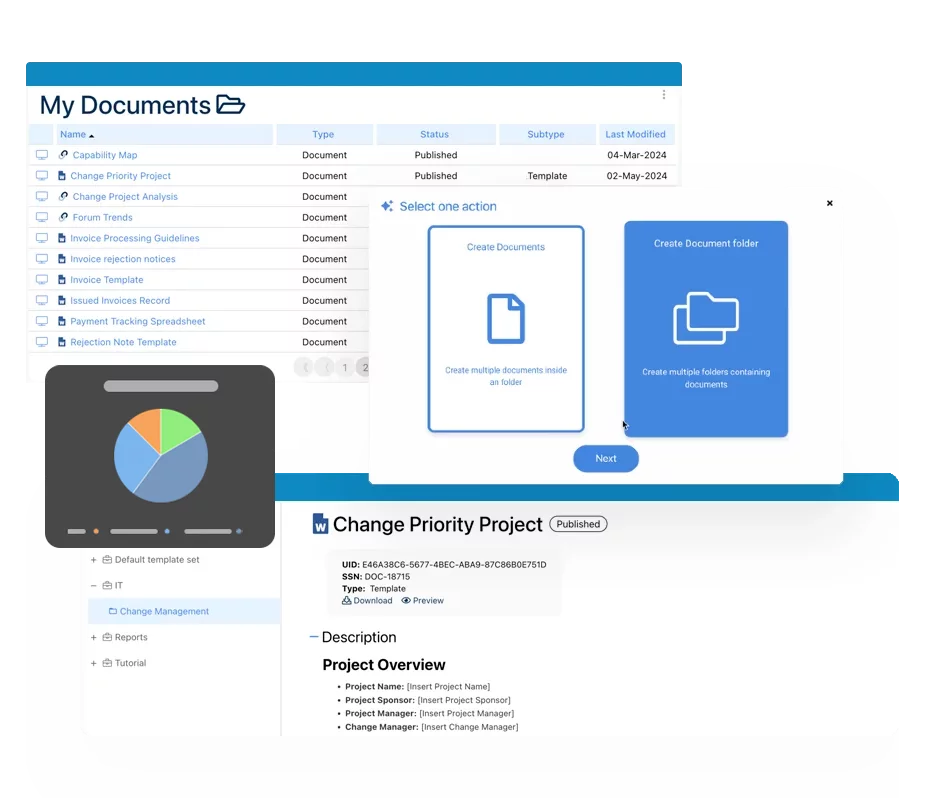
Interfacing’s low-code platform is designed to support rapid application development while remaining embedded within a broader management system. AI is used to accelerate digitization, assist with impact analysis, and surface insights across processes and documentation.

Crucially, applications remain connected to business context. Forms, workflows, approvals, and data are governed as part of the same system that manages quality, risk, and compliance. This allows organizations to innovate confidently, without creating a parallel automation layer that must later be controlled retroactively.

The Future of Low-Code Is Not Hands-Off, It Is Hands-In

The most successful organizations are not those that remove humans from design, but those that empower them with better tools. AI-assisted low-code reflects this reality. It respects the complexity of enterprise operations while still delivering speed.

Auto-generation may be useful for prototypes. Assisted design is what survives audits, scale, and time.

Why Choose Interfacing?


With over two decades of AI, Quality, Process, and Compliance software expertise, Interfacing continues to be a leader in the industry. To-date, it has served over 500+ world-class enterprises and management consulting firms from all industries and sectors. We continue to provide digital, cloud & AI solutions that enable organizations to enhance, control and streamline their processes while easing the burden of regulatory compliance and quality management programs.

To explore further or discuss how Interfacing can assist your organization, please complete the form below.

Documentation: Driving Transformation, Governance and Control

• Gain real-time, comprehensive insights into your operations.
• Improve governance, efficiency, and compliance.
• Ensure seamless alignment with regulatory standards.

eQMS: Automating Quality & Compliance Workflows & Reporting

• Simplify quality management with automated workflows and monitoring.
• Streamline CAPA, supplier audits, training and related workflows.
• Turn documentation into actionable insights for Quality 4.0

Low-Code Rapid Application Development: Accelerating Digital Transformation

• Build custom, scalable applications swiftly
• Reducing development time and cost
• Adapt faster and stay agile in the face of evolving customer and business needs.


AI to Transform your Business!

The AI-powered tools are designed to streamline operations, enhance compliance, and drive sustainable growth. Check out how AI can:
• Respond to employee inquiries
• Transform videos into processes
• Assess regulatory impact & process improvements
• Generate forms, processes, risks, regulations, KPIs & more
• Parse regulatory standards into requirements


Learn more about EPC's AI Use Cases
CONTACT US

Request Free Demo

Document, analyze, improve, digitize and monitor your business processes, risks, regulatory requirements and performance indicators within Interfacing’s Digital Twin integrated management system the Enterprise Process Center®!

Trusted by Customers Worldwide!

More than 400+ world-class enterprises and management consulting firms