

Interfacing

sales@interfacing.com
AI is rapidly entering Quality Management Systems, promising faster insights, smarter audits, and automated decision support. But without operational context, those promises collapse quickly.
Quality leaders are discovering that AI alone does not improve quality, it simply accelerates confusion if it is not grounded in how work is actually done.

The flawed assumption behind AI-driven quality

The prevailing assumption is simple and dangerous: if an algorithm can analyze deviations, CAPAs, complaints, and audit findings faster than humans, quality will automatically improve.

This assumes quality data exists in isolation.

In reality, quality events are symptoms, not root causes. A deviation only makes sense when understood in relation to the process that produced it, the roles that executed it, the controls that governed it, the training that enabled it, and the documents that instructed it. AI operating on disconnected quality records cannot infer intent, accountability, or systemic weakness.

A skeptic would argue that more data should compensate for missing structure. That logic fails in regulated environments. Regulators do not accept probabilistic reasoning when accountability and traceability are required. They expect explainability.

Why context matters more than intelligence

Quality management is not a data problem. It is a systems problem.

Context in quality means understanding how events relate to:

  • End-to-end business processes

  • Approved procedures and controlled documents

  • Roles and responsibilities

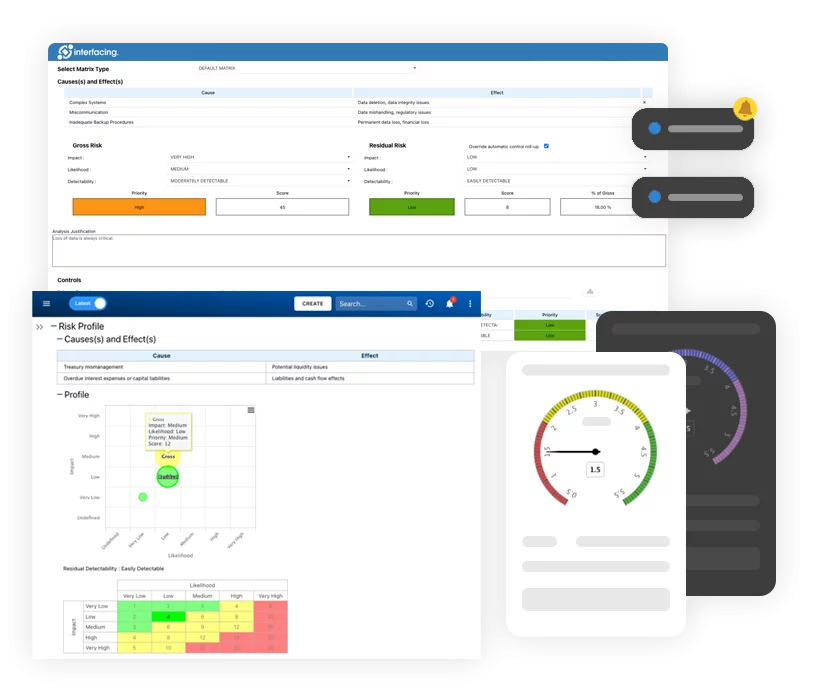
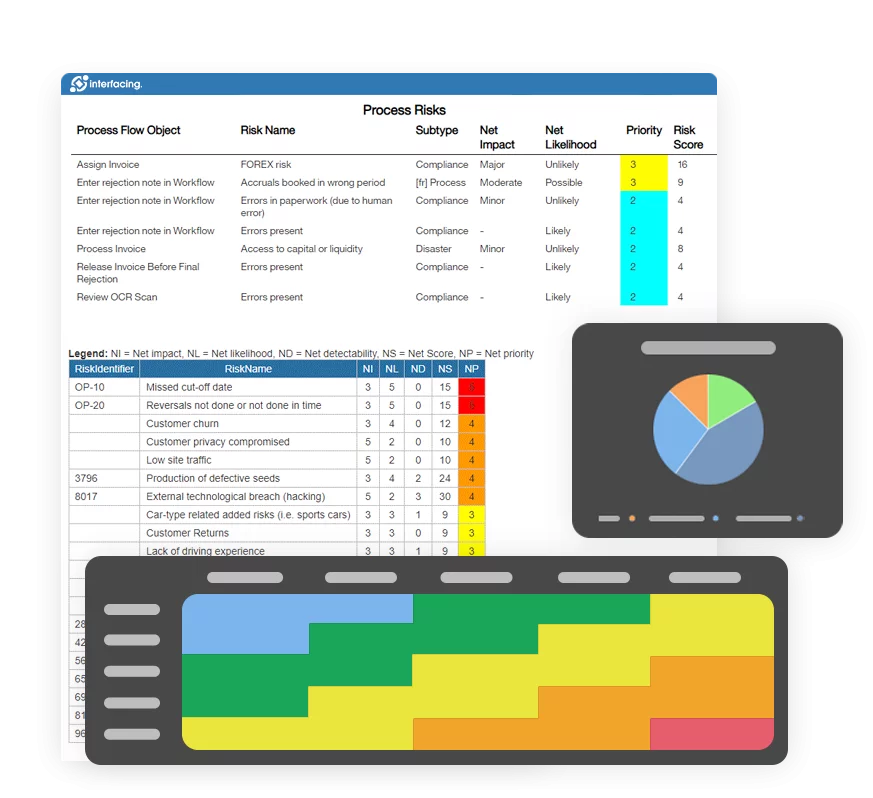
  • Risks, controls, and regulatory obligations

  • Training, change history, and effectiveness checks

AI without this connective tissue behaves like a powerful microscope pointed at the wrong specimen. It may detect patterns, but it cannot explain why they matter or what must change.

This is why many AI-powered QMS pilots stall. They surface correlations but fail to produce defensible decisions. Quality leaders are left with dashboards that look impressive but cannot be used during audits or management reviews.

The real role of AI in Quality 4.0

AI is not the decision-maker in modern quality systems. It is the amplifier.

When AI is embedded inside an Integrated Management System, it can:

  • Highlight risk concentrations across related processes

  • Detect recurring quality issues tied to specific controls or roles

  • Accelerate impact analysis when procedures or regulations change

  • Surface training gaps linked to real operational failures


Notice the distinction. AI is not replacing quality judgment. It is strengthening it by working within a governed model of the organization.

This aligns with regulatory expectations. Standards increasingly emphasize risk-based thinking, process ownership, and systemic control. AI that operates outside this structure increases exposure instead of reducing it.

Why traditional QMS architectures fall short

Most legacy QMS platforms were designed as event trackers and document repositories. They record outcomes after problems occur. They do not model how quality is produced day to day.

Adding AI on top of a fragmented architecture does not fix this. It magnifies fragmentation.

Without a shared operational model, AI cannot reliably connect:

  • A deviation to the exact process step that failed

  • A CAPA to the risk it was meant to mitigate

  • A training record to the behavior it was supposed to change

This is where many organizations misdiagnose the problem. They blame the AI when the real issue is the absence of context.

The uncomfortable truth for quality leaders

AI will not save a weak quality system.

If your QMS lacks clear process ownership, controlled documentation, and risk visibility, AI will simply surface those weaknesses faster. That can be uncomfortable, but it is also an opportunity.

The organizations gaining real value from AI in quality are not the ones chasing automation first. They are the ones investing in context, structure, and governance, then using AI to strengthen what already exists.

How Interfacing approaches AI-assisted quality

Interfacing approaches AI-assisted quality from the premise that intelligence without structure creates risk, not improvement. Rather than layering AI on top of isolated quality records, Interfacing embeds AI within a fully governed Integrated Management System where quality is inseparable from how work is designed, executed, and controlled.

Quality events are not treated as standalone data points. They are intrinsically linked to the processes that produced them, the documents that guided execution, the roles responsible for outcomes, the risks and controls in place, and the training that enabled performance. Within this unified operational model, AI is used to accelerate insight and strengthen human decision-making, not replace it.

AI-assisted analysis can surface patterns across deviations, CAPAs, audits, and complaints, but those insights remain explainable, traceable, and defensible because they are grounded in real operational context.

This approach aligns with regulatory expectations by preserving accountability, audit readiness, and transparency, while enabling organizations to move beyond reactive quality management toward proactive, risk-informed quality improvement driven by structured context rather than disconnected automation.

Why Choose Interfacing?


With over two decades of AI, Quality, Process, and Compliance software expertise, Interfacing continues to be a leader in the industry. To-date, it has served over 500+ world-class enterprises and management consulting firms from all industries and sectors. We continue to provide digital, cloud & AI solutions that enable organizations to enhance, control and streamline their processes while easing the burden of regulatory compliance and quality management programs.

To explore further or discuss how Interfacing can assist your organization, please complete the form below.

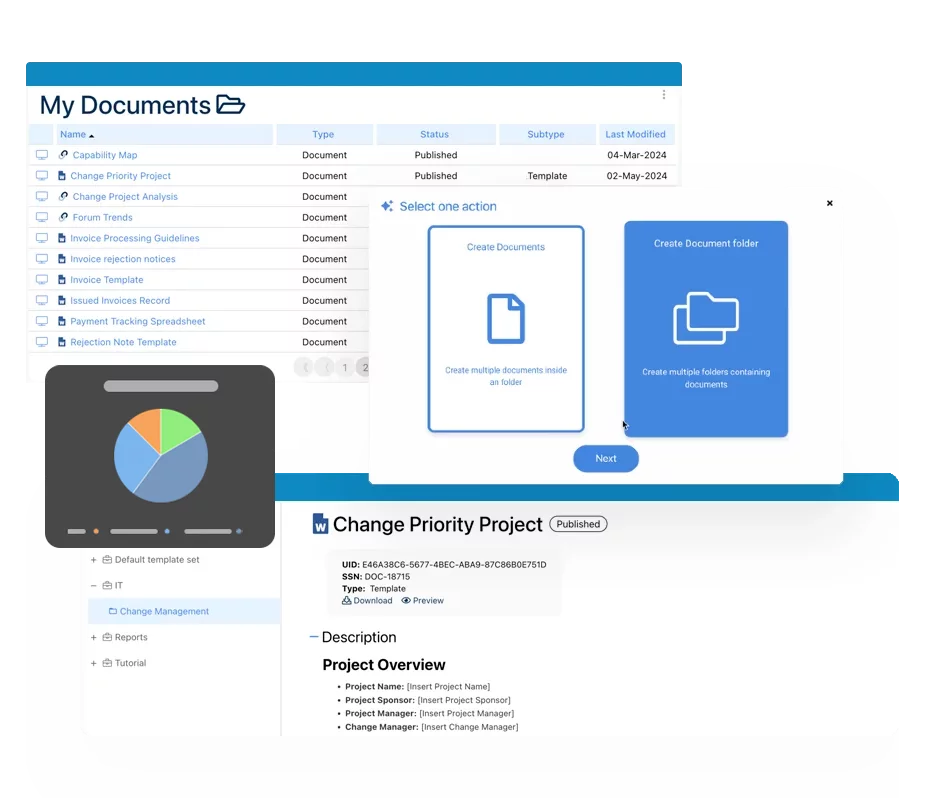
Documentation: Driving Transformation, Governance and Control

• Gain real-time, comprehensive insights into your operations.
• Improve governance, efficiency, and compliance.
• Ensure seamless alignment with regulatory standards.

eQMS: Automating Quality & Compliance Workflows & Reporting

• Simplify quality management with automated workflows and monitoring.
• Streamline CAPA, supplier audits, training and related workflows.
• Turn documentation into actionable insights for Quality 4.0

Low-Code Rapid Application Development: Accelerating Digital Transformation

• Build custom, scalable applications swiftly
• Reducing development time and cost
• Adapt faster and stay agile in the face of evolving customer and business needs.


AI to Transform your Business!

The AI-powered tools are designed to streamline operations, enhance compliance, and drive sustainable growth. Check out how AI can:
• Respond to employee inquiries
• Transform videos into processes
• Assess regulatory impact & process improvements
• Generate forms, processes, risks, regulations, KPIs & more
• Parse regulatory standards into requirements


Learn more about EPC's AI Use Cases
CONTACT US

Request Free Demo

Document, analyze, improve, digitize and monitor your business processes, risks, regulatory requirements and performance indicators within Interfacing’s Digital Twin integrated management system the Enterprise Process Center®!

Trusted by Customers Worldwide!

More than 400+ world-class enterprises and management consulting firms