

Passing audits is no longer the benchmark for compliance success.
In highly regulated environments, the real challenge is sustaining compliance as operations, systems, and regulations constantly change.
This is where audit resilience, not audit readiness, becomes a strategic necessity.
Why Regulated Enterprises Struggle With Audits
In regulated industries, audits are not occasional disruptions. They are a permanent condition of operating.
Healthcare, life sciences, aerospace, financial services, energy, and government organizations all face a similar reality, complex processes, evolving regulations, distributed ownership, and very little tolerance for error.
Yet many compliance programs are still built around episodic preparation. Evidence is collected periodically. Documentation is updated reactively. Controls are validated in isolation. The organization looks compliant at audit time, but fragile everywhere else.
This model breaks down under pressure because it treats compliance as a reporting exercise rather than an operating capability.
Audit Readiness Is Necessary, But Insufficient
Audit readiness answers a narrow question, Can we pass the next audit?
For regulated enterprises, that question is too small.
Passing an audit does not mean controls are working as intended. It does not mean risks are understood in context. And it does not mean the organization can absorb change without creating new compliance gaps.
Audit readiness focuses on outputs. Audit resilience focuses on behavior.
The difference becomes visible the moment something changes.
Defining Audit Resilience
Audit resilience is the ability to sustain compliance continuously, even as processes evolve, systems change, and regulations shift.
A resilient organization does not prepare for audits by assembling evidence. It produces evidence naturally through the way work is designed, governed, and executed.
In this model:
Controls are embedded into processes, not layered on top
Accountability is explicit and enforced systemically
Traceability exists by design, not reconstruction
Compliance adapts as operations change, not months later
Audits become validations of operational discipline, not stress tests of documentation.
The Audit Resilience Model
Audit resilience is not achieved through a single tool or initiative. It emerges from a connected operating model built on five core principles.
Process-Centered Compliance
In resilient organizations, compliance starts with how work actually happens. Processes are not treated as diagrams for reference. They are the backbone that connects roles, systems, risks, controls, documents, and outcomes. When compliance is anchored to processes, context is preserved and accountability is clear. This eliminates the common failure where policies say one thing and operations do another.
Embedded Controls and Accountability
Controls that exist outside of execution are fragile. In the audit resilience model, controls are embedded directly into operational workflows. Ownership is enforced by the system itself, not dependent on reminders or heroics. When controls are part of how work is executed, evidence is created automatically, and deviations surface early.
Continuous Traceability
Traceability is not about linking documents after the fact. It is about maintaining live relationships between processes, risks, controls, regulations, and evidence. When something changes, a process update, a regulatory revision, a system modification, the impact is immediately visible. This is what allows organizations to respond before auditors identify the gap. This prevents drift and ensures the operating model remains aligned with regulatory expectations.
Governed Change Management
Change is the single greatest threat to compliance. Audit-resilient organizations treat change as a governed event, not an operational afterthought. Process changes, policy updates, and system modifications are assessed for compliance impact before they are released.
AI-Assisted Insight Within Governance
AI strengthens audit resilience when it is applied conservatively and transparently. Within a governed structure, AI-assisted insight helps identify emerging gaps, surface control weaknesses, and highlight risk patterns across the operating model. It does not replace judgment. It augments visibility. Decisions remain explainable, auditable, and under human control, which is essential in regulated environments.
From Audit Events to Operational Confidence
Organizations that adopt the audit resilience model experience a fundamental shift.
Audit preparation becomes unnecessary because compliance is already embedded. Findings decrease because gaps are identified earlier. Confidence increases because leadership understands how compliance behaves under change.
Audit readiness may help you pass.
Audit resilience helps you operate.
How Interfacing Enables the Audit Resilience Model
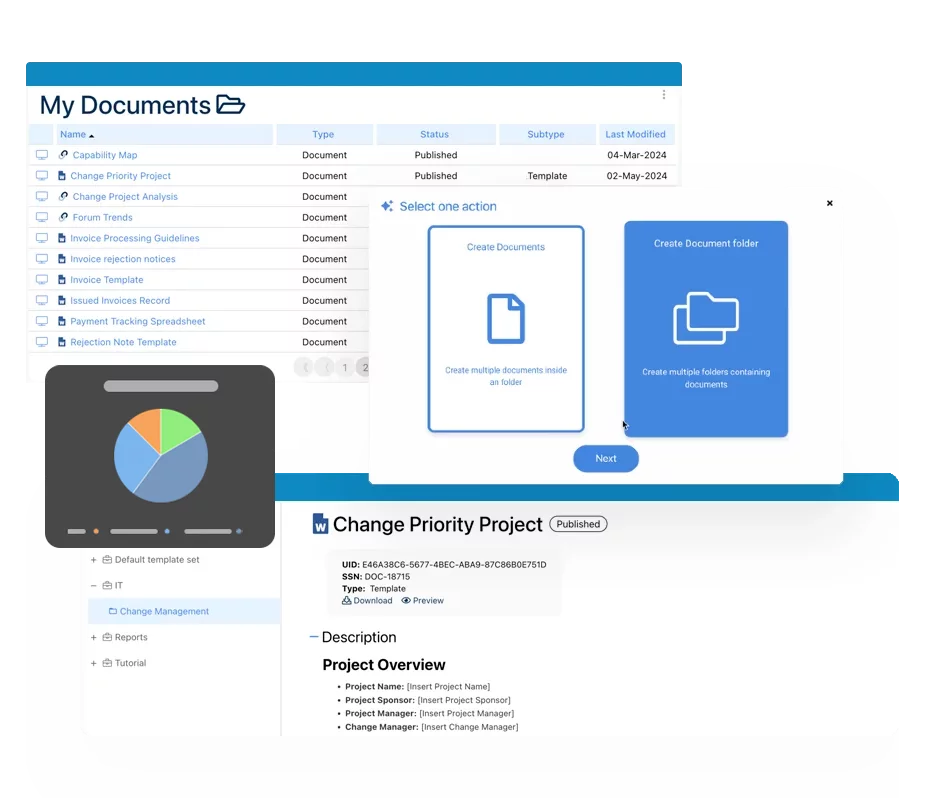
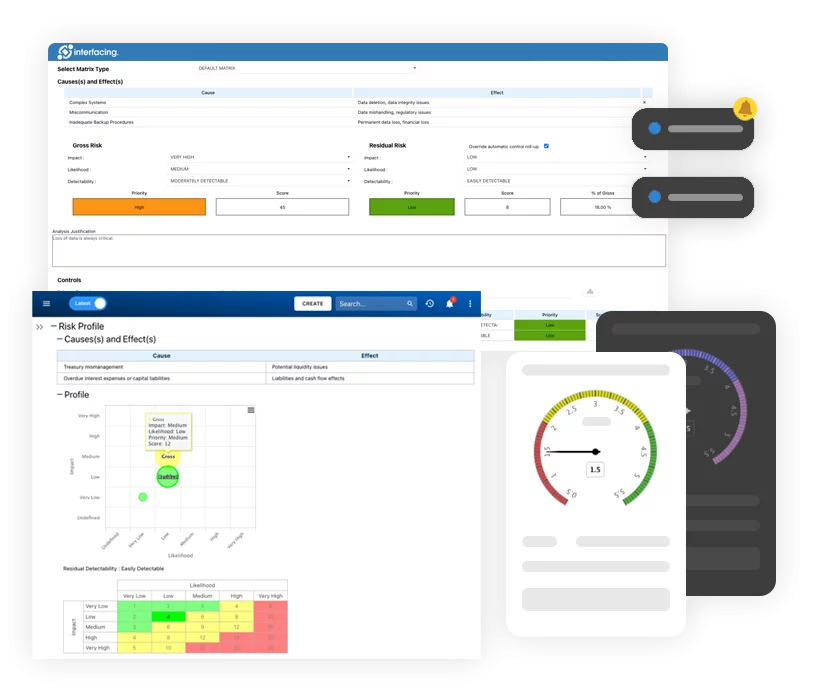
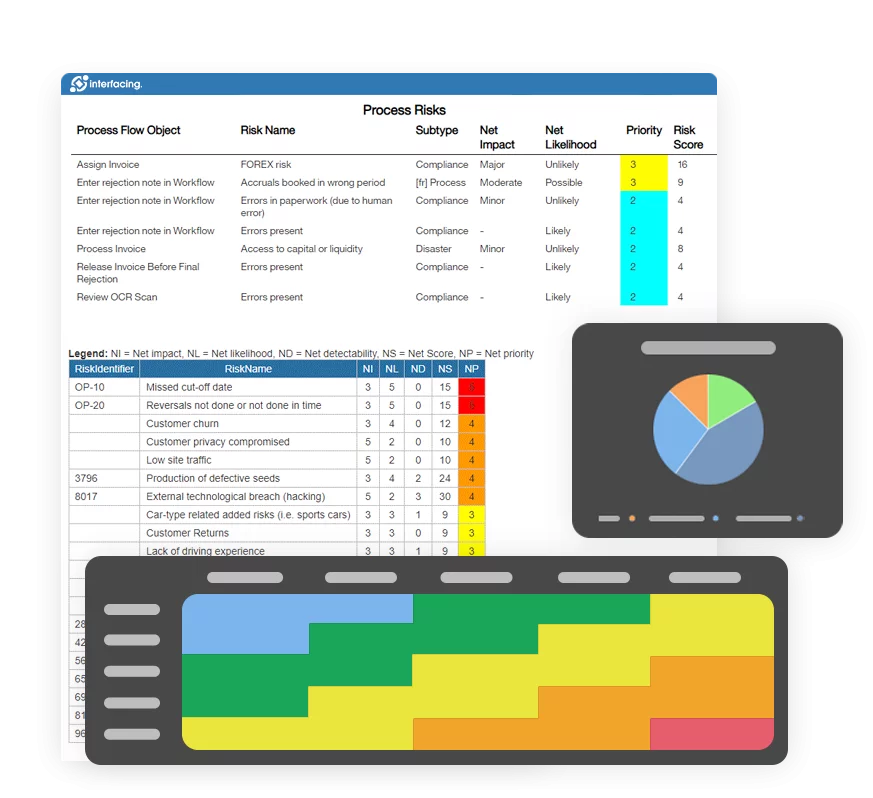
Interfacing enables audit resilience by providing an Integrated Management System that connects processes, risks, controls, documentation, and accountability into a single operating model.
Rather than treating compliance as a separate layer, Interfacing embeds it directly into how organizations design and manage work. AI-assisted capabilities support insight and impact analysis, while governance, ownership, and traceability remain structured and auditable.
This allows regulated enterprises to scale compliance without increasing complexity.
Why Choose Interfacing?
With over two decades of AI, Quality, Process, and Compliance software expertise, Interfacing continues to be a leader in the industry. To-date, it has served over 500+ world-class enterprises and management consulting firms from all industries and sectors. We continue to provide digital, cloud & AI solutions that enable organizations to enhance, control and streamline their processes while easing the burden of regulatory compliance and quality management programs.
To explore further or discuss how Interfacing can assist your organization, please complete the form below.

Documentation: Driving Transformation, Governance and Control
• Gain real-time, comprehensive insights into your operations.
• Improve governance, efficiency, and compliance.
• Ensure seamless alignment with regulatory standards.

eQMS: Automating Quality & Compliance Workflows & Reporting
• Simplify quality management with automated workflows and monitoring.
• Streamline CAPA, supplier audits, training and related workflows.
• Turn documentation into actionable insights for Quality 4.0

Low-Code Rapid Application Development: Accelerating Digital Transformation
• Build custom, scalable applications swiftly
• Reducing development time and cost
• Adapt faster and stay agile in the face of
evolving customer and business needs.
AI to Transform your Business!
The AI-powered tools are designed to streamline operations, enhance compliance, and drive sustainable growth. Check out how AI can:
• Respond to employee inquiries
• Transform videos into processes
• Assess regulatory impact & process improvements
• Generate forms, processes, risks, regulations, KPIs & more
• Parse regulatory standards into requirements


Request Free Demo
Document, analyze, improve, digitize and monitor your business processes, risks, regulatory requirements and performance indicators within Interfacing’s Digital Twin integrated management system the Enterprise Process Center®!

Trusted by Customers Worldwide!
More than 400+ world-class enterprises and management consulting firms