

Interfacing

sales@interfacing.com
Collaboration is often treated as a cultural challenge, but most collaboration failures are structural. Without clear process governance, even the best collaboration tools amplify confusion instead of coordination.
As organizations scale, governance becomes the difference between shared ownership and shared risk.

Collaboration Is Not a Tooling Problem


When organizations talk about collaboration, the conversation usually starts with platforms, Teams, SharePoint, workflow tools, or digital workspaces. The assumption is simple, if people can communicate faster, collaboration will improve.

That assumption rarely holds.

What actually happens is that collaboration accelerates existing dysfunctions. Decisions become harder to trace. Ownership blurs. Processes fragment across departments. Instead of alignment, organizations get parallel interpretations of how work is supposed to happen.

This is not a collaboration failure. It is a governance failure.

True collaboration depends on a shared understanding of how work flows, who owns which decisions, and how change is controlled. Without that foundation, collaboration tools merely make disorder more visible.

Governance Is the Missing Operating Layer

Process governance is often misunderstood as bureaucracy. In reality, it is an enabling structure that allows collaboration to scale safely.

Governance answers questions collaboration alone cannot:

  • Who is accountable when a process crosses functional boundaries?

  • How are decisions documented, reviewed, and enforced?

  • What happens when policies, risks, or regulations change?

  • How do teams collaborate without rewriting processes informally?

This is where business process governance becomes essential. By defining ownership, controls, escalation paths, and change mechanisms, governance creates a shared operating model that collaboration can rely on.

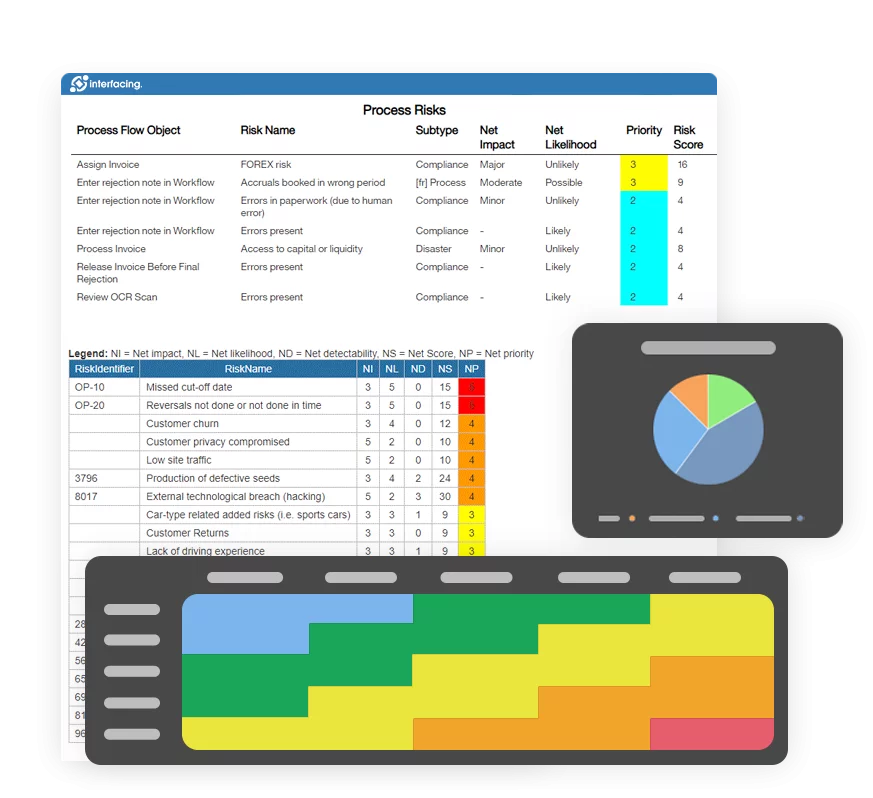
Interfacing’s approach to business process governance establishes this operating layer by connecting processes, roles, documentation, risks, and controls into a single governed system rather than disconnected artifacts.

Governance Is the Missing Operating Layer

Process governance is often misunderstood as bureaucracy. In reality, it is an enabling structure that allows collaboration to scale safely. Governance answers questions collaboration alone cannot:

  • Who is accountable when a process crosses functional boundaries?
  • How are decisions documented, reviewed, and enforced?
  • What happens when policies, risks, or regulations change?
  • How do teams collaborate without rewriting processes informally?

This is where business process governance becomes essential. By defining ownership, controls, escalation paths, and change mechanisms, governance creates a shared operating model that collaboration can rely on.

Interfacing’s approach to business process governance establishes this operating layer by connecting processes, roles, documentation, risks, and controls into a single governed system rather than disconnected artifacts.

Why Collaboration Breaks Down at Scale

Collaboration often works in small teams because informal alignment is still possible. As organizations grow, informal agreements no longer scale.

  • Teams adapting processes locally without visibility
  • Compliance requirements interpreted differently across regions
  • Decision authority shifting without documentation
  • Audits uncovering gaps no one realized existed

These are not people problems. They are structural gaps caused by the absence of governance embedded directly into process execution.

Without governance, collaboration becomes improvisation. Improvisation might feel agile, but in regulated or complex environments, it introduces operational and compliance risk.

Governance Does Not Replace Collaboration, It Enables It


Governance is often perceived as something that slows teams down, but that assumption confuses poor governance with effective governance. When governance is designed around how work actually flows, it removes friction rather than adding it. Clear ownership reduces rework, defined escalation paths accelerate decision-making, and controlled change management prevents local optimizations from creating enterprise-wide issues.

By anchoring collaboration to governed processes, organizations shift from consensus-driven work to coordinated execution. Teams still collaborate, but within a shared operating model that preserves accountability and intent. This is where an Integrated Management System becomes critical. By connecting collaboration directly to governed process models, controlled documentation, risk structures, and compliance obligations, Interfacing’s IMS ensures collaboration produces consistent, auditable outcomes rather than fragmented interpretations of how work should be done.

The Role of AI in Governance-Enabled Collaboration


AI does not replace governance, and positioning it that way would be misleading. Where AI delivers value is in strengthening governance by improving visibility and decision support. Within Interfacing’s IMS, AI-assisted capabilities help surface process dependencies during change, support impact analysis across policies and procedures, and identify inconsistencies between documented standards and how work is actually executed.

Used responsibly, AI becomes AI-assisted and AI-informed, augmenting human judgment rather than bypassing it. Collaboration improves because teams can see how their actions affect upstream and downstream processes, reducing conflict, rework, and misalignment before they become systemic problems.

Collaboration, Governance, and Regulatory Confidence


In regulated environments, collaboration without governance is inherently risky. Informal process changes, undocumented decisions, and uncontrolled workarounds create exposure that often remains invisible until an audit or incident forces it into the open. Governance embeds compliance directly into the way collaboration happens, rather than attempting to layer controls on after the fact.

When collaboration is linked to governed processes, organizations gain traceability of decisions, consistency across teams and geographies, and audit readiness by design. Equally important, they reduce dependence on tribal knowledge that disappears when people change roles or leave the organization. Governance is not a constraint on collaboration, it is the mechanism that makes collaboration trustworthy at scale.

How Interfacing Enables Governed Collaboration


Interfacing approaches collaboration through a governed, process-centric foundation rather than standalone collaboration tooling. By centralizing business process governance, enforcing role-based accountability, integrating document and policy control, and supporting safe change through AI-assisted impact analysis, Interfacing enables organizations to collaborate with confidence.

The result is an Integrated Management System that connects process, quality, risk, and compliance into a single operating model. Collaboration scales without sacrificing control, consistency, or regulatory confidence.

Why Choose Interfacing?


With over two decades of AI, Quality, Process, and Compliance software expertise, Interfacing continues to be a leader in the industry. To-date, it has served over 500+ world-class enterprises and management consulting firms from all industries and sectors. We continue to provide digital, cloud & AI solutions that enable organizations to enhance, control and streamline their processes while easing the burden of regulatory compliance and quality management programs.

To explore further or discuss how Interfacing can assist your organization, please complete the form below.

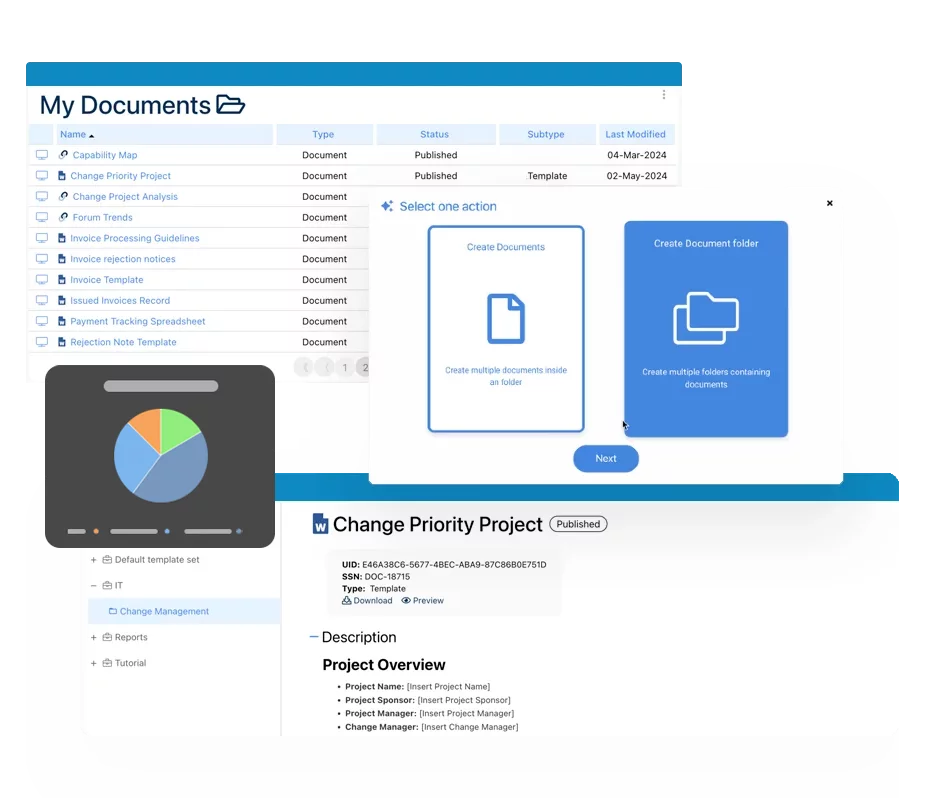
Documentation: Driving Transformation, Governance and Control

• Gain real-time, comprehensive insights into your operations.
• Improve governance, efficiency, and compliance.
• Ensure seamless alignment with regulatory standards.

eQMS: Automating Quality & Compliance Workflows & Reporting

• Simplify quality management with automated workflows and monitoring.
• Streamline CAPA, supplier audits, training and related workflows.
• Turn documentation into actionable insights for Quality 4.0

Low-Code Rapid Application Development: Accelerating Digital Transformation

• Build custom, scalable applications swiftly
• Reducing development time and cost
• Adapt faster and stay agile in the face of evolving customer and business needs.


AI to Transform your Business!

The AI-powered tools are designed to streamline operations, enhance compliance, and drive sustainable growth. Check out how AI can:
• Respond to employee inquiries
• Transform videos into processes
• Assess regulatory impact & process improvements
• Generate forms, processes, risks, regulations, KPIs & more
• Parse regulatory standards into requirements


Learn more about EPC's AI Use Cases
CONTACT US

Request Free Demo

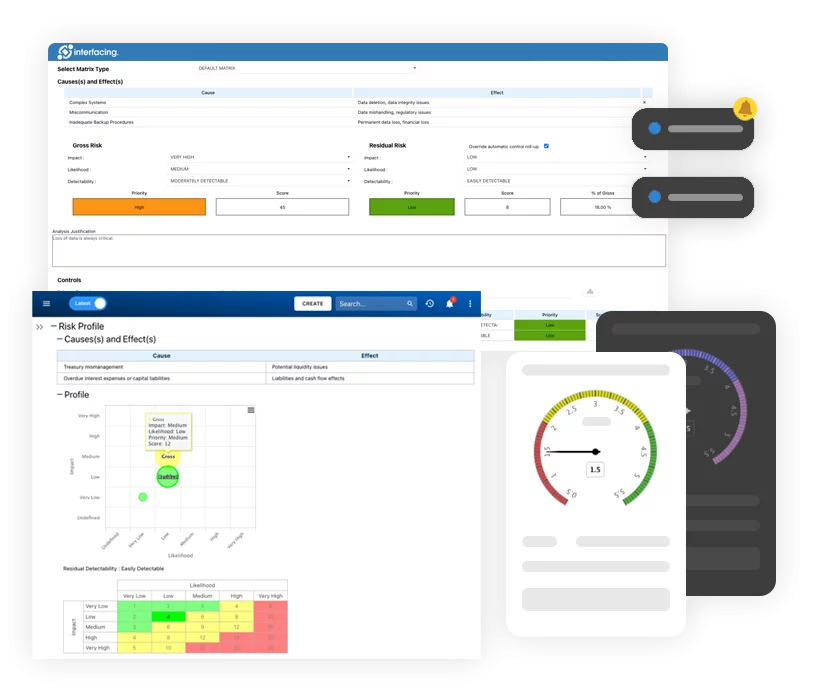
Document, analyze, improve, digitize and monitor your business processes, risks, regulatory requirements and performance indicators within Interfacing’s Digital Twin integrated management system the Enterprise Process Center®!
Trusted by Customers Worldwide!

More than 400+ world-class enterprises and management consulting firms