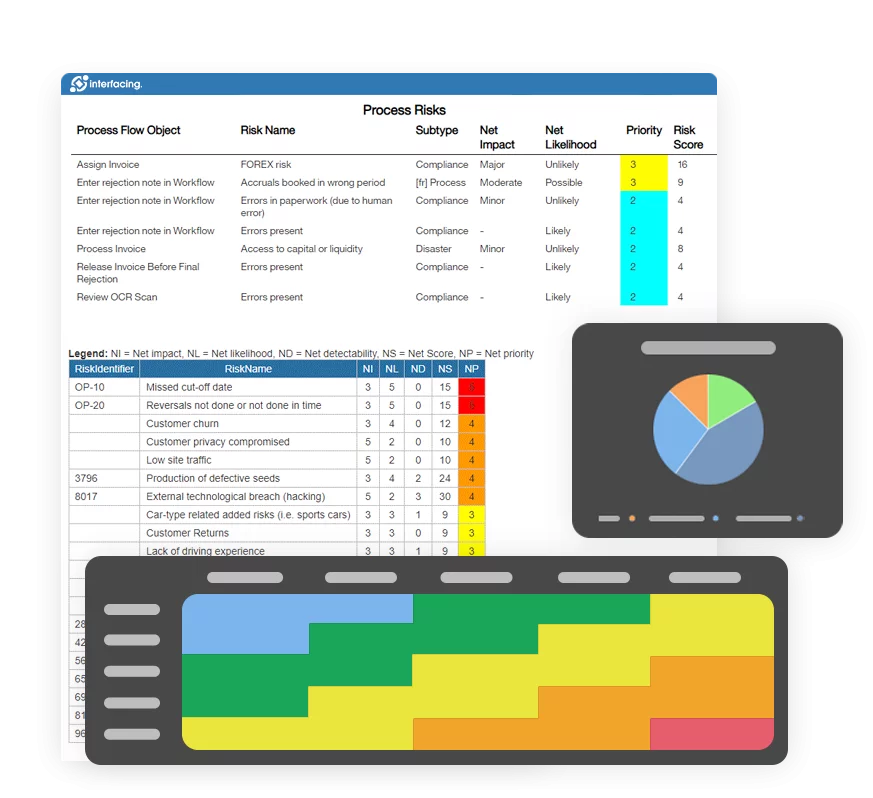


Process visibility alone does not satisfy modern compliance. Without risk, controls, and regulatory traceability connected to processes, organizations are exposed.
For years, Business Process Management (BPM) has been the backbone of operational improvement.
Â
Organizations invested heavily in modeling workflows, optimizing efficiency, and documenting how work gets done. And for good reason. BPM brings structure, clarity, and repeatability to complex operations.
But for compliance-driven organizations, especially those operating in highly regulated industries like life sciences, aerospace, financial services, energy, and government, BPM on its own is no longer enough.
Regulators are not asking how work should happen. They are asking how work is controlled, evidenced, monitored, and continuously improved across changing regulations, risks, and operational realities. This is where BPM, when deployed in isolation, begins to show its limits.
What BPM Does Well, and Where It Stops
BPM excels at documenting and standardizing processes. It answers questions such as:
• What are the steps in a process?
• Who performs each activity?
• How does work flow across departments and systems?
This level of clarity is essential. However, BPM typically stops at process logic and structure. It does not inherently answer:
• Which regulations govern this process?
• What risks are introduced if this process changes?
• Where are the controls that mitigate those risks?
• Which documents, records, and training evidence support compliance?
• What happens when regulations or policies change?
In compliance-driven environments, these unanswered questions are where audit findings, regulatory gaps, and operational risk begin to surface.

The Compliance Reality BPM Was Not Designed to Solve
Â
Modern compliance is no longer static. Regulations evolve continuously. Auditors expect traceability across systems, documents, training records, risk assessments, and corrective actions.
When BPM operates alone, organizations often compensate by layering disconnected systems around it. A document management system here, a risk register there, audit spreadsheets somewhere else. The result is fragmented compliance that relies heavily on manual coordination and tribal knowledge.
This creates three structural weaknesses:
No end-to-end traceability
Processes exist separately from risks, controls, and regulatory obligations.Reactive compliance
Issues are discovered during audits rather than prevented through continuous monitoring.High operational friction
Teams spend more time chasing evidence than improving performance.
Why Compliance Requires More Than Process Maps
Compliance is not about knowing how work flows. It is about proving that work is governed, controlled, and resilient.
That requires a connected operating model where processes are linked to:
• Regulatory requirements and standards
• Risks and internal controls
• Policies, SOPs, and records
• Training and role-based responsibilities
• Audit findings, CAPAs, and management review
Without this connectivity, BPM becomes a static representation of operations, not a living system of compliance.

From BPM to an Integrated Management System (IMS)
Â
This is where an Integrated Management System (IMS) becomes essential.
An IMS does not replace BPM. It extends it.
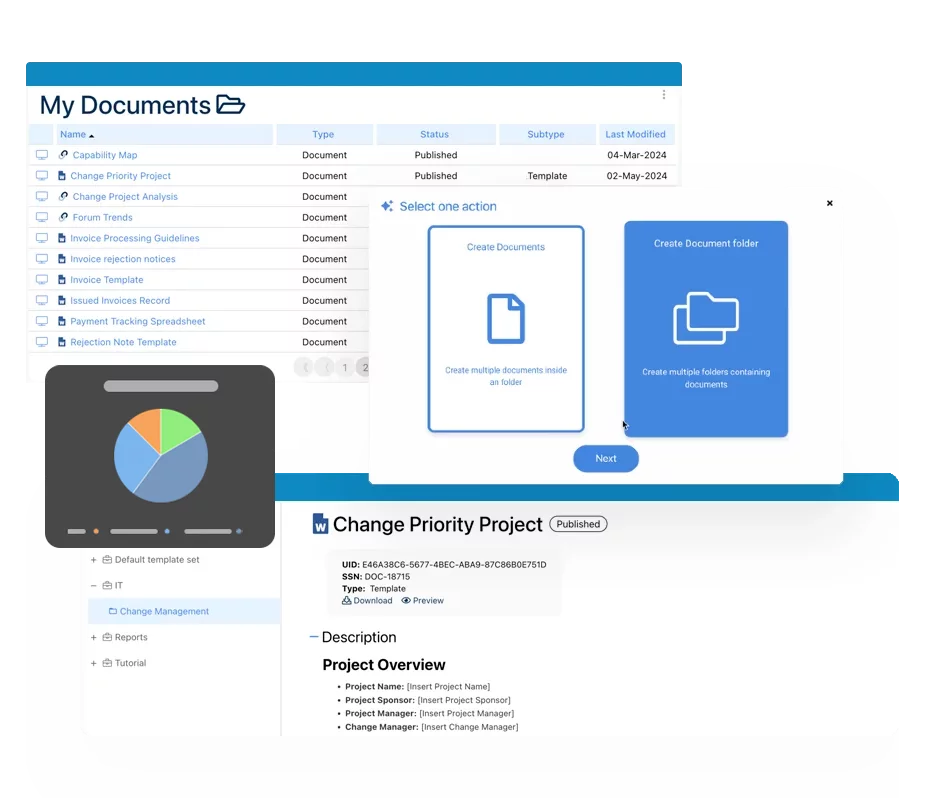
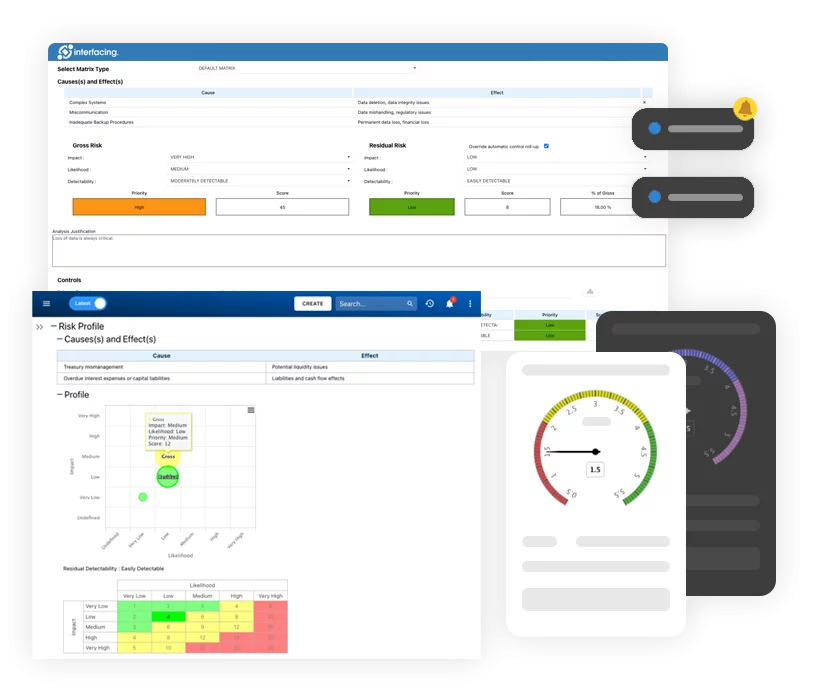
Within an IMS, BPM acts as the structural backbone, but it is enriched with governance, risk, quality, audit, and compliance intelligence. Changes to a process can automatically trigger impact analysis across related risks, documents, controls, and training requirements.
Instead of asking teams to manually assess what might be affected, the system shows them.
This shift transforms compliance from a periodic exercise into a continuous capability.
Learn more about Integrated Management Systems here:
https://interfacing.com/ai-integrated-management-system
The Role of AI in Closing the BPM Compliance Gap
Artificial Intelligence is accelerating this evolution.
AI-powered IMS platforms can:
• Analyze regulatory changes and map them to impacted processes
• Detect inconsistencies between documented processes and actual execution
• Identify risk exposure created by process changes
• Surface compliance gaps before audits reveal them
Without governance, AI introduces risk. With governance embedded into an IMS, AI becomes a compliance multiplier rather than a liability.
This distinction is critical for organizations adopting AI while remaining accountable to regulators.

A Practical Example
Consider a regulated manufacturer updating a production process.
In a BPM-only environment, the process model is updated and approved. What happens next depends on human follow-up.
In an IMS environment, that same update can automatically:
Identify impacted SOPs and work instructions
Flag training requirements for affected roles
Assess risk exposure and control effectiveness
Trigger review workflows and approvals
Update audit scope and compliance evidence
Â
The difference is not tooling. It is integration.
Â
Â
BPM Still Matters, But It Cannot Stand Alone
This is not an argument against BPM. It is an argument against treating BPM as the final destination.
For compliance-driven organizations, BPM is the foundation, not the full structure. Without integration into risk, quality, audit, and regulatory intelligence, BPM cannot meet the demands of modern governance.
Organizations that recognize this shift early are better positioned to scale, adapt, and remain audit-ready in an increasingly complex regulatory landscape.
How Interfacing Helps
Â
Interfacing Technologies Corporation delivers an AI-powered Integrated Management System that unifies BPM, Quality, Risk, Audit, and Compliance into a single governed platform.
By connecting processes to regulations, risks, documents, and performance data, Interfacing helps organizations move from static process documentation to continuous compliance and operational resilience.
Request a demo to see how BPM evolves inside a fully integrated IMS:
https://interfacing.com/ai-integrated-management-system
Q1: Is BPM sufficient for regulatory compliance?
A: BPM supports process documentation, but regulatory compliance requires integration with risk, controls, audits, and regulatory intelligence.
Q2: What is the difference between BPM and an Integrated Management System?
A: BPM focuses on process modeling, while an IMS connects processes with risk, quality, audit, and compliance data.
Q3: Why do regulated industries need more than BPM?
A: Regulated industries must demonstrate traceability, control effectiveness, and continuous compliance beyond process flow visibility.
Q4: How does AI improve compliance management?
A: AI enables impact analysis, regulatory change mapping, and early detection of compliance risks across integrated systems.
Why Choose Interfacing?
With over two decades of AI, Quality, Process, and Compliance software expertise, Interfacing continues to be a leader in the industry. To-date, it has served over 500+ world-class enterprises and management consulting firms from all industries and sectors. We continue to provide digital, cloud & AI solutions that enable organizations to enhance, control and streamline their processes while easing the burden of regulatory compliance and quality management programs.
To explore further or discuss how Interfacing can assist your organization, please complete the form below.

Documentation: Driving Transformation, Governance and Control
• Gain real-time, comprehensive insights into your operations.
• Improve governance, efficiency, and compliance.
• Ensure seamless alignment with regulatory standards.

eQMS: Automating Quality & Compliance Workflows & Reporting
• Simplify quality management with automated workflows and monitoring.
• Streamline CAPA, supplier audits, training and related workflows.
• Turn documentation into actionable insights for Quality 4.0

Low-Code Rapid Application Development: Accelerating Digital Transformation
• Build custom, scalable applications swiftly
• Reducing development time and cost
• Adapt faster and stay agile in the face of
evolving customer and business needs.
AI to Transform your Business!
The AI-powered tools are designed to streamline operations, enhance compliance, and drive sustainable growth. Check out how AI can:
• Respond to employee inquiries
• Transform videos into processes
• Assess regulatory impact & process improvements
• Generate forms, processes, risks, regulations, KPIs & more
• Parse regulatory standards into requirements


Request Free Demo
Document, analyze, improve, digitize and monitor your business processes, risks, regulatory requirements and performance indicators within Interfacing’s Digital Twin integrated management system the Enterprise Process Center®!

Trusted by Customers Worldwide!
More than 400+ world-class enterprises and management consulting firms