

Fragmented QMS, BPM, and GRC tools are creating visibility gaps that modern compliance models can no longer afford.
Compliance has outgrown the systems traditionally used to manage it.
For years, organizations have relied on separate tools to manage quality, processes, risk, governance, and documentation. Each system served a purpose, but together they created operational silos that obscured how compliance actually functions across the enterprise.
As regulatory expectations increase and operational change accelerates, this fragmented approach has become a liability. Quality teams struggle to keep procedures aligned with evolving processes. Risk registers drift away from day-to-day execution. Audit preparation turns into a manual exercise in reconciliation rather than verification.
What organizations are discovering is that compliance can no longer be treated as a collection of independent activities. It must be managed as a connected operating model, where processes, documents, risks, controls, training, and governance reinforce one another in real time.
This shift is driving the rise of hyper-connected compliance and accelerating the move away from stand-alone QMS, BPM, and GRC tools toward Integrated Management Systems.
The limits of fragmented compliance architectures
Stand-alone compliance tools were designed to solve specific problems in isolation. Quality Management Systems focus on documentation, deviations, and CAPA. Business Process Management tools model workflows and execution paths. Governance, Risk, and Compliance platforms track risks, controls, and obligations.
Individually, these systems function well. Collectively, they fail to reflect how organizations actually operate.
Processes change without automatically updating procedures.
Risks are assessed without direct visibility into execution.
Training requirements lag behind revised SOPs.
Audits depend on manual evidence gathering across multiple platforms.
Even when integrations exist, they often connect systems at a technical level rather than a semantic one. Data moves, but context is lost. Dependencies remain implicit rather than explicit. Compliance becomes something that is reconstructed after the fact rather than continuously understood.
As regulatory scrutiny increases and organizations adopt automation and AI, these limitations become increasingly difficult to defend.
From compliance tooling to compliance operating models
The shift underway is not simply about replacing software. It reflects a deeper change in how compliance is expected to function within the organization.
Modern compliance is no longer about proving that documents exist or controls are defined. It is about demonstrating how compliance is embedded into daily operations and how changes are assessed, communicated, and managed across the enterprise.
This requires a shared operational backbone where compliance-relevant elements coexist rather than compete for relevance. Processes define how work is done. Documents govern how it should be done. Risks explain what could go wrong. Controls enforce consistency. Training ensures readiness. Governance provides oversight.
When these elements are managed in isolation, compliance remains reactive. When they are managed together, compliance becomes continuous.
This is the distinction that Integrated Management Systems introduce.
Hyper-connected compliance as the new operating model
What is emerging is not a new category of tooling, but a fundamental shift in how compliance is managed across the organization. As regulatory demands increase and operational change accelerates, compliance can no longer exist as a set of parallel activities spread across disconnected systems.
AI governance, modern quality management, regulatory intelligence, audit readiness, and operational resilience all rely on the same underlying capability: a shared understanding of how processes, risks, controls, documentation, and people interact in practice. When these elements are managed in isolation, organizations are forced into reactive compliance, where evidence is assembled after the fact and change introduces uncertainty.
Hyper-connected compliance represents a different operating model. It assumes that compliance must evolve alongside operations, not trail behind them. In this model, processes provide the structural backbone, documents define controlled execution, risks and controls are embedded directly into workflows, and training reflects real operational responsibilities. Each element reinforces the others within a single, connected system.
An Integrated Management System enables this model by establishing a common structure and shared context across quality, risk, governance, and execution. Instead of reconciling information across stand-alone QMS, BPM, and GRC tools, organizations gain continuous visibility into how compliance is designed, implemented, and maintained.
As organizations adopt automation and artificial intelligence, this connected foundation becomes essential. Without it, AI initiatives lack reliable context, audits remain manual, and compliance continues to depend on static documentation. With it, compliance becomes adaptive, traceable, and resilient, supporting change rather than resisting it.
What “replacement” really means in practice
IMS replacing stand-alone compliance tools does not mean eliminating functionality. It means absorbing that functionality into a single system of record.
Quality management becomes process-aware rather than document-centric.
Process management becomes risk-informed rather than execution-only.
Risk management becomes operationally actionable rather than abstract.
Governance becomes continuous rather than episodic.
In an IMS environment, a quality event is not just logged. It is analyzed in context. A control is not just documented. It is monitored through execution. A regulatory change is not just recorded. It is mapped, assessed, and acted upon.
The result is not more complexity, but less friction. Compliance stops being something teams prepare for and becomes something they operate within.

Why IMS aligns with the future of compliance and AI
Artificial intelligence is accelerating the shift toward integrated compliance models, not replacing them.
AI requires structured, contextual data to deliver reliable insights. When compliance information is fragmented across systems, AI outputs become unreliable or incomplete. Impact analysis, predictive risk modeling, and automated controls only work when the system understands relationships, dependencies, and operational reality.
IMS provides the structured foundation that AI depends on. By unifying processes, risks, documents, and controls within a shared model, organizations enable AI to support compliance rather than undermine it.
This alignment is becoming critical as regulators, auditors, and internal stakeholders expect faster responses, deeper transparency, and continuous assurance.

The move toward hyper-connected compliance is not a technology trend.
It is a response to structural realities.
Organizations can no longer afford compliance models that rely on disconnected systems, manual reconciliation, and after-the-fact validation. As operations become more dynamic and regulatory scrutiny increases, compliance must be designed into how work is executed, not layered on afterward.
Integrated Management Systems reflect this shift. By unifying process management, quality, risk, governance, and execution within a shared structure, IMS replaces fragmented oversight with continuous visibility and control.
For organizations navigating regulatory complexity, digital transformation, and AI adoption, the question is no longer whether integration is necessary. It is whether existing architectures can support the level of connectivity modern compliance demands.
Hyper-connected compliance answers that question, and IMS is the system enabling it.
How Interfacing Helps
Interfacing enables organizations to move beyond fragmented compliance architectures with an AI-powered Integrated Management System that unifies quality, process, risk, and governance management into a single operational backbone.
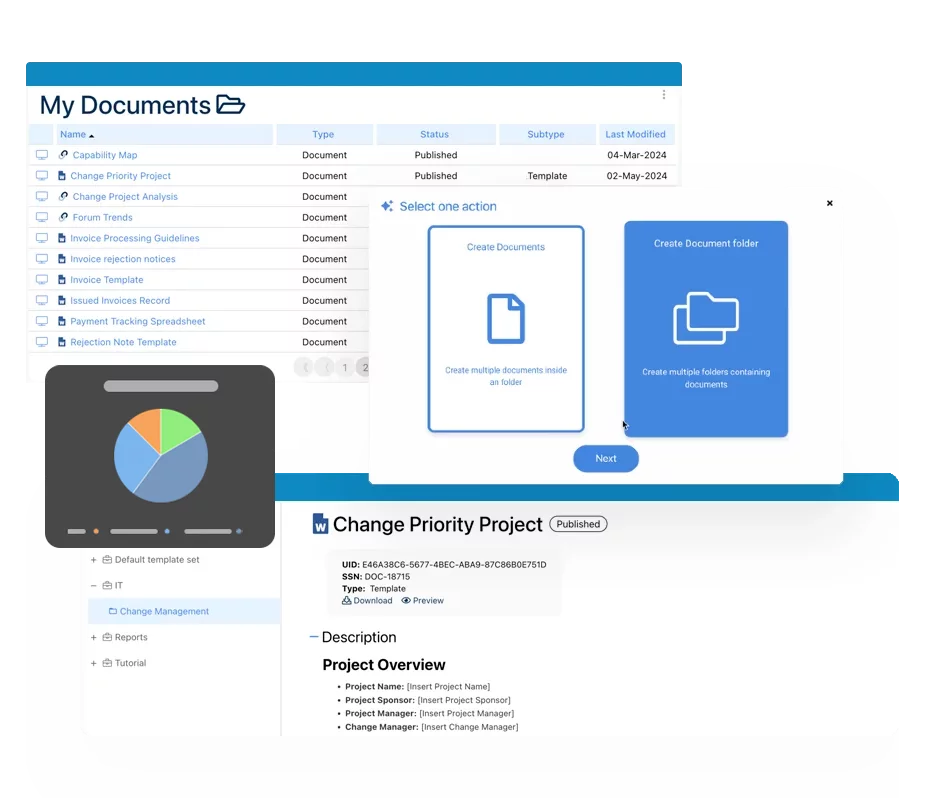
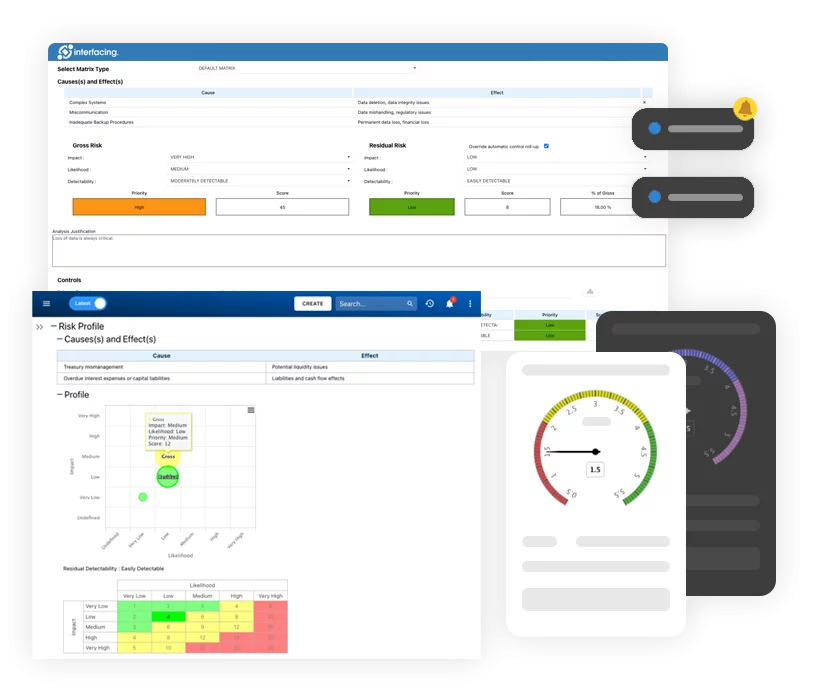
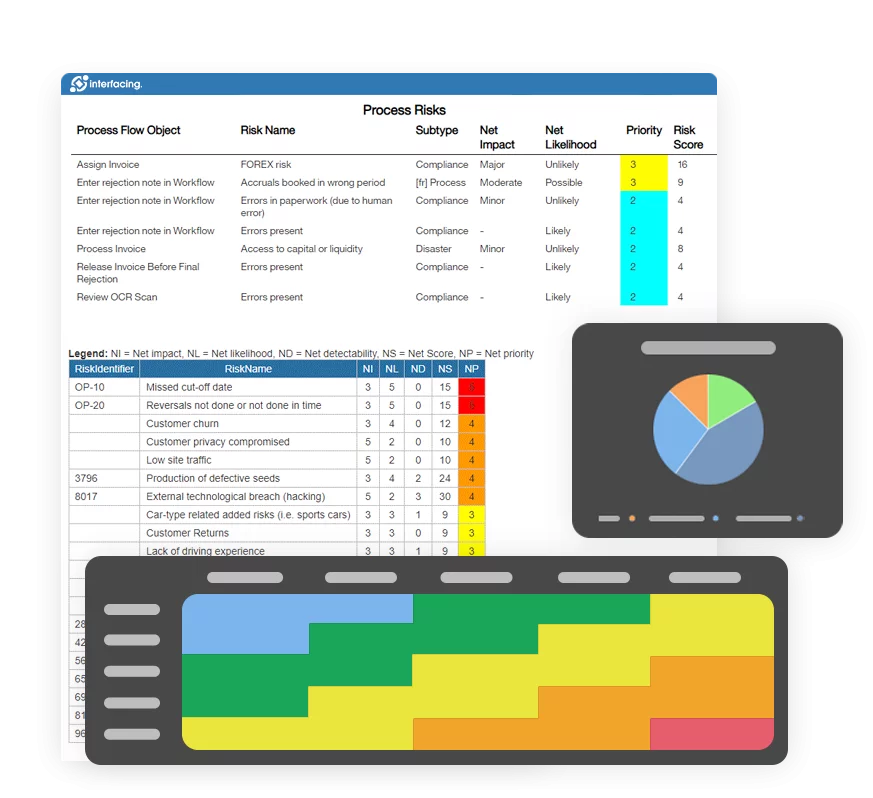
Our platform connects process architecture, document lifecycle management, CAPA, audit and inspection workflows, risk and control management, training, and regulatory intelligence within a shared, traceable system model. This allows organizations to maintain continuous compliance visibility, automate impact analysis, and embed governance directly into execution.
By aligning compliance with how work is actually performed, Interfacing helps organizations reduce risk, improve audit readiness, and scale compliance without adding complexity.
Request a demo:
https://interfacing.com/ai-integrated-management-system
Question 1
What is hyper-connected compliance?
Answer
Hyper-connected compliance is an operating model where processes, documents, risks, controls, training, and governance are managed within a single integrated system, enabling continuous visibility and traceability across compliance activities.
Question 2
Why are stand-alone QMS, BPM, and GRC tools no longer sufficient?
Answer
Stand-alone tools manage individual compliance functions but lack shared context. This fragmentation increases manual effort, audit risk, and limits automation as regulatory complexity grows.
Question 3
What is an Integrated Management System (IMS)?
Answer
An Integrated Management System unifies quality management, process execution, risk and control management, governance, and compliance workflows into a single structured platform.
Question 4
How does IMS support AI-driven compliance?
Answer
IMS provides structured, contextual data across processes, risks, and controls, enabling AI to perform accurate impact analysis, automation, and regulatory intelligence.
Question 5
Is IMS only relevant for highly regulated industries?
Answer
While IMS is essential in regulated industries, any organization managing complex operations, risk, or governance can benefit from a hyper-connected compliance model.
Why Choose Interfacing?
With over two decades of AI, Quality, Process, and Compliance software expertise, Interfacing continues to be a leader in the industry. To-date, it has served over 500+ world-class enterprises and management consulting firms from all industries and sectors. We continue to provide digital, cloud & AI solutions that enable organizations to enhance, control and streamline their processes while easing the burden of regulatory compliance and quality management programs.
To explore further or discuss how Interfacing can assist your organization, please complete the form below.

Documentation: Driving Transformation, Governance and Control
• Gain real-time, comprehensive insights into your operations.
• Improve governance, efficiency, and compliance.
• Ensure seamless alignment with regulatory standards.

eQMS: Automating Quality & Compliance Workflows & Reporting
• Simplify quality management with automated workflows and monitoring.
• Streamline CAPA, supplier audits, training and related workflows.
• Turn documentation into actionable insights for Quality 4.0

Low-Code Rapid Application Development: Accelerating Digital Transformation
• Build custom, scalable applications swiftly
• Reducing development time and cost
• Adapt faster and stay agile in the face of
evolving customer and business needs.
AI to Transform your Business!
The AI-powered tools are designed to streamline operations, enhance compliance, and drive sustainable growth. Check out how AI can:
• Respond to employee inquiries
• Transform videos into processes
• Assess regulatory impact & process improvements
• Generate forms, processes, risks, regulations, KPIs & more
• Parse regulatory standards into requirements


Request Free Demo
Document, analyze, improve, digitize and monitor your business processes, risks, regulatory requirements and performance indicators within Interfacing’s Digital Twin integrated management system the Enterprise Process Center®!
Trusted by Customers Worldwide!
More than 400+ world-class enterprises and management consulting firms