The rise of ungoverned AI use is introducing traceability gaps across regulated processes, signaling the next major challenge for compliance and audit readiness.
Organizations have always feared what they can’t see. For decades, compliance teams built entire systems around visibility: documented processes, controlled procedures, structured approvals, traceable decisions. The goal was simple. If something ever went wrong, the organization could follow a clean trail back to the truth.
But over the last two years, something subtle has changed inside organizations, something that now threatens the very idea of traceability. It’s quiet, fast-moving, and already embedded in everyday work. Employees are using AI in ways leaders never intended, and often never notice. What’s emerging is not a technology problem, but a new form of compliance risk hiding in plain sight.
This phenomenon has a name: AI Shadow Compliance. And it may define the next decade of regulatory oversight.
Gestion proactive des risques et continuité des activités
La véritable résilience est le fruit d’une identification, d’une simulation et d’une atténuation proactives des risques.
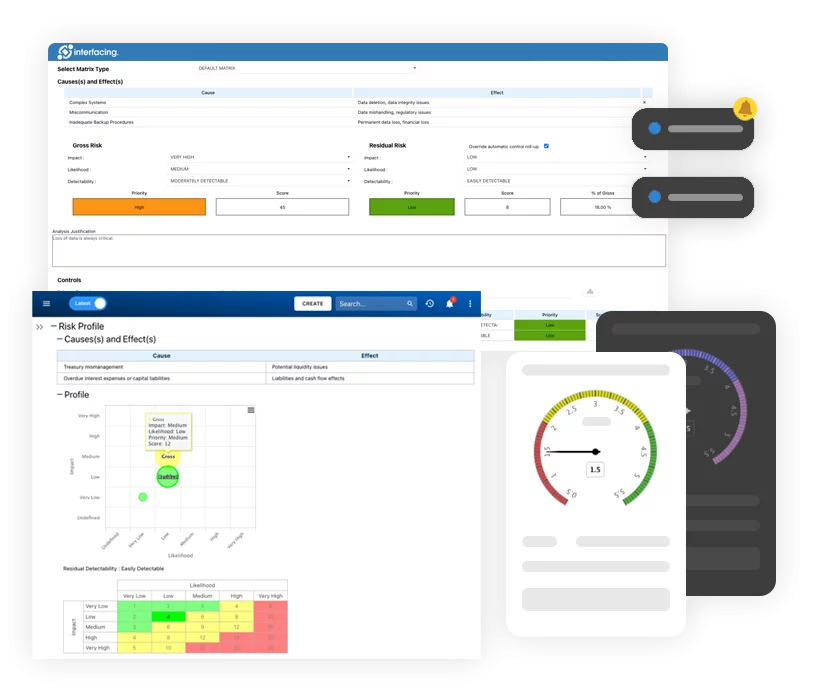
InterfacingLes modules de gestion des risques et des contrôles et de planification de la continuité des activités permettent une modélisation prédictive des risques, des simulations de scénarios et des flux de travail CAPA automatisés.
Ces capacités offrent une visibilité unifiée et en temps réel de l’exposition au risque, ce qui est crucial pour les équipes interfonctionnelles qui travaillent dans plusieurs départements et sur plusieurs fuseaux horaires.
Sécurisé, validé et conçu pour être mis à l’échelle
Interfacing offre un environnement validé et sécurisé auquel les entreprises internationales font confiance. Les fonctionnalités comprennent les signatures numériques cryptées, les pistes d’audit, le contrôle des versions et la conformité au CRF Part 11.
Son analyseur de documents IA et son moteur NLP exclusifs garantissent que les mises à jour ne sont jamais manquées et que les anomalies sont rapidement signalées. Des modules de formation et des journaux de confirmation de lecture permettent aux utilisateurs de rester informés.
Construit sur une plateforme à code bas, Interfacing prend en charge la configuration rapide de nouveaux cas d’utilisation, ce qui est idéal pour les organisations dynamiques qui évoluent.
Comment Interfacing peut vous aider
Interfacing ne se contente pas d’offrir des outils, il propose une plateforme stratégique qui réunit la gestion des risques, de la conformité et de la performance.
Découvrez notre gamme complète de capacités alimentées par l’IA à l’adresse suivante : https://interfacing.com/artificial-intelligence
Du suivi intelligent des changements réglementaires à l’exploration et à l’automatisation des processus, Interfacing permet à votre entreprise de transformer les risques en opportunités.
À une époque de changements constants et de pressions croissantes, les stratégies de conformité statiques ne sont plus viables.
L’IA offre une meilleure voie – proactive, prédictive et précise. Interfacing aide les organisations à construire des systèmes plus intelligents qui s’adaptent, répondent et dirigent.
Les entreprises prêtes pour l’avenir ne se contentent pas de gérer les risques, elles les maîtrisent.
Why Shadow AI Emerges So Easily
Employees are not acting recklessly. Most believe they’re helping. They see AI as a productivity tool—a modern assistant that saves time and improves clarity. And, in truth, it does. The problem is not the motivation; it’s the invisibility.
AI becomes a shadow actor because of three forces working together.
First, work is simply too much for too few. Compliance teams are stretched. Quality teams are understaffed. Process owners are juggling more than ever. When AI offers speed, they take it.
Second, AI feels harmless. It doesn’t demand login credentials. It doesn’t challenge authority. It’s just a box you type into. People assume that if they’re not sharing confidential information, they’re safe.
Third, organizations have not yet built governance structures for generative output. They address data privacy risks but forget the equally dangerous risks of traceability, reproducibility, and accuracy.
As a result, AI becomes a silent collaborator—reshaping SOP paragraphs, rewriting risk rationales, and summarizing audit findings in ways that may be elegant, but not necessarily correct.

The Regulators Are Watching, Even Quietly
Many leaders comfort themselves by believing regulators are far from cracking down on AI usage. But this belief is starting to look more like denial than strategy. Across the globe, regulatory bodies have begun to articulate concerns that go far beyond data protection. They are questioning explainability, transparency, reproducibility, and the origins of decisions.
The EU AI Act, FDA draft reflections, EMA guidance, and NIST frameworks may differ in approach, but they share one core expectation: organizations must be able to show how decisions were made, especially when AI was involved.
In the context of controlled documentation, this is seismic.
Imagine an auditor, three years from now, asking a simple question:
“Who authored this root cause explanation?”
If an employee used AI to restructure the logic, remove details, or introduce new ones, who takes responsibility? And how can the organization prove the reasoning if the AI’s output cannot be regenerated?
The truth is uncomfortable: many organizations would have no answer. They might not even know AI was involved.
Auditors have always rewarded transparency. They will not accept decisions whose origins cannot be demonstrated.
The Dangerous Comfort of “It Looks Good”
One of AI’s greatest strengths is also its most dangerous trait: it produces content that sounds confident. It produces explanations that feel complete. And when a document “looks good,” reviewers often let their guard down.
In traditional compliance processes, poor writing often acts as a signal. A vague CAPA narrative, a rambling deviation summary, or an unclear SOP section invites scrutiny. But AI removes those signals. It replaces human imperfection with polished coherence.
This creates a false sense of security.
A deviation report may now be shorter, clearer, and structurally consistent, yet missing critical context.
An SOP may read more logically, yet reflect a procedural variation that was never formally approved.
A risk explanation may appear grounded, yet reference factors that were never validated.
AI doesn’t simply improve clarity. It reshapes content. And reshaping content without governance is rewriting history.
The Fragility of Reproducibility
A foundational principle of compliance is reproducibility.
If data, logic, or explanation cannot be reproduced, the integrity of the system collapses.
AI, by design, is non-deterministic. The same prompt today may generate a different answer tomorrow. In regulated operations, variance is not a feature; it’s a flaw.
Imagine trying to reconstruct why a decision was made during an investigation, only to discover the rationale came from an AI tool that cannot generate the same justification again. The organization is left with a compliance black hole: a decision that cannot be retraced.
Regulators do not accept black holes.
They expect organizations to understand not only what decisions were made, but why. And the “why” must be evidence-based, not probabilistic.
The Coming Shift in Audit Culture
We often view audits as backward-looking events: an examination of what has happened. But AI will force audits to become more forward-facing. The focus will shift from documentation quality to documentation lineage.
The new audit questions will sound different. Instead of:
“Where is this procedure approved?” Auditors will ask:
“How was this text generated, and by whom?”
Instead of:
“Show me your deviation analysis steps.”
They will ask:
“Can you demonstrate the reasoning path behind this conclusion?”
Instead of:
“Was training completed?”
They will ask:
“How do you ensure that AI did not perform steps reserved for trained personnel?”
This is not science fiction.
This is the predictable evolution of compliance theory: as tools evolve, so must governance.
Organizations that prepare for these questions now will be the ones that thrive later.

A Hard Truth: AI Is Not the Risk – Blindness Is
Despite everything above, AI itself is not inherently dangerous. It is no more risky than spreadsheets, macros, or open-source templates, technologies that once also felt disruptive.
The real risk emerges when leaders cannot see how AI is influencing controlled work.
Shadow usage breaks traceability.
Traceability breaks accountability.
Accountability breaks compliance.
In the absence of visibility, compliance becomes a guessing game.
But when AI is brought into the light, when it becomes governed, tracked, and embedded within controlled systems, it stops being a threat and becomes what it was always meant to be: an accelerator.
The organizations that win will not be those who fear AI, nor those who adopt it blindly.
They will be the ones who understand that trustworthy AI requires trustworthy infrastructure.
And that brings us to the role of Interfacing.
How Interfacing Helps Bring Shadow AI Into the Light
Interfacing’s approach to AI governance begins with a simple principle: compliance must evolve as fast as technology does.
Rather than bolt AI tools onto old processes, Interfacing integrates AI governance directly into the organization’s architecture, documentation, change control, regulatory intelligence, risk frameworks, and the full Integrated Management System.
This changes the game.
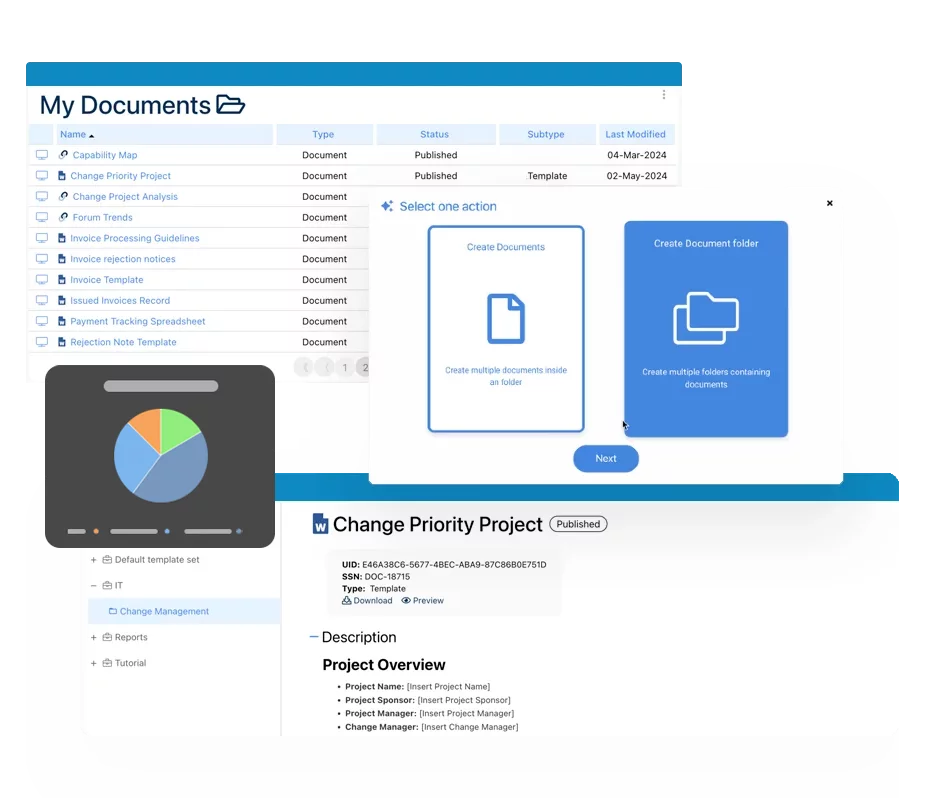
When employees generate content, the system can capture lineage.
When documentation evolves, the system can show how and why.
When a regulator asks for traceability, the organization can demonstrate it without hesitation.
Interfacing’s Digital Twin Organization (DTO) does more than map processes. It reflects how AI interacts with them, where decisions originate, and how changes ripple across roles, controls, risks, and procedures. This gives leaders something they’ve been missing: visibility.
Interfacing’s AI-driven impact analysis reveals deviations that don’t belong, logic shifts that occurred silently, and edits that don’t match previous patterns, signals that AI may have influenced the content.
Instead of retroactively guessing what happened, organizations get proactive intelligence about what is changing and why.
And because Interfacing’s platform is built for regulated environments, with validated environments, full audit trails, encryption, segregation of duties, controlled workflows, and secure lifecycle management, the use of AI becomes part of the compliance fabric rather than an ungoverned leak within it.
The result is simple but powerful:
AI becomes accountable.
Documentation remains trustworthy.
Compliance gets stronger, not weaker.
Through structured workflows, lineage tracking, and a unified system of record, organizations using Interfacing can let employees embrace AI—without fearing the shadows.
The Future Belongs to Organizations Who Prepare Now
The rise of AI Shadow Compliance is not a crisis; it is a turning point. Every major shift in technology, from electronic signatures to cloud systems to automated workflows, created fear before it created structure. The organizations that thrived were those that built governance early, before regulators forced the issue.
AI is no different.
Right now, organizations have a choice:
Let AI reshape their compliance landscape invisibly, or bring AI under governance and transform it into a strength.
The winners will be those who choose visibility.
AI will not replace compliance.
But compliance that embraces AI, openly, transparently, and intelligently, will replace the compliance models that refuse to change.
Interfacing helps organizations make that transition with confidence, clarity, and control.
And in a world where AI may write the first draft of tomorrow’s documentation, the organizations that stay transparent will be the ones regulators trust most.
Pourquoi choisir Interfacing?
Avec plus de deux décennies de logiciels d'IA, de qualité, de processus et de conformité, Interfacing continue d'être un leader dans l'industrie. À ce jour, nous avons servi plus de 500+ entreprises de classe mondiale et des sociétés de conseil en gestion de toutes les industries et de tous les secteurs. Nous continuons à fournir des solutions numériques, cloud et IA qui permettent aux organisations d'améliorer, de contrôler et de moderniser leurs processus tout en allégeant le fardeau de la conformité réglementaire et des programmes de gestion de la qualité.
Pour en savoir plus ou discuter de la manière dont Interfacing peut aider votre organisation, veuillez remplir le formulaire ci-dessous.

Documentation : Piloter la transformation, la gouvernance et le contrôle
• Obtenez des informations complètes et en temps réel sur vos opérations.
• Améliorez la gouvernance, l'efficacité et la conformité.
• Assurez une conformité fluide avec les normes réglementaires.

eQMS : Automatiser les workflows de qualité et de conformité & rapports
• Simplifiez la gestion de la qualité avec des workflows automatisés et une traçabilité continue.
• Standardisez la gestion des CAPA, des audits fournisseurs, de la formation et des workflows associés.
• Transformez la documentation en informations exploitables pour la Qualité 4.0.

Développement rapide d'applications low-code : Accélérer la transformation numérique
• Créez rapidement des applications personnalisées et évolutives.
• Réduisez le temps et les coûts de développement.
• Adaptez-vous rapidement pour répondre aux besoins évolutifs des clients et de votre entreprise.
L’IA pour transformer votre entreprise !
Conçus pour optimiser les opérations, l'efficacité et renforcer la conformité. Découvrez nos solutions alimentés par l’IA :
• Répondre aux questions des employés.
• Transformer des vidéos en processus.
• Recommander des améliorations de processus et des impacts réglementaires.
• Générer des formulaire, processus, risques, réglementations, KPIs, et bien plus.
• Fragmenter les normes réglementaires

Request Free Demo
Document, analyze, improve, digitize and monitor your business processes, risks, regulatory requirements and performance indicators within Interfacing’s Digital Twin integrated management system the Enterprise Process Center®!
Approuvé par nos clients à travers le monde !
Plus de 400 entreprises de classe mondiale et cabinets de conseil en gestion.


INTEGRATION
Approuvé par les nos clients dans le monde entier !
Plus de 400 entreprises de classe mondiale et cabinets de conseil en gestion.