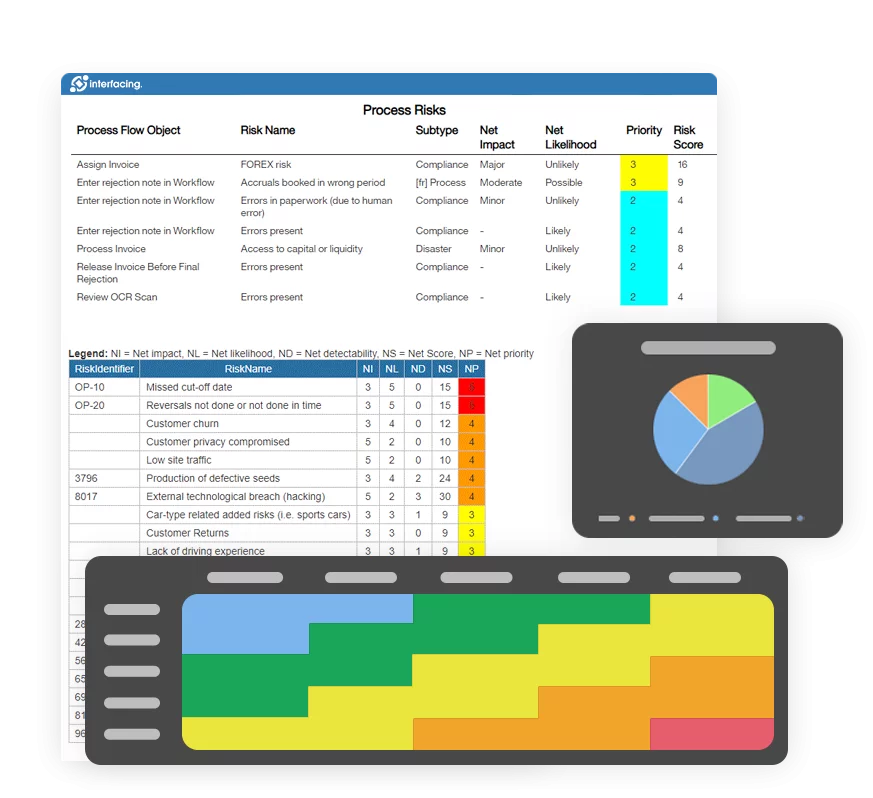


AI cannot reason across silos. When QMS and BPM operate in isolation, intelligence stops at the system boundary.
For more than two decades, organizations have invested heavily in standalone Quality Management Systems (QMS) and Business Process Management (BPM) tools. These platforms promised control, standardization, and visibility. And for a long time, they delivered just enough value to justify their place in the enterprise stack.
But something fundamental has changed.
Artificial intelligence is no longer an emerging capability. It is rapidly becoming the connective tissue of modern operations. And as AI matures, it is exposing a hard truth that many organizations are now confronting, often uncomfortably. Tools designed to operate in isolation are no longer fit for environments where insight, speed, and adaptability depend on context.
Standalone QMS and BPM tools are not failing because they are poorly built. They are failing because they were never designed for an AI-driven world.
The Hidden Cost of Siloed Systems
At first glance, separating quality from process management can seem logical. Quality teams manage audits, CAPAs, training, and documentation. Process teams model workflows, improve efficiency, and optimize performance. Each group has its own tools, dashboards, and metrics.
The problem is not ownership. The problem is fragmentation.
When quality events live in one system and business processes live in another, the organization loses the ability to understand cause and effect at scale. A deviation might be logged in the QMS, but the process context that explains why it happened often sits elsewhere. A process change might be approved in a BPM tool, but its downstream impact on compliance, risk, or training requirements is rarely visible in real time.
In a pre-AI world, this was inefficient but manageable. In an AI-driven environment, it becomes a structural limitation.
AI does not generate value from isolated data. It generates value from relationships.
Why AI Exposes the Cracks
Artificial intelligence thrives on connected information. To identify patterns, predict risk, or recommend corrective actions, AI needs to understand how processes, roles, documents, risks, controls, and performance indicators relate to one another.
Standalone systems break that chain of understanding.

A traditional QMS can tell you how many CAPAs are open. A BPM tool can show you how a process flows. But neither can answer higher-order questions without heavy manual effort:
- Why are the same quality issues recurring in different regions?
- Which process variations introduce the highest compliance risk?
- What operational changes will be impacted if a regulation changes tomorrow?
These are not edge cases anymore. They are the questions executives expect answers to, quickly and with confidence.
This is where AI quietly becomes a mirror. It reflects the limits of systems that were built to document reality, not to interpret it.
The Illusion of “AI-Enabled” Point Solutions
Many vendors have responded by layering AI features onto existing products. Automated tagging. Smarter search. Predictive alerts. These enhancements are not useless, but they are incremental.
The underlying architecture remains unchanged.
AI embedded in a silo can only optimize within that silo. It cannot reason across the organization. It cannot understand how a process deviation links to a regulatory requirement, a training gap, and a risk exposure unless those elements exist in a shared model.
This is why organizations often feel disappointed after initial AI pilots. The technology works, but the insight feels shallow. The problem is not the algorithm. It is the operating model.

The Shift Toward Integrated Thinking
Leading organizations are moving away from tool-centric strategies and toward system-centric ones. Instead of asking, “Which QMS or BPM tool should we buy?”, they are asking a different question:
“How do we create a single source of operational truth that AI can actually learn from?”
This shift is driving growing interest in Integrated Management Systems, platforms designed to unify process, quality, risk, compliance, and performance within a shared structure. In this model, quality events are not isolated records. They are signals within a living system of processes and controls.
When AI is applied to an integrated environment, its role changes. It moves from automation to intelligence.
Interfacing’s approach to an AI-driven Integrated Management System reflects this shift. By connecting quality management, business process management, risk, and regulatory intelligence within a single platform, organizations gain the context AI requires to deliver meaningful insight rather than surface-level analytics.
From Documentation to Decision Support
One of the most profound consequences of integration is how it changes decision-making.
In a fragmented environment, leaders rely on reports that explain what already happened. In an integrated, AI-enabled system, they gain foresight. They can see how a process change might impact compliance obligations. They can anticipate where quality risks are likely to emerge based on process behavior. They can prioritize improvements based on enterprise-wide impact, not departmental urgency.
This is where traditional BPM and QMS tools quietly fall behind. They were built to document work. AI demands systems that understand work.
Interfacing’s Business Process Management capabilities reflect this evolution, moving beyond static diagrams toward connected, analyzable process architectures that AI can interpret.
Likewise, its Quality Management Software positions quality not as a standalone function, but as an integrated outcome of how processes are designed, executed, and governed.
A Structural, Not Technological, Failure
It is tempting to frame this shift as a race to adopt AI features. That framing misses the point.
Standalone QMS and BPM tools are failing not because they lack AI, but because they lack integration. AI simply makes that absence impossible to ignore.
Organizations that continue to invest in disconnected systems will find themselves spending more time reconciling data than acting on insight. Those that rethink their management architecture will unlock something far more powerful than automation.
They will gain understanding.

The Real Question Leaders Should Be Asking
The future of quality and process management is not about replacing one tool with another. It is about replacing fragmentation with coherence.
As AI becomes embedded in daily decision-making, the organizations that succeed will be those that treat quality, process, risk, and compliance as interdependent elements of a single system, not as separate disciplines managed by separate tools.
The question is no longer whether AI belongs in QMS or BPM.
The question is whether your management systems are ready for AI at all.
How Interfacing Helps
The failure of standalone QMS and BPM tools is not a tooling problem. It is an architectural one. Interfacing was designed around this reality from the start.
Rather than treating quality, process, risk, and compliance as separate disciplines managed by separate systems, Interfacing delivers an AI-driven Integrated Management System that models how organizations actually operate. Processes are not isolated diagrams. They are living structures connected to roles, documents, risks, controls, regulatory requirements, and performance indicators.
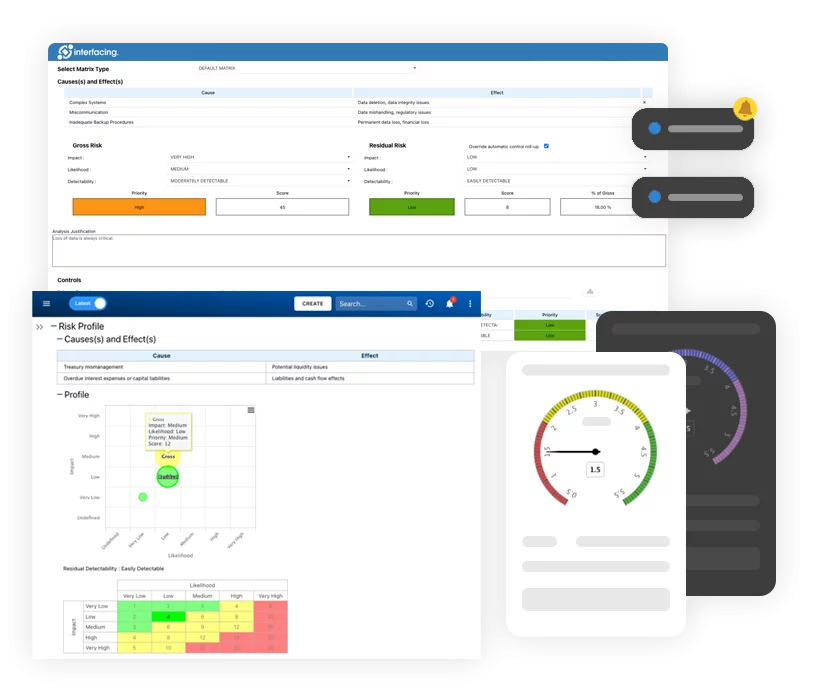
This unified operating model is what allows AI to move beyond surface-level automation. When a deviation occurs, Interfacing does not simply log an event. It understands the process context behind it. When a process changes, the platform can immediately assess downstream impacts on compliance, training, and risk exposure. When regulations evolve, AI-powered impact analysis identifies what is affected and where action is required.
Because quality management is embedded directly into process architecture, CAPAs, audits, and management reviews are no longer reactive activities. They become part of a continuous, traceable improvement cycle supported by real operational intelligence.
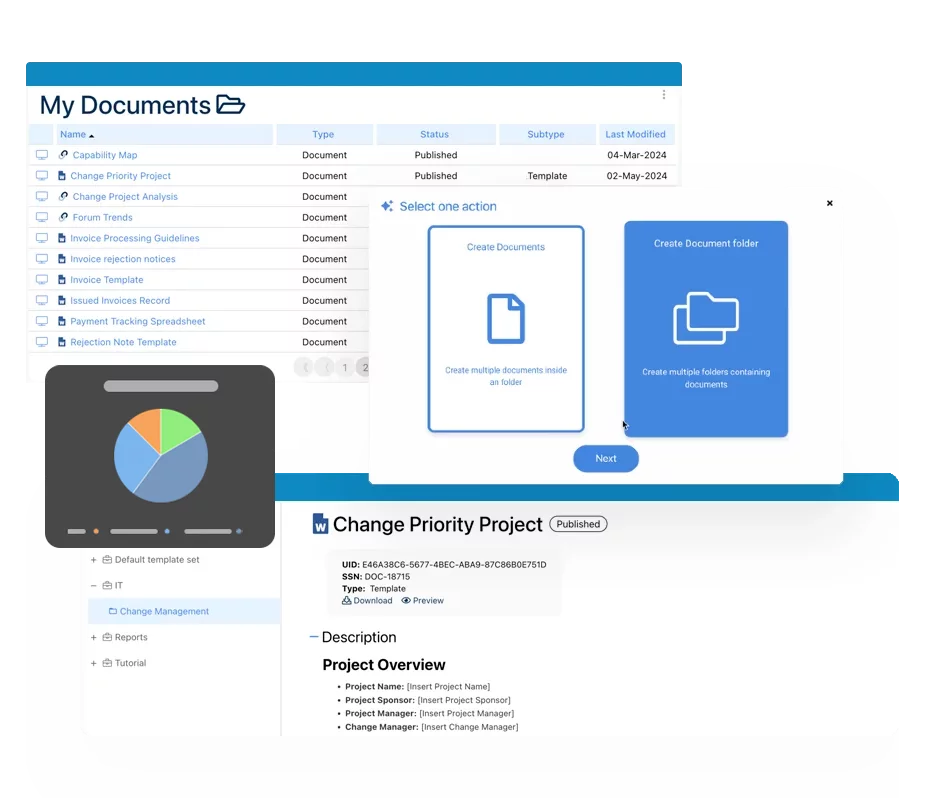
At the same time, Interfacing’s Business Process Management capabilities move beyond static documentation. Processes are designed, governed, and analyzed within the same environment that manages compliance and risk, giving leaders a single source of truth for decision-making.
This integrated foundation is what enables Interfacing’s AI to deliver meaningful insight rather than isolated predictions. By connecting process, quality, and governance data within one system, organizations gain the context AI requires to identify patterns, anticipate issues, and support better decisions across the enterprise.
In short, Interfacing does not add AI to siloed tools. It removes the silos that prevent AI from working in the first place.
Why Choose Interfacing?
With over two decades of AI, Quality, Process, and Compliance software expertise, Interfacing continues to be a leader in the industry. To-date, it has served over 500+ world-class enterprises and management consulting firms from all industries and sectors. We continue to provide digital, cloud & AI solutions that enable organizations to enhance, control and streamline their processes while easing the burden of regulatory compliance and quality management programs.
To explore further or discuss how Interfacing can assist your organization, please complete the form below.

Documentation: Driving Transformation, Governance and Control
• Gain real-time, comprehensive insights into your operations.
• Improve governance, efficiency, and compliance.
• Ensure seamless alignment with regulatory standards.

eQMS: Automating Quality & Compliance Workflows & Reporting
• Simplify quality management with automated workflows and monitoring.
• Streamline CAPA, supplier audits, training and related workflows.
• Turn documentation into actionable insights for Quality 4.0

Low-Code Rapid Application Development: Accelerating Digital Transformation
• Build custom, scalable applications swiftly
• Reducing development time and cost
• Adapt faster and stay agile in the face of
evolving customer and business needs.
AI to Transform your Business!
The AI-powered tools are designed to streamline operations, enhance compliance, and drive sustainable growth. Check out how AI can:
• Respond to employee inquiries
• Transform videos into processes
• Assess regulatory impact & process improvements
• Generate forms, processes, risks, regulations, KPIs & more
• Parse regulatory standards into requirements


Request Free Demo
Document, analyze, improve, digitize and monitor your business processes, risks, regulatory requirements and performance indicators within Interfacing’s Digital Twin integrated management system the Enterprise Process Center®!

Trusted by Customers Worldwide!
More than 400+ world-class enterprises and management consulting firms