

Interfacing

sales@interfacing.com

Process mining has become the go-to tool for understanding how work actually flows across systems. But in regulated and complex environments, visibility is only the first step. The real challenge is not seeing what happened, it is understanding why it happened, who owns it, and what needs to change.

Process Mining Gave Us Visibility, Not Understanding

For years, organizations struggled with a fundamental problem. They did not know how work was actually getting done. Process maps reflected how things were supposed to work, not how they behaved in reality, and reports captured outcomes without revealing the decisions and actions that produced them.

Process mining changed that. It gave organizations the ability to reconstruct real execution from system data, making flows visible, exposing bottlenecks, and turning what had once been anecdotal into something measurable. That shift mattered because it replaced assumption with evidence.

However, it also introduced a more subtle problem. As visibility improved, many organizations began to assume they now understood their processes. In reality, they had only gained a clearer view of what was happening, not why it was happening.

The Moment Where Process Mining Stops Helping

The limitation of process mining does not appear immediately. In many cases, early results feel like a breakthrough. Teams identify delays, uncover rework loops, and detect deviations from expected paths. On the surface, it looks like meaningful progress.

The real challenge emerges when organizations try to act on those insights. Questions begin to surface that the data alone cannot answer. Why is a step consistently bypassed? Why does an issue appear only in certain regions? Why are controls not triggering when they should, and why do the same problems reappear even after corrective actions have been implemented?

At that point, process mining reaches its boundary, because the answers to those questions do not exist within the event data itself. They exist in how the business is structured, governed, and operated.

The Gap Between Data and Accountability

Process mining is highly effective at reconstructing sequences of events, but it does not inherently capture intent, ownership, or control. It can show that something happened, but it cannot fully explain who was responsible for it, what policy governed it, or whether the process behaved as designed.

This distinction becomes critical when organizations move beyond optimization and into compliance, risk, and audit scenarios. 

Demonstrating that a process occurred is not enough. Organizations must also demonstrate that it occurred correctly, under control, and with clear accountability.

That level of understanding requires more than data. It requires context.


Why Context, Not More Data, Is the Real Requirement

When organizations encounter these limitations, the instinct is often to collect more data or build more sophisticated dashboards. However, the issue is not a lack of visibility, it is a lack of structure.

Understanding requires a model that connects processes to ownership, controls, risks, and policies. This is where a Business Process Management-driven operating model becomes essential, because it provides the framework needed to interpret what process mining reveals.

Within this structure, processes are no longer just sequences of activities. They become governed systems where each step is defined, owned, and controlled. Only then can organizations move from observing behavior to explaining it.

From Insight to Explanation Requires a Governed Operating Model

This is the point where most organizations recognize the limitation but struggle with what comes next. They have visibility, but no consistent way to connect that visibility back to how the business is actually designed and controlled.

This is where Interfacing’s approach becomes relevant.

Rather than treating process insight as an isolated analytics layer, Interfacing establishes a governed operating model that connects execution data directly to process design, ownership, risk, and compliance. The goal is not just to observe processes, but to make them explainable.

At the core of this approach is structured process modeling. Interfacing enables organizations to define processes hierarchically, from high-level value streams down to detailed work instructions, ensuring that every activity is anchored within a clear operational structure. Without this level of decomposition, process insights remain disconnected from how work is actually governed.

This structure is extended by embedding accountability directly into processes. Each step is linked to defined roles, responsibilities, and supporting systems, allowing organizations to trace not just what occurred, but who was responsible and how decisions were made. This is what enables a shift from observing activity to understanding execution.

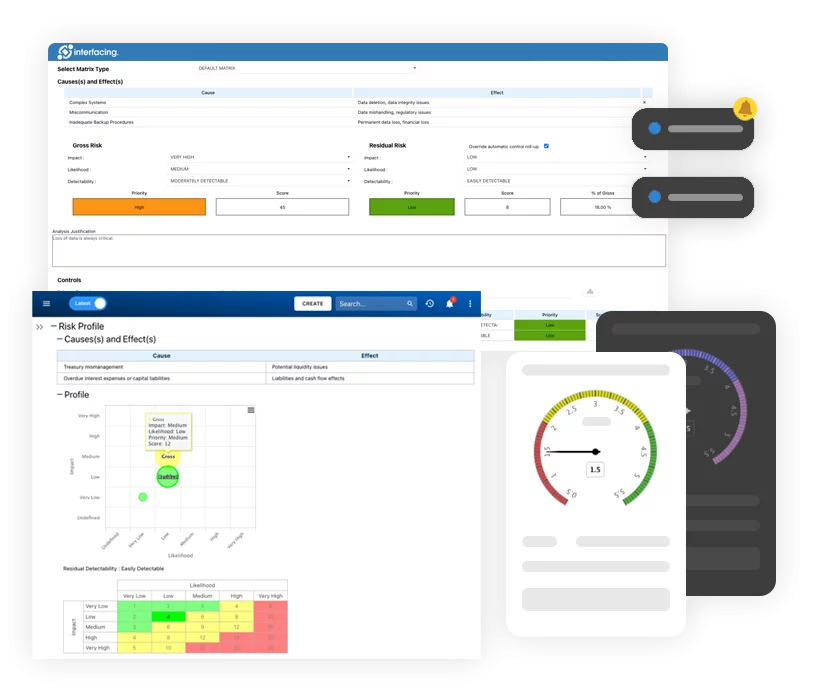
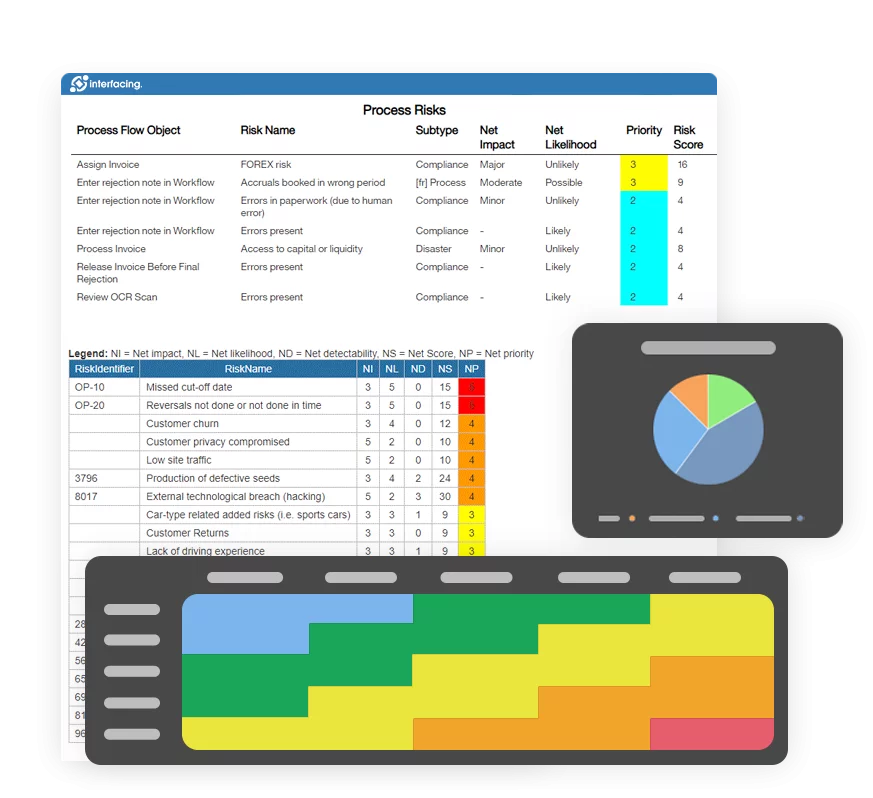
Interfacing also connects process behavior to risk and control frameworks. When a deviation is identified, it can be traced back to the relevant controls, policies, and risk factors within the same environment. This is particularly critical in regulated industries, where organizations must demonstrate not only that issues are detected, but that they are understood and controlled.

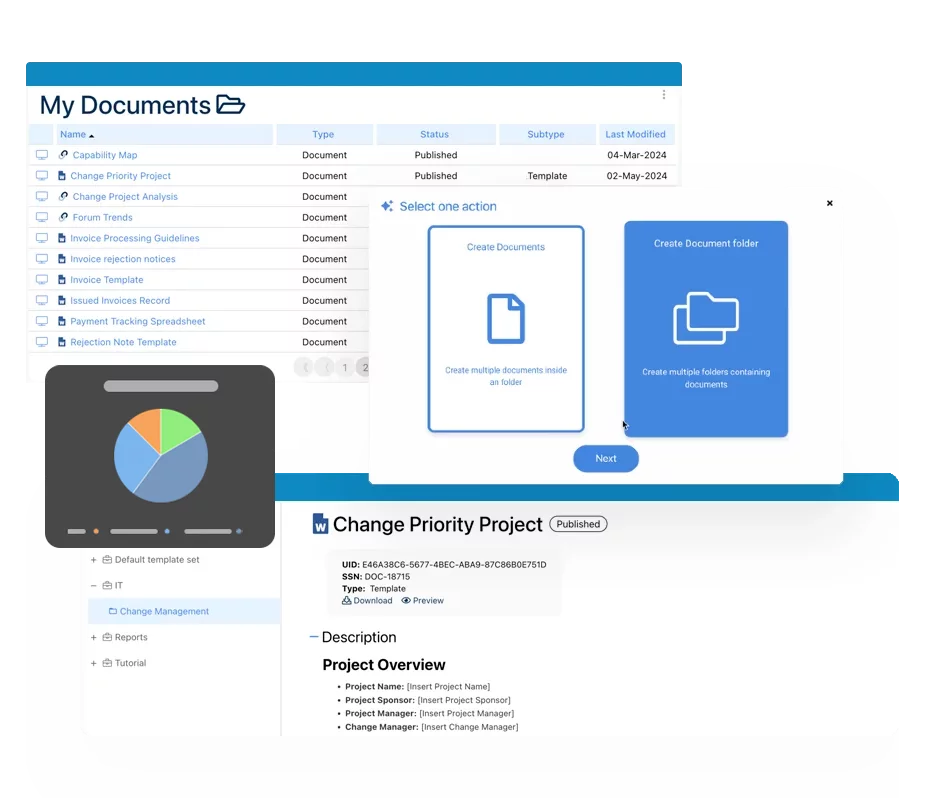
These capabilities come together within an Integrated Management System (IMS), which unifies process, quality, risk, and compliance into a single governed repository. This allows organizations to perform impact analysis, maintain traceability, and support audit requirements without relying on disconnected tools or manual interpretation. 

In this context, process mining does not replace governance, it feeds into it. Insights are no longer isolated observations, they become part of a structured system that enables explanation, accountability, and controlled improvement.

When Visibility Creates False Confidence

One of the more overlooked risks is that process mining can create a sense of confidence that is not fully justified. Dashboards appear complete, data looks comprehensive, and patterns seem clear. However, without governance, interpretation remains disconnected from how the organization actually operates.

As a result, teams may implement changes based on observed patterns without fully understanding their underlying causes. This often leads to recurring issues, repeated CAPAs, and persistent audit findings. The organization is reacting to symptoms rather than addressing the structural drivers behind them.

Where Process Mining Fits

Process mining remains a valuable tool for uncovering how work flows and where inefficiencies exist. However, it is not a complete solution. It answers the question of what is happening, but it does not, on its own, explain why it is happening or how to control it.

That requires governance.

The Real Shift

Organizations that succeed are not those that simply see more data. They are the ones that understand their operations at a deeper level. They connect execution to design, activity to accountability, and insight to governance.

Knowing what happened is useful. Understanding why it happened is what enables control, improvement, and compliance.

Why Choose Interfacing?


With over two decades of AI, Quality, Process, and Compliance software expertise, Interfacing continues to be a leader in the industry. To-date, it has served over 500+ world-class enterprises and management consulting firms from all industries and sectors. We continue to provide digital, cloud & AI solutions that enable organizations to enhance, control and streamline their processes while easing the burden of regulatory compliance and quality management programs.

To explore further or discuss how Interfacing can assist your organization, please complete the form below.

Documentation: Driving Transformation, Governance and Control

• Gain real-time, comprehensive insights into your operations.
• Improve governance, efficiency, and compliance.
• Ensure seamless alignment with regulatory standards.

eQMS: Automating Quality & Compliance Workflows & Reporting

• Simplify quality management with automated workflows and monitoring.
• Streamline CAPA, supplier audits, training and related workflows.
• Turn documentation into actionable insights for Quality 4.0

Low-Code Rapid Application Development: Accelerating Digital Transformation

• Build custom, scalable applications swiftly
• Reducing development time and cost
• Adapt faster and stay agile in the face of evolving customer and business needs.


AI to Transform your Business!

The AI-powered tools are designed to streamline operations, enhance compliance, and drive sustainable growth. Check out how AI can:
• Respond to employee inquiries
• Transform videos into processes
• Assess regulatory impact & process improvements
• Generate forms, processes, risks, regulations, KPIs & more
• Parse regulatory standards into requirements


Learn more about EPC's AI Use Cases
CONTACT US

Request Free Demo

Document, analyze, improve, digitize and monitor your business processes, risks, regulatory requirements and performance indicators within Interfacing’s Digital Twin integrated management system the Enterprise Process Center®!
Trusted by Customers Worldwide!

More than 400+ world-class enterprises and management consulting firms