Process models are an important part of a Digital Twin of an Organization, but they do not provide a complete representation of how an enterprise operates. A reliable DTO must also connect processes with people, systems, capabilities, resources, risks, controls, documents, performance measures and governance responsibilities.
Without these relationships, the organization may have a sophisticated process repository, but it does not yet have a functioning digital twin.
A Process Map Is Not an Organization
The process model is often the most visible element of a Digital Twin of an Organization.
It is also the element most likely to be mistaken for the entire twin.
Organizations may invest years documenting value streams, procedures, subprocesses and work instructions. They may create an extensive process hierarchy, adopt BPMN standards and establish a central repository for approved diagrams.
This work has value. It creates consistency, clarifies workflow and gives employees a common reference point.
But it still represents only one dimension of the enterprise.
A process tells us what work is expected to happen and in what sequence. It does not automatically tell us whether the right resources are available, whether the supporting system is reliable, whether the process is exposed to unacceptable risk or whether the controls attached to it remain effective.
It may not show which regulatory requirements apply, which documents provide evidence, which capabilities the organization depends on or which performance indicators should trigger intervention.
Those relationships are what turn a collection of process models into an operating model.
They are also what allow that operating model to become a useful Digital Twin of an Organization.
Interfacing describes a DTO as a continuously aligned representation of how an organization operates, including its processes, roles, controls, documents, risks, systems and governance relationships.
The Process-Only Assumption Creates False Confidence
A well-designed process map can appear authoritative.
The activities are arranged logically. Roles may be represented through swimlanes. Decision points are visible. Documentation is attached. The model looks complete.
That visual completeness can create a dangerous assumption: because the workflow has been documented, the organization understands how the operation works.
The problem becomes visible when leaders begin asking questions that the process model cannot answer.
- What happens if a critical application becomes unavailable?
- Which procedures must change when a regulation is updated?
- What other business units depend on the same supplier?
- Which controls are intended to mitigate the risks within this activity?
- Do employees assigned to this process have the required training?
- Which capabilities would be weakened by a resource shortage?
- How would a proposed automation affect approvals, segregation of duties or compliance evidence?
A process diagram may provide part of the answer, but it cannot answer these questions reliably unless the surrounding objects and relationships have also been modeled.
A DTO must therefore represent more than the flow of work. It must represent the conditions under which that work is performed.
Roles Are More Than Swimlanes
Swimlanes help identify who performs an activity, but they rarely capture the full resource structure behind execution.
A role may require particular qualifications, permissions, training, certifications or delegated authority. Multiple people may fill the role at different locations. An employee may perform several roles across different processes. An AI agent, software application, machine or external provider may also participate in the same operation.
That distinction matters.
Knowing that a task belongs to “Quality Assurance” is not the same as knowing which person is accountable, which employees are qualified to perform it, which system permissions they require and who can assume responsibility if the primary resource is unavailable.
A complete DTO must connect process responsibilities with the resources and capabilities needed to carry them out.
Without that layer, resource planning remains separate from process planning, even though the two are operationally inseparable.

Systems Must Be Modeled in Context
Enterprise systems are often documented in application inventories or architecture tools, while business processes are managed somewhere else.
This separation makes it difficult to understand how technology supports actual operations.
A process may depend on an ERP platform, document repository, laboratory system, supplier portal and several manual spreadsheets. Each system may support different activities, store different records and introduce different dependencies.
When these relationships are not part of the operating model, technology changes are evaluated primarily as IT projects.
The broader operational effects emerge later.
A system replacement may change responsibilities, reporting, controls, training, data retention requirements and downstream procedures. A system outage may interrupt several processes that appear unrelated when viewed through organizational charts.
A complete DTO links systems directly to the processes, roles, data, documents and controls they support. That context turns an application inventory into operational intelligence.
Risks and Controls Cannot Remain in a Separate Register
Many organizations maintain a risk register alongside their process repository.
The two may use similar terminology, but they are rarely connected in enough detail to support meaningful analysis.
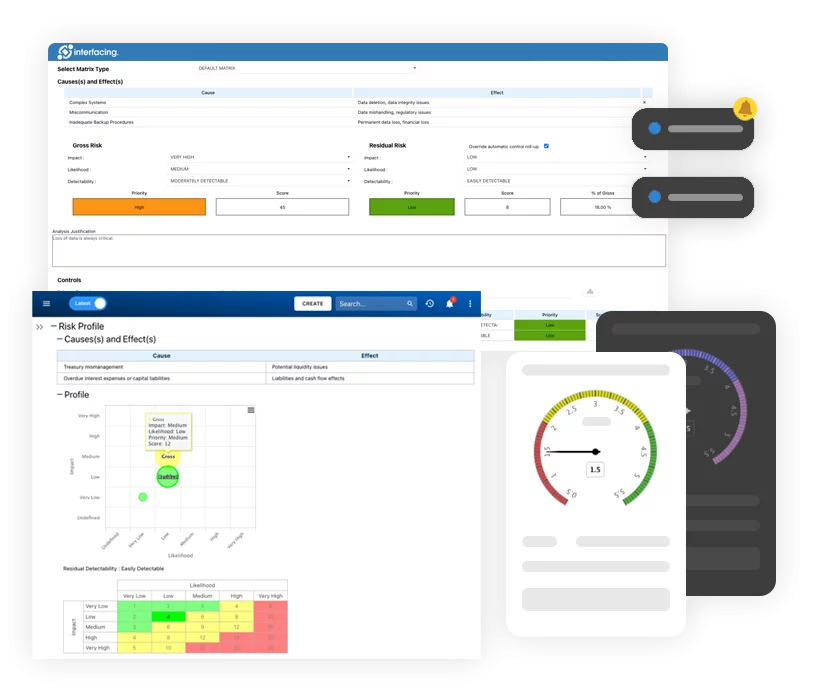
A risk register can describe a threat, assign an owner and record a residual risk score. It may not show exactly where the risk enters the operation, which activities are affected, which controls address it or what evidence demonstrates that those controls are working.
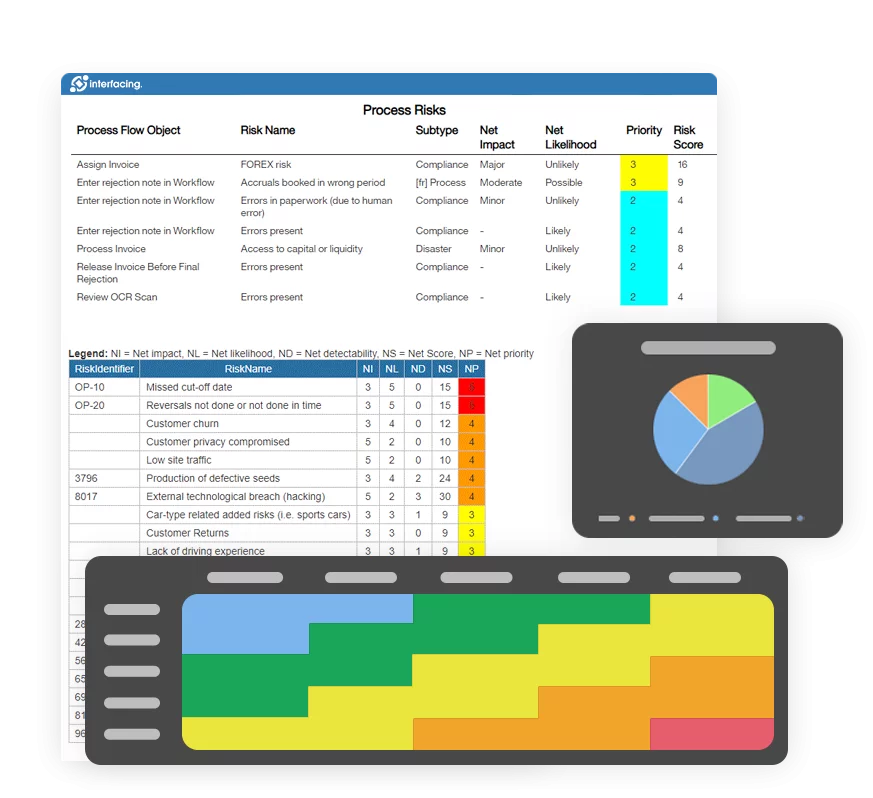
Interfacing’s risk management approach connects risks and controls to business processes and supports the use of qualitative and quantitative indicators to evaluate control effectiveness.
This relationship is essential to a DTO.
When risk is modeled within the operating context, leaders can see not only that a risk exists, but how it could move through the organization.
They can identify the affected process, supporting system, accountable role, regulatory requirement and operational outcome.
Without that context, the risk register describes concerns. It does not represent exposure.
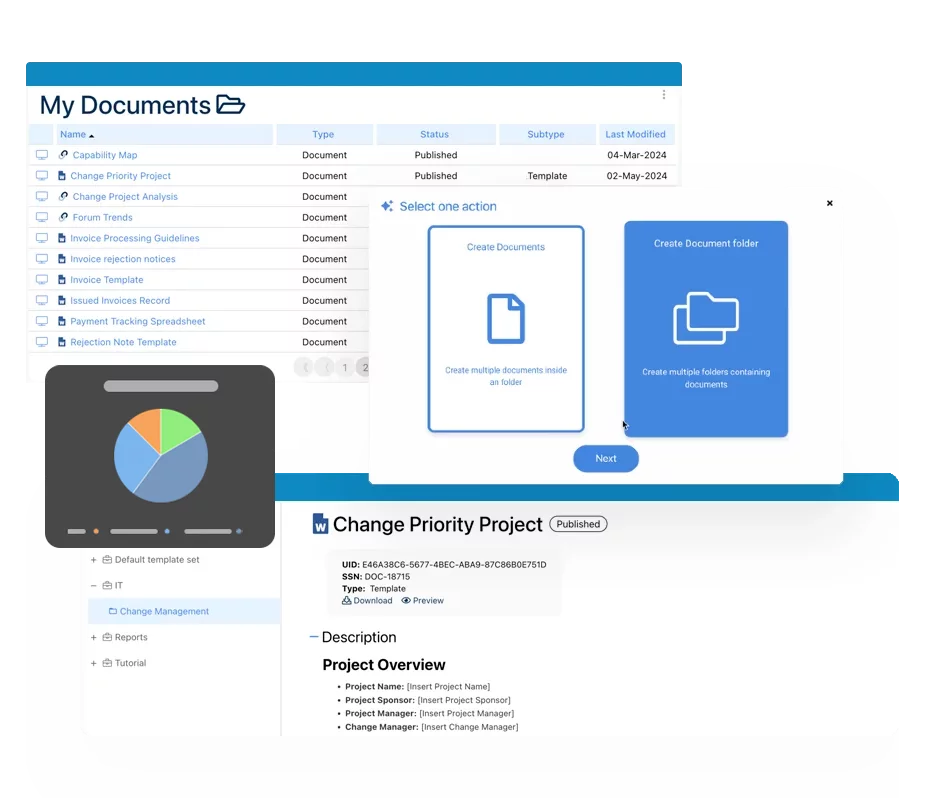
Documents Are Evidence, Not the Operating Model
Procedures, policies and work instructions are another source of false completeness.
An organization may have excellent document control and still lack a reliable view of how work is performed.
Documents describe expectations. Processes represent the structure of execution. Systems, roles, controls and records provide evidence of what actually happened.
A complete DTO must connect these layers.
A procedure should be linked to the process it governs, the roles expected to follow it, the controls it implements, the regulations it supports and the training required when it changes.
When these relationships are missing, document updates become administrative events. Teams revise the file, obtain approval and distribute the new version, but the organization cannot reliably determine everything affected by the change.
In a connected DTO, a document change becomes an operational change. Its downstream consequences can be identified, assigned and monitored.
Performance Data Needs Operating Context
Dashboards are frequently presented as evidence that an organization has created a digital twin.
They have not.
A dashboard shows measurements. A DTO explains what those measurements mean in relation to the operating model.
A declining KPI is useful information, but leaders still need to understand which processes contribute to the result, which resources influence it, which controls may be failing and which risks are increasing.
Without those relationships, analytics remain descriptive.
A complete DTO connects performance measures to processes, objectives, resources, risks, controls and business outcomes. This allows leaders to investigate cause and effect rather than merely observe a trend.
It also creates a stronger foundation for simulation. Interfacing’s process simulation approach connects process models with roles, documents, KPIs and compliance controls, allowing organizations to evaluate scenarios within a broader operational context.
The Missing Layer Is the Operating Model
A process repository organizes workflows. An operating model explains how the enterprise delivers value.
It connects what the organization does with who performs the work, what capabilities are required, which resources are deployed, what systems support execution, how performance is measured and how governance is enforced.
This is the structure a DTO must represent.
The distinction is important because organizations do not transform one process at a time in isolation. A change to a process can affect applications, responsibilities, documents, controls, risks, suppliers, training and performance targets.
When these elements are modeled separately, teams encounter what can be described as a transformation whack-a-mole problem. Solving one issue creates another somewhere else because the dependencies were not visible.
The organization may optimize a workflow but weaken a control. It may automate an activity but overlook a regulatory approval. It may consolidate systems but create a resource bottleneck.
A connected operating model makes those dependencies visible before changes are implemented.
Executive Reality Check
Executives should be cautious when a DTO initiative is defined primarily by the number of processes mapped or dashboards deployed.
Those metrics demonstrate activity, not operational completeness.
The more useful question is whether the model can explain how a proposed change affects responsibilities, systems, risks, controls, documents, resources and performance across the enterprise.
When those relationships are unavailable, leaders are still making decisions across fragmented sources. The process repository may be valuable, but calling it a complete DTO overstates what it can support.
AI Needs More Than Process Context
AI makes the limitations of a process-only model even more significant.
An AI system may understand the sequence of activities within a workflow. That does not mean it understands the operational boundaries surrounding those activities.
It may not know that a particular action requires a certified employee, that a control prohibits the same person from initiating and approving a transaction or that a procedural change triggers mandatory training in several jurisdictions.
AI needs relationships, not merely content. Interfacing has previously explained that AI requires connected information across processes, roles, documents, risks, controls and performance indicators to identify patterns and provide useful recommendations.
A complete DTO provides that context.
It gives AI-assisted analysis a governed structure within which to interpret dependencies, assess downstream impacts and identify where human review is required.
Without that foundation, AI may accelerate analysis while overlooking the conditions that make an answer operationally valid.
How to Tell Whether Your DTO Is Complete
A Digital Twin of an Organization does not need to contain every piece of enterprise information before it can create value.
It does need to model the relationships required for the decisions it is expected to support.
Leaders should test the model with practical questions:
- Can we trace a regulatory change to affected processes, controls, documents and training?
- Can we identify every operation that depends on a critical system or supplier?
- Can we see which resources and capabilities are required to execute a process?
- Can we evaluate how a process change affects risk and control effectiveness?
- Can we connect performance deterioration to its operational causes?
- Can we simulate change using realistic roles, resources, timing and constraints?
- Can we determine which decisions require human approval and which actions may be automated?
When the answer repeatedly requires separate spreadsheets, interviews, architecture tools, risk registers and document repositories, the twin remains fragmented.
How Interfacing Helps Build a Complete Digital Twin of an Organization
Interfacing does not treat a Digital Twin of an Organization as a process visualization, isolated architecture model or reporting layer. Its approach is based on building a living, governed operating model that connects how work is designed with how it is executed, controlled, measured and improved.
At the centre of Interfacing’s DTO is a structured process architecture. Organizations can model end-to-end value streams, processes, subprocesses, activities, tasks and work instructions while preserving ownership, version history and relationships across the full process hierarchy. However, the process model is only the foundation.
Interfacing’s Integrated Management System connects that process foundation with the wider organizational elements required to understand operational reality, including:
- Roles, responsibilities, organizational units and resource assignments
- Business capabilities and the people, systems and assets that support them
- Applications, data sources, integrations and technology dependencies
- Policies, SOPs, work instructions, records and controlled documents
- Regulatory requirements and the processes and controls used to satisfy them
- Enterprise, operational and process-level risks
- Preventive and detective controls, control owners and effectiveness measures
- Products, services, suppliers and external stakeholders
- Quality events, audits, findings, deviations, CAPAs and corrective actions
- Training requirements, competencies, confirmations and employee accountability
- KPIs, performance indicators, objectives, costs, timing and operational outcomes
These objects are maintained within a shared repository rather than being distributed across unrelated process tools, risk registers, document libraries and quality applications. The relationships between them create a connected representation of how the organization operates and how one change may affect many other areas.
From Process Architecture to Operational Context
Interfacing’s DTO allows an organization to examine the same operation from multiple perspectives.
A process can be viewed according to its workflow, responsible roles, supporting systems, applicable regulations, associated risks, control requirements, documentation, performance indicators or organizational capabilities.
This matters because operational questions rarely fit neatly within one discipline.
A regulatory change may require revisions to processes, documents, controls and training. A system replacement may affect responsibilities, data flows, procedures and business continuity plans. A quality event may expose a weakness in the underlying process, control design or employee competency.
By maintaining these relationships inside one operating model, Interfacing helps organizations understand the wider impact before approving or implementing change. Its DTO approach is designed to show not only what is changing, but what else may need to be assessed, updated, approved, communicated or monitored.
Connecting the Designed Organization With Actual Execution
A complete DTO must represent both how the organization believes work should operate and how work is actually being performed.
Interfacing combines process modeling with process mining, operational analysis and simulation. Process mining can use event data to identify actual process paths, variations, delays and exceptions. These findings can then be interpreted within the wider operating model rather than viewed as isolated activity sequences.
Simulation allows teams to test proposed changes against process timing, resources, responsibilities, risks and other operating conditions before making changes to live operations. This supports a progression from documenting the current state to evaluating possible future states.
Governance Embedded Into the DTO
Interfacing’s DTO is also governed.
Processes, documents and other operating-model objects can be placed under controlled review, endorsement, approval, publication and periodic revision workflows. Changes can be tracked through version history, audit trails, electronic signatures, assigned responsibilities and employee confirmation or training requirements.
Risks and controls are connected directly to the processes in which they occur. Regulatory obligations can be linked to the procedures, controls and evidence used to satisfy them. Quality events and CAPAs can be traced back to affected processes, roles, systems and documentation.
This allows the DTO to function as more than a reference model. It becomes part of the organization’s governance and execution environment, supporting accountability, compliance traceability and continuous improvement.
AI-Assisted Intelligence With Operating-Model Context
Interfacing applies AI-assisted capabilities within this connected operating model.
Rather than providing AI with isolated documents or process diagrams, the DTO gives it governed context about relationships, responsibilities, risks, controls, regulations and performance. This can support process and document discovery, impact recommendations, information retrieval, improvement analysis and identification of operational dependencies.
Human oversight remains central. AI-assisted findings can inform decisions, but ownership, approvals and accountability remain connected to defined roles and governance workflows.
This combination of connected enterprise context, governed information and human-supervised intelligence provides a more reliable foundation for AI than disconnected content or process maps alone.
From Digital Representation to Managed Transformation
The practical value of Interfacing’s DTO is its ability to connect analysis with action.
Organizations can use the same operating model to document current operations, identify weaknesses, assess risks, test scenarios, govern changes, automate workflows and monitor outcomes. Low-code capabilities can help translate the modeled operation into forms, tasks, approvals and executable workflows without separating automation from its process and governance context.
This creates continuity between understanding the organization and changing it.
Interfacing’s DTO is therefore not simply a digital picture of the enterprise. It is a governed management environment that connects process architecture, operational intelligence, quality, risk, compliance, documentation, automation and performance within a single integrated model.
A DTO Must Represent the Organization, Not Just Its Workflows
Process modeling remains one of the foundations of a Digital Twin of an Organization.
But it is a foundation, not the finished structure.
A process-only model explains how work should move. A complete DTO explains how that work depends on people, capabilities, systems, suppliers, documents, risks, controls and performance conditions.
That distinction determines whether the model can support serious operational decisions.
Organizations do not need another isolated representation of the enterprise. They need a connected operating model that reflects how the enterprise actually functions and how change moves through it.
The difference is not the number of process maps an organization has created. It is whether those processes are connected deeply enough to support governance, operational analysis, impact assessment, simulation and controlled execution across the enterprise.
Why Choose Interfacing?
With over two decades of AI, Quality, Process, and Compliance software expertise, Interfacing continues to be a leader in the industry. To-date, it has served over 500+ world-class enterprises and management consulting firms from all industries and sectors. We continue to provide digital, cloud & AI solutions that enable organizations to enhance, control and streamline their processes while easing the burden of regulatory compliance and quality management programs.
To explore further or discuss how Interfacing can assist your organization, please complete the form below.

Documentation: Driving Transformation, Governance and Control
• Gain real-time, comprehensive insights into your operations.
• Improve governance, efficiency, and compliance.
• Ensure seamless alignment with regulatory standards.

eQMS: Automating Quality & Compliance Workflows & Reporting
• Simplify quality management with automated workflows and monitoring.
• Streamline CAPA, supplier audits, training and related workflows.
• Turn documentation into actionable insights for Quality 4.0

Low-Code Rapid Application Development: Accelerating Digital Transformation
• Build custom, scalable applications swiftly
• Reducing development time and cost
• Adapt faster and stay agile in the face of
evolving customer and business needs.
AI to Transform your Business!
The AI-powered tools are designed to streamline operations, enhance compliance, and drive sustainable growth. Check out how AI can:
• Respond to employee inquiries
• Transform videos into processes
• Assess regulatory impact & process improvements
• Generate forms, processes, risks, regulations, KPIs & more
• Parse regulatory standards into requirements

Request Free Demo
Document, analyze, improve, digitize and monitor your business processes, risks, regulatory requirements and performance indicators within Interfacing’s Digital Twin integrated management system the Enterprise Process Center®!
Trusted by Customers Worldwide!
More than 400+ world-class enterprises and management consulting firms