

Interfacing

sales@interfacing.com

Audit readiness is often treated as a temporary state that organizations enter when an assessment, inspection or certification audit approaches. Teams begin gathering documents, locating evidence, checking training records, validating approvals and contacting process owners to fill gaps before the auditor arrives.

The problem with this model is not simply the amount of preparation involved. It is that much of the work consists of reconstructing relationships that should already be visible.

A Digital Twin of an Organization changes that dynamic by connecting processes, requirements, risks, controls, documents, people, systems, training and operational evidence within one governed operating model. Instead of assembling the compliance story for each audit, organizations can maintain the context behind that story continuously.

Audit Readiness Depends on Context, Not Just Evidence

Most organizations have evidence. The harder problem is proving what that evidence means.

A controlled procedure may show that a documented method exists, but an auditor may also need to understand which regulatory requirement it supports, which process it governs, who owns it, which controls are associated with it and whether affected employees received the appropriate training.

If the process has changed, the questions can extend further. Was the procedure updated? Were downstream controls reviewed? Were employees retrained? Were associated risks reassessed? Were affected systems or suppliers considered? Is there evidence showing that the new version is actually being followed?

This is where audit preparation becomes difficult.

The evidence may be spread across a document management system, training platform, QMS, risk register, workflow tool, spreadsheet and shared drive. Each application may perform its individual job correctly, yet the organization still lacks an easy way to see the relationships between them.

That means the audit team must rebuild context manually.

The challenge, therefore, is not merely document retrieval. It is organizational traceability.

Interfacing’s process compliance approach reflects this broader view by connecting requirements, processes, controls, procedures, responsibilities and evidence rather than treating compliance as a collection of isolated documents.

Why Traditional Audit Preparation Becomes a Reconstruction Exercise

The familiar pre-audit scramble is often blamed on poor organization or inadequate documentation. In many cases, however, it is a predictable result of fragmented systems.

Quality may maintain CAPA and deviation records. Compliance may own regulatory mappings. Human resources or training administrators may manage competency records. Process owners maintain procedures. Risk teams maintain risk and control registers. IT may hold access records, system logs or technical evidence.

When an audit begins, these pieces have to be assembled around the auditor’s questions.

That process can work, but it creates a fundamental weakness. The relationships between these pieces are often maintained informally, through spreadsheets, institutional knowledge or manual cross-referencing rather than through the operating model itself.

As a result, audit preparation becomes a temporary integration project.

A Digital Twin of an Organization approaches the problem differently. Instead of treating each artifact as an isolated record, the DTO maintains relationships between the objects that describe how the organization operates.

A regulatory requirement can be linked to a policy. The policy can be linked to a process. The process can be associated with risks and controls. Procedures can be connected to responsible roles. Training requirements can be tied to those roles. Operational records can provide evidence that activities occurred. Findings and CAPAs can be linked back to the processes, controls and requirements they affect.

The value lies in the chain of relationships.

Evidence Becomes More Useful When Its Relationships Are Visible

Consider something as simple as a training record.

In isolation, the record confirms that an employee completed a training activity. That is useful evidence, but it does not necessarily explain why the training was required or what operational obligation it supports.

Inside a connected operating model, the same record can form part of a broader traceability chain:

Requirement → Policy → Process → Procedure → Role → Training → Employee Confirmation → Operational Evidence

That context becomes especially important when something changes.

A regulatory update may affect a policy. The policy change may require a procedure revision. That revision may affect particular roles. Those roles may require retraining. The change may also affect an associated risk, control or system configuration.

This is one reason regulatory change management and audit readiness are so closely related. A change that is not fully traced through the organization can create a gap that may not become visible until an audit exposes it.

A DTO helps preserve those dependencies so organizations are not forced to rediscover them after the fact.

Audit Readiness Extends Beyond Document Control

Controlled documents remain essential, particularly in regulated industries. But document control alone does not demonstrate that the organization is operating as intended.

A procedure describes what should happen. A record provides evidence of what did happen. A control describes how risk should be reduced. A training record demonstrates that an employee was prepared to perform the work. An audit finding identifies where expectations and execution may have diverged. A CAPA documents how that failure was investigated and addressed.

The assurance picture only becomes complete when these elements can be understood together.

This is why document and records management should not be separated from the operating model. A document becomes more useful when it is connected to the process it governs, the requirements it supports, the roles responsible for execution and the risks and controls affected by change.

The same principle applies to audit evidence.

The key question should not be merely whether the evidence exists. The organization should be able to explain what the evidence proves and how it relates to the requirement being assessed.

Control Effectiveness Requires More Than a Control Library

The same problem appears in risk and control management.

A risk register may show that a risk has been identified, while a control library may show that a control has been defined. Neither automatically proves that the control remains effective in day-to-day operations.

Audit readiness requires operational context.

Where does the risk occur? Which process creates the exposure? Who owns the control? How is the control executed? What evidence is generated? Have there been exceptions? Has the underlying process changed? Were those changes assessed for their impact on the control?

Without these connections, assurance teams may spend significant time verifying relationships that should already exist within the governance model.

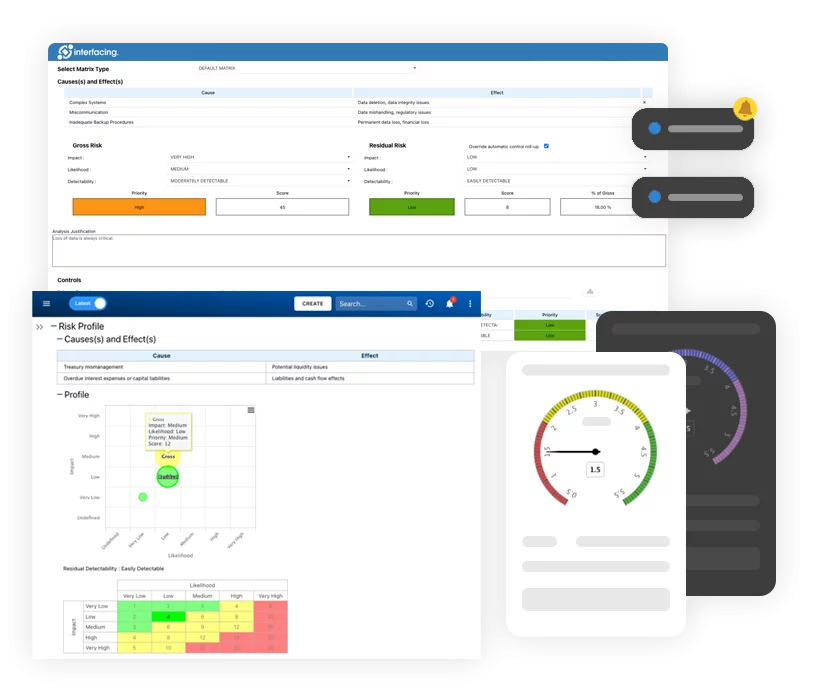
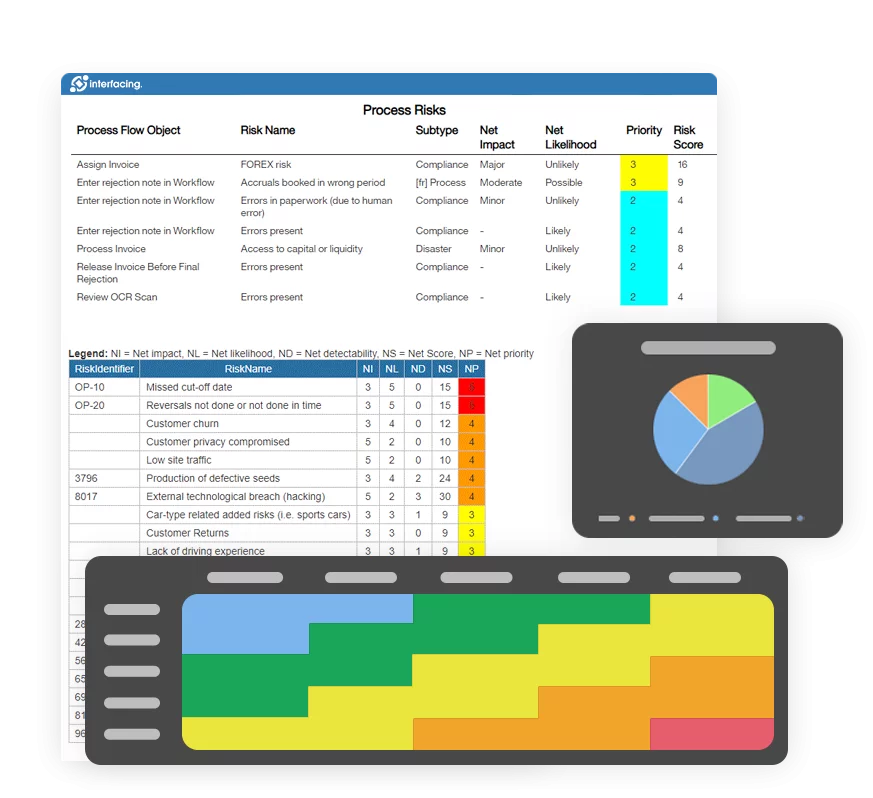
A DTO links the risk, process, control, owner and evidence within the same organizational context. This allows auditors and internal assurance teams to evaluate the control as part of how the organization actually operates rather than as an isolated entry in a register.

Moving From Periodic Preparation to Continuous Readiness

Continuous audit readiness does not mean that audit preparation disappears.

Audits still require scope definition, sampling, interviews, professional judgment and evidence review. Human oversight remains essential, particularly where regulatory interpretation or control effectiveness is involved.

The difference is that the organization does not need to reconstruct its operating model every time an audit takes place.

When processes, controls, requirements, documents, roles, training, findings and evidence are governed continuously, audit preparation becomes primarily an exercise in validation rather than discovery.

That is an important distinction.

An organization that begins looking for relationships only after an audit has been scheduled is preparing for an audit.

An organization that maintains those relationships as part of normal operations is building continuous audit readiness.

The latter is a governance capability, not simply an audit-management capability.


AI Can Assist, but Governance Still Matters

AI can help organizations navigate large volumes of audit and compliance information, but it does not remove the need for governed context.

An AI system working against isolated documents may be able to extract information or identify patterns. An AI-assisted capability working within a connected organizational model has access to something more valuable: relationships.

It can help users investigate which requirements relate to a finding, which processes or controls may be affected by a change, where supporting evidence exists or which downstream areas may require review.

This can improve the speed of investigation and impact analysis, but the technology should remain an aid to human decision-making.

Audit conclusions, control assessments and compliance judgments still require accountable human review. In regulated environments, explainability and traceability matter as much as analytical speed.

The objective should therefore not be autonomous audit decision-making. It should be better governed access to the information and dependencies people need to make informed decisions.

Audit Readiness as an Outcome of Good Governance

The strongest audit-ready organizations do not become ready in the weeks before an auditor arrives.

They operate in a way that continuously produces traceable evidence.

Requirements remain connected to implementation. Processes have ownership. Risks are associated with the activities that create exposure. Controls are linked to those risks. Procedures are governed through review and approval. Training follows role and process changes. Findings lead to corrective action. Changes trigger downstream impact assessment.

When those relationships are maintained, the organization does not need to recreate the story of how compliance works.

The story is already embedded in the operating model.

This is where the Digital Twin of an Organization becomes particularly important. A DTO is not simply a visual representation of processes. It provides the connected operational context needed to understand how processes, quality, risk, compliance, governance and execution influence one another.

Audit readiness becomes one of the outcomes of that connectivity.

How Interfacing Helps

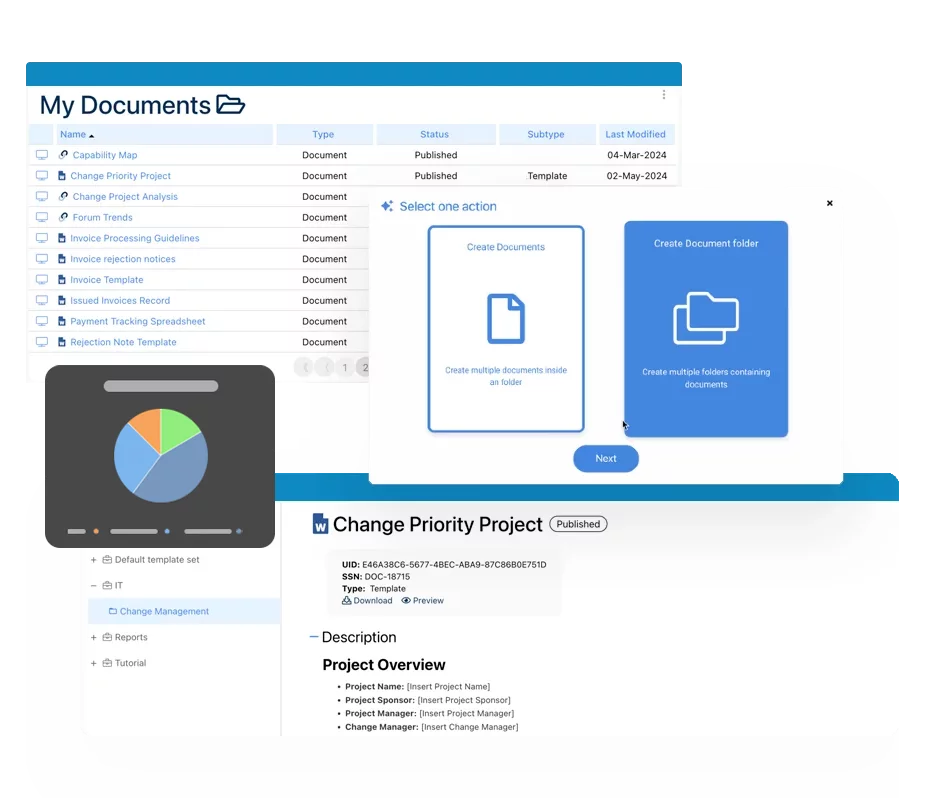
Interfacing’s Integrated Management System brings process management, QMS, GRC, document control, risk and controls, regulatory requirements, training, audit management and workflow automation into a connected governance environment.

The platform is designed around the relationships between these areas rather than treating them as independent repositories. This allows organizations to connect processes with the documents that govern them, risks with the controls that mitigate them, requirements with the procedures that implement them and findings with the corrective actions required to resolve them.

Interfacing also supports audit management within this broader operating context, helping organizations manage audit activities while maintaining links to relevant processes, risks, controls, documents and remediation actions.

The result is a different approach to audit readiness.

Rather than creating another layer of audit documentation, organizations can use the Digital Twin of an Organization to maintain the operational relationships auditors need to understand in the first place.

That moves audit readiness away from periodic preparation and closer to continuous assurance.

What is a DTO for audit readiness?

A DTO for audit readiness is a Digital Twin of an Organization that connects processes, requirements, risks, controls, documents, roles, training, findings and evidence within a governed operating model. This helps organizations maintain the context required to demonstrate compliance during audits.

How does a Digital Twin of an Organization improve audit readiness?

A DTO improves audit readiness by preserving relationships between regulatory obligations and operational execution. Organizations can trace requirements through processes, controls, responsibilities and supporting evidence instead of rebuilding those relationships during each audit.

Is a DTO the same as audit management software?

No. Audit management software typically supports audit planning, execution, findings, evidence and remediation. A DTO provides a broader organizational model that connects those audit activities to processes, risks, controls, systems, documents, training and other operational dependencies.

Can a DTO eliminate audit preparation?

No. Audits still require planning, sampling, interviews, professional judgment and evidence review. A DTO can reduce the effort required to reconstruct organizational context because relevant relationships are already maintained within the operating model.

How does a DTO support continuous audit readiness?

A DTO supports continuous audit readiness by maintaining governed relationships as operations change. When processes, requirements, controls, documents, roles and training remain connected, audit evidence can be evaluated within its operational context rather than assembled from scratch.

How can AI support audit readiness?

AI-assisted capabilities can help users search governed information, identify dependencies, analyze potential impacts and surface relevant evidence. Human reviewers should remain responsible for audit conclusions, control assessments and compliance decisions.

Why Choose Interfacing?


With over two decades of AI, Quality, Process, and Compliance software expertise, Interfacing continues to be a leader in the industry. To-date, it has served over 500+ world-class enterprises and management consulting firms from all industries and sectors. We continue to provide digital, cloud & AI solutions that enable organizations to enhance, control and streamline their processes while easing the burden of regulatory compliance and quality management programs.

To explore further or discuss how Interfacing can assist your organization, please complete the form below.

Documentation: Driving Transformation, Governance and Control

• Gain real-time, comprehensive insights into your operations.
• Improve governance, efficiency, and compliance.
• Ensure seamless alignment with regulatory standards.

eQMS: Automating Quality & Compliance Workflows & Reporting

• Simplify quality management with automated workflows and monitoring.
• Streamline CAPA, supplier audits, training and related workflows.
• Turn documentation into actionable insights for Quality 4.0

Low-Code Rapid Application Development: Accelerating Digital Transformation

• Build custom, scalable applications swiftly
• Reducing development time and cost
• Adapt faster and stay agile in the face of evolving customer and business needs.


AI to Transform your Business!

The AI-powered tools are designed to streamline operations, enhance compliance, and drive sustainable growth. Check out how AI can:
• Respond to employee inquiries
• Transform videos into processes
• Assess regulatory impact & process improvements
• Generate forms, processes, risks, regulations, KPIs & more
• Parse regulatory standards into requirements

Learn more about EPC's AI Use Cases
CONTACT US

Request Free Demo

Document, analyze, improve, digitize and monitor your business processes, risks, regulatory requirements and performance indicators within Interfacing’s Digital Twin integrated management system the Enterprise Process Center®!
Trusted by Customers Worldwide!

More than 400+ world-class enterprises and management consulting firms