

Interfacing

sales@interfacing.com

The next evolution of ISO 9001 is already changing how organizations think about quality, governance, and operational accountability. While many companies still approach ISO compliance as a documentation exercise, the direction of modern quality management increasingly points toward connected operational visibility, traceability, and continuous governance. Organizations that prepare early may gain far more than compliance readiness. They may gain operational resilience.

ISO 9001:2027 and the Future of Operational Governance

For years, many organizations treated ISO 9001 as a documentation challenge.

Policies had to be updated. Procedures needed approvals. Training records required signatures. Audits became cyclical exercises centered around proving that the organization maintained the right documentation at the right time.

That model worked reasonably well when operations moved slower, systems were simpler, and quality management largely existed inside isolated departmental environments.

But operational reality has changed.

Modern enterprises now operate across distributed teams, hybrid infrastructure, outsourced operations, increasingly interconnected supply chains, and rapidly evolving regulatory expectations. At the same time, organizations are under growing pressure to modernize operations using AI-assisted technologies, workflow automation, process intelligence, and integrated governance systems.

The result is a growing disconnect between documented compliance and actual operational execution.

This is where the conversation around ISO 9001:2027 becomes far more important than a routine standards revision.

The future of quality management is increasingly moving toward operational governance.

The Problem Is No Longer Missing Documentation

In many organizations today, the issue is not whether procedures exist.

The issue is whether those procedures accurately reflect operational reality.

A process map may appear compliant on paper while operational teams work around it daily. A quality workflow may technically satisfy documentation requirements while disconnected systems create delays, duplicated effort, fragmented accountability, and inconsistent execution underneath.

This is one of the hidden governance problems emerging across modern enterprises.

As organizations scale, quality systems often become fragmented ecosystems:

  • separate document repositories
  • disconnected CAPA systems
  • siloed risk registers
  • isolated audit tools
  • manual spreadsheet governance
  • inconsistent process ownership across departments

Over time, these disconnected environments create operational drift.

The organization still appears compliant structurally, but visibility into how operations actually function becomes increasingly limited.

This is also why many audit findings today are less about missing procedures and more about weak traceability, inconsistent execution, lack of accountability, and poor downstream impact visibility.

Organizations are beginning to realize that compliance maturity and operational maturity are no longer separate conversations.

Why Operational Governance Is Becoming Central to Quality Management

The next generation of quality management is increasingly focused on how organizations govern operations continuously, not just how they document them periodically.

That distinction matters.

Traditional quality systems were largely designed around maintaining evidence. Modern governance environments must also maintain operational alignment.

Organizations now need visibility into:

  • how processes connect
  • how risks propagate across operations
  • how changes affect downstream controls
  • how policies align to execution
  • how operational decisions impact compliance obligations
  • how accountability is maintained during change


This requires a far more connected operating model than many legacy quality environments were designed to support.

The organizations most likely to struggle under future governance expectations are often not the least compliant organizations. In many cases, they are the organizations operating with the highest complexity and the lowest operational visibility.

That complexity increases dramatically when organizations attempt to modernize using disconnected digital initiatives.

A workflow automation platform may improve task execution without improving governance. A process mining initiative may reveal bottlenecks without explaining operational dependencies. AI-assisted tools may accelerate analysis while introducing new accountability and explainability challenges.

Without an integrated governance framework underneath, modernization itself can unintentionally increase operational fragmentation.

ISO 9001:2027 Reflects a Broader Industry Shift

Although the final direction of ISO 9001:2027 is still evolving, broader industry patterns are already clear.

Organizations are being pushed toward:

  • stronger risk-based thinking
  • greater operational transparency
  • improved traceability
  • continuous governance
  • digitally connected management systems
  • more resilient operational structures


This evolution aligns closely with the broader movement toward integrated operational governance across highly regulated industries.

Quality management is no longer operating independently from process governance, risk management, compliance management, operational resilience, audit readiness, and digital transformation.

These disciplines are increasingly converging into a single operational ecosystem.

That convergence is important because modern operational risk rarely exists inside one department.

A process change can affect quality outcomes.
A supplier issue can create compliance exposure.
A system update can impact training obligations.
A workflow automation initiative can alter audit accountability.

Disconnected systems struggle to model and govern these relationships effectively.

Connected governance models do not simply improve compliance visibility. They improve organizational intelligence.

AI Is Raising the Governance Bar Even Higher

AI-assisted operational environments are accelerating this shift further.

Many organizations are now exploring AI-assisted process discovery, workflow intelligence, document analysis, anomaly detection, predictive risk analysis, and operational recommendations.

But AI introduces a new governance challenge.

Organizations still need explainability.

In highly regulated industries especially, operational decisions cannot become black boxes. Leaders must still understand why recommendations were made, how decisions were influenced, and what operational dependencies may be affected downstream.

This is where governance-first AI strategies become critically important.

AI should strengthen operational visibility and decision support while preserving accountability, traceability, and human oversight.

Organizations that separate AI initiatives from governance frameworks may unintentionally create new operational risks while attempting to solve old ones.

The future of operational excellence will likely depend less on how much AI organizations deploy and more on how effectively they govern it.

Final Thoughts

ISO 9001:2027 may ultimately represent something much larger than a standards update.

It reflects a broader shift happening across enterprise operations.

Organizations are moving away from isolated compliance activities and toward continuously governed operating environments where process, quality, risk, compliance, operational execution, and AI-assisted intelligence are increasingly interconnected.

The organizations that prepare early will likely gain more than compliance readiness.

They may gain the operational visibility, resilience, and governance maturity required to compete in increasingly complex and regulated environments.

Why Choose Interfacing?


With over two decades of AI, Quality, Process, and Compliance software expertise, Interfacing continues to be a leader in the industry. To-date, it has served over 500+ world-class enterprises and management consulting firms from all industries and sectors. We continue to provide digital, cloud & AI solutions that enable organizations to enhance, control and streamline their processes while easing the burden of regulatory compliance and quality management programs.

To explore further or discuss how Interfacing can assist your organization, please complete the form below.

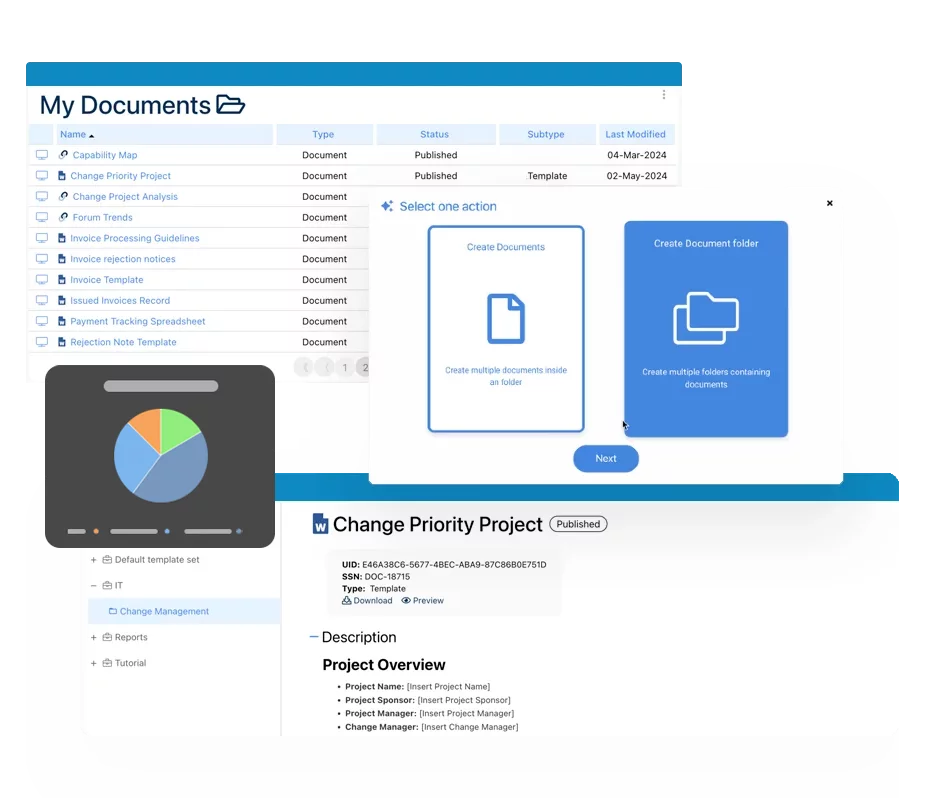
Documentation: Driving Transformation, Governance and Control

• Gain real-time, comprehensive insights into your operations.
• Improve governance, efficiency, and compliance.
• Ensure seamless alignment with regulatory standards.

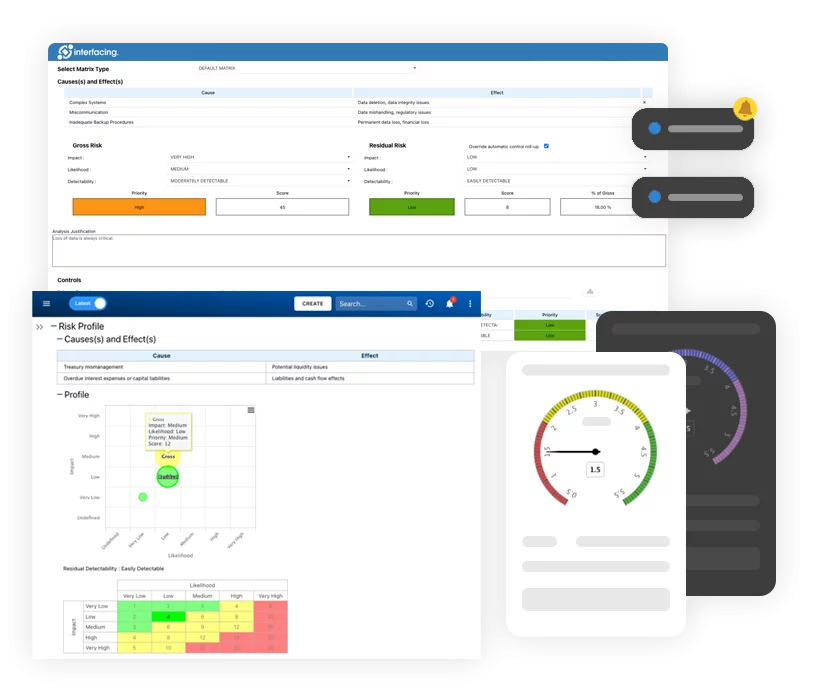
eQMS: Automating Quality & Compliance Workflows & Reporting

• Simplify quality management with automated workflows and monitoring.
• Streamline CAPA, supplier audits, training and related workflows.
• Turn documentation into actionable insights for Quality 4.0

Low-Code Rapid Application Development: Accelerating Digital Transformation

• Build custom, scalable applications swiftly
• Reducing development time and cost
• Adapt faster and stay agile in the face of evolving customer and business needs.


AI to Transform your Business!

The AI-powered tools are designed to streamline operations, enhance compliance, and drive sustainable growth. Check out how AI can:
• Respond to employee inquiries
• Transform videos into processes
• Assess regulatory impact & process improvements
• Generate forms, processes, risks, regulations, KPIs & more
• Parse regulatory standards into requirements


Learn more about EPC's AI Use Cases
CONTACT US

Request Free Demo

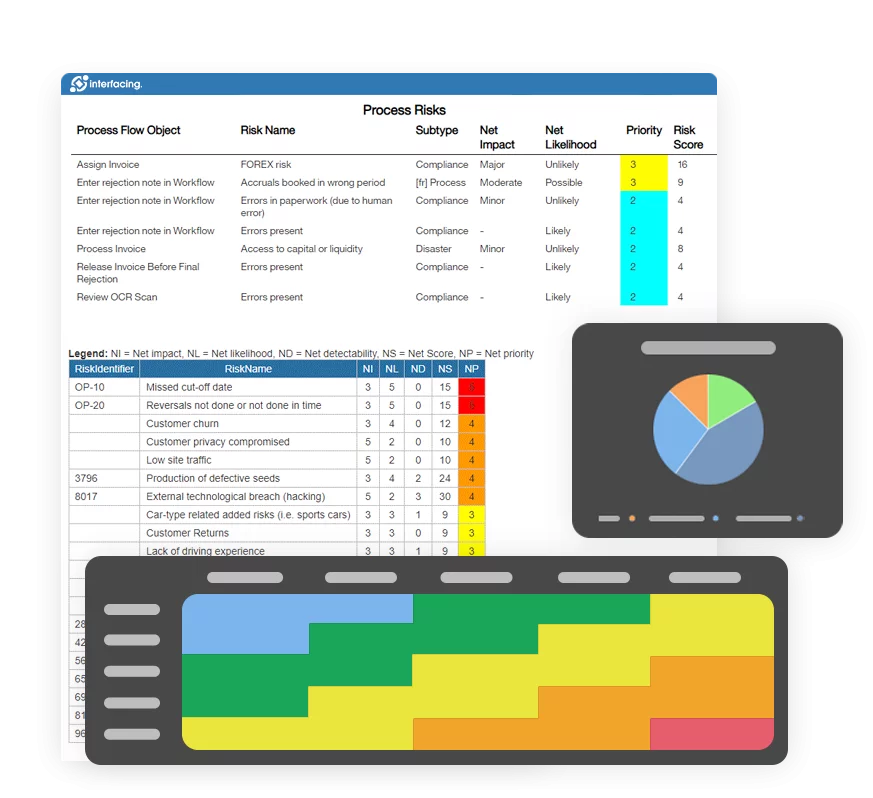
Document, analyze, improve, digitize and monitor your business processes, risks, regulatory requirements and performance indicators within Interfacing’s Digital Twin integrated management system the Enterprise Process Center®!
Trusted by Customers Worldwide!

More than 400+ world-class enterprises and management consulting firms