

Interfacing

sales@interfacing.com

Organizations rarely struggle because they cannot identify what changed. They struggle because they cannot see everything that the change will affect.

A Digital Twin of an Organization becomes valuable when it reveals how processes, systems, people, policies, risks, controls, suppliers, data, and performance measures depend on one another. Without those relationships, the twin may document the organization, but it cannot help leaders govern change.

A Digital Twin Must Explain What Happens Next

A regulation changes.

A supplier becomes unavailable.

A critical system is replaced.

A process owner leaves.

A control is redesigned.

A standard operating procedure is revised.

Each event appears manageable when viewed in isolation. The real difficulty begins when leaders ask the next question: What else will this change affect?

A revised regulatory requirement may affect policies, procedures, controls, training, forms, software configurations, supplier agreements, and audit evidence. A system change may alter process steps, user responsibilities, data retention rules, access controls, and recovery plans.

These consequences do not follow a simple linear path. They move through a network of operational dependencies.

A Digital Twin of an Organization should make that network visible. It should show not only what exists inside the organization, but also how each operational element relates to everything around it.

Without those relationships, the organization has a collection of digital records, not a reliable model of operational reality.

Most Change Management Systems Track Tasks, Not Consequences

Traditional change management systems are often designed around requests, approvals, implementation tasks, and closure dates.

That structure can answer several useful questions:

  • Who requested the change?
  • Who approved it?
  • Which tasks have been completed?
  • Is the change overdue?
  • Has the implementation been closed?


What it often cannot answer is whether the change was assessed across the complete operating environment.

A change request might be marked complete even though an affected training program was never updated. A new control might be implemented without examining the processes that depend on it. A revised procedure may be approved while related forms continue to enforce the previous version.

The workflow may be complete while the organizational change remains incomplete.

This is the weakness of task-based change governance. It measures the progress of the change record, not the completeness of the operational impact.

Dependencies Are the Structure Behind Organizational Change

Dependencies define how one part of the organization relies on another.

A business process may depend on a specific role, application, supplier, policy, control, data source, or piece of equipment. That process may also produce information required by another department, customer-facing service, regulatory report, or quality workflow.

When these dependencies are explicitly modeled, leaders can trace how a change may move through the organization.

For example, replacing a laboratory information system could affect:

  • process activities that collect or approve test data
  • roles authorized to review results
  • interfaces transferring information to other systems
  • electronic records and retention requirements
  • standard operating procedures
  • employee training
  • data integrity controls
  • validation documentation
  • business continuity and recovery plans


A conventional application inventory may identify the system owner and renewal date. A connected operating model explains what the system supports, who relies on it, which controls govern it, and what could fail if it changes.

That difference is central to dependency-aware digital transformation.

A Process Map Alone Cannot Reveal the Full Impact

Process models provide critical operational context, but process flows alone are not enough.

A process map might show the sequence of activities from receiving a quality complaint to closing a corrective action. It may not show the regulations governing the process, the systems storing evidence, the training required for each role, the risks controlled by individual activities, or the downstream processes consuming the resulting information.

This is why a DTO cannot be limited to process visualization.

It must connect processes with:

  • organizational roles and responsibilities
  • systems, applications, equipment, and data
  • policies, procedures, and business rules
  • regulations and compliance obligations
  • risks, controls, and control objectives
  • products, services, customers, and suppliers
  • capabilities, resources, and performance indicators
  • quality events, audits, CAPAs, and improvement actions


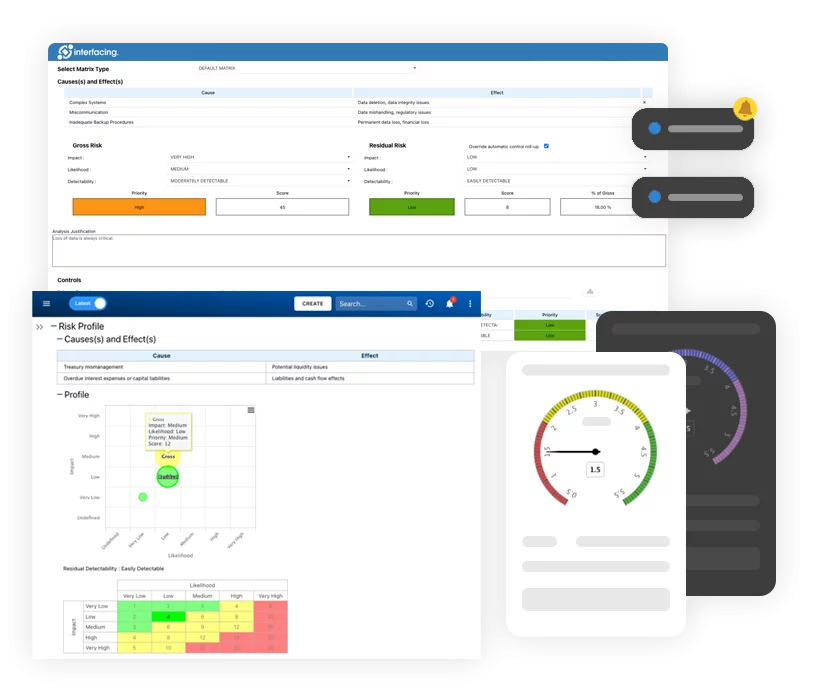
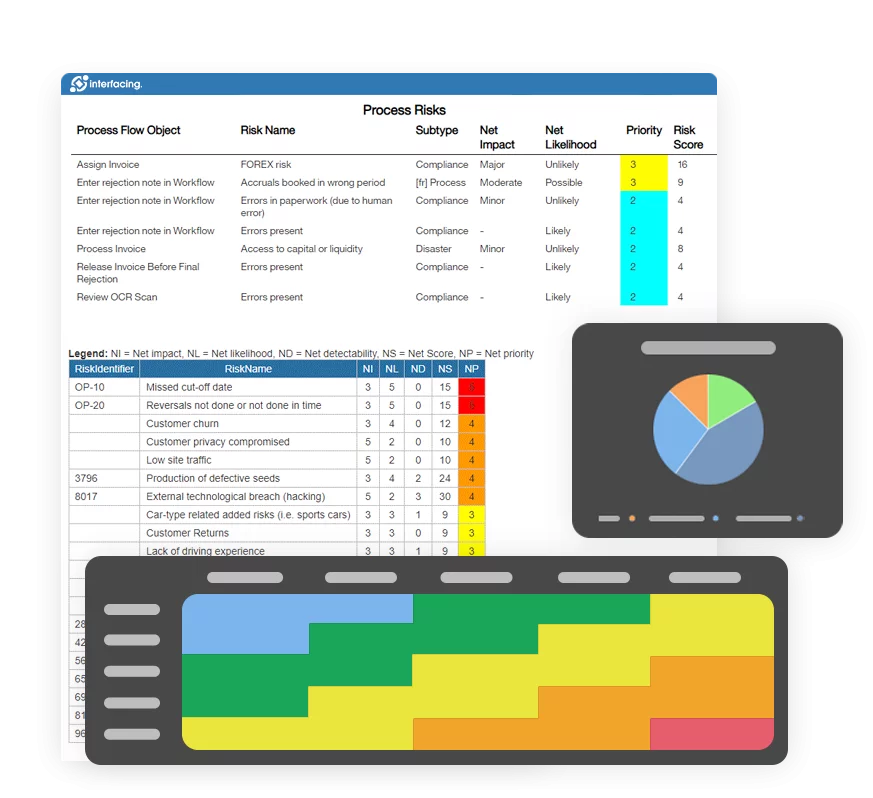
Interfacing’s AI-Integrated Management System is designed around this connected approach, bringing process, quality, risk, compliance, documentation, and automation into a shared operational environment.

The value comes from the relationships, not merely the number of objects stored in the platform.

Hidden Dependencies Turn Small Changes Into Large Failures

Many operational failures begin with a change that appeared low risk.

A team modifies a process but overlooks a related control. A policy is updated, but the employees responsible for executing it are not retrained. A supplier is replaced without assessing how the new arrangement affects product specifications, inspections, data exchange, or regulatory obligations.

The original decision may be reasonable. The failure comes from an incomplete view of its consequences.

This creates a familiar organizational pattern. One issue is corrected, but the correction introduces problems somewhere else.

The organization then enters a cycle of reactive remediation:

  1. A problem appears.
  2. A local fix is introduced.
  3. The fix changes another dependency.
  4. A new problem surfaces elsewhere.
  5. Another local fix is applied.

This is the operational “whack-a-mole” effect. It occurs when decisions are made within departmental or system boundaries while the underlying dependencies cross those boundaries.

A dependency-aware DTO helps leaders evaluate the connected operating model before implementing the change.

Regulatory Change Exposes the Dependency Problem

Regulatory change is one of the clearest examples of why dependency modeling matters.

A new or revised requirement rarely affects only the compliance department. It may require changes to policies, SOPs, controls, product documentation, employee training, supplier oversight, data retention, reporting, audit protocols, and system configurations.

A spreadsheet can record the regulatory update. A document management system can store the new policy. A task management platform can assign activities.

None of those tools, by themselves, can reliably show the complete chain of operational impact.

Interfacing describes regulatory intelligence as the ability to map external changes to internal systems and initiate updates to procedures, training, or change workflows. This is possible only when external requirements are connected to the internal objects they govern.

The key principle is straightforward: impact analysis depends on relationship data.

If the relationship between a regulation and a process has never been modeled, the system cannot reliably identify that process as affected.

AI Cannot Infer Dependencies That the Organization Has Never Governed

AI-assisted impact analysis can help organizations examine complex networks of operational information. It can suggest relationships, identify likely downstream impacts, compare content, and help teams recognize patterns that may be difficult to detect manually.

However, AI does not eliminate the need for a governed operating model.

An AI tool may identify a semantic similarity between a revised requirement and an existing procedure. That does not automatically establish whether the procedure is formally governed by the requirement, whether the relationship remains valid, or whether the proposed change should be approved.

The organization still needs:

  • defined ownership
  • approved relationships
  • controlled taxonomies
  • version histories
  • review and approval workflows
  • traceable human decisions
  • verified implementation evidence


AI should assist the impact assessment. It should not invent the governance structure on which the assessment depends.

This is especially important in regulated environments, where suggested impacts must be reviewed, approved, implemented, and documented through controlled workflows.

Impact Analysis Must Continue After Approval

Another common assumption is that impact analysis ends when a change is approved.

In reality, approval is only the beginning of implementation.

The organization must still determine whether:

  • all affected documents were revised
  • required controls were updated
  • systems and forms reflect the new requirements
  • employees completed training
  • local variations were addressed
  • suppliers received the necessary information
  • risks were reassessed
  • implementation evidence was retained
  • the change achieved its intended outcome


A connected DTO allows impact analysis to extend across the complete change lifecycle.

The organization can trace a requirement from identification through assessment, approval, implementation, training, confirmation, and ongoing monitoring. Each affected object can retain its own ownership, workflow status, version history, and audit evidence.

This turns impact analysis from a one-time workshop into a governed operational capability.

Executive Reality Check

A Digital Twin of an Organization should not be judged by how many diagrams it contains.

The real test is whether leaders can use it to answer difficult operational questions before approving a change.

What processes depend on this system? Which controls will need to be reassessed? What training will become outdated? Which customer or supplier commitments could be affected? Where could the change introduce new risk?

If the twin cannot answer those questions, it remains descriptive rather than operational. It may show the organization’s current state, but it cannot reliably help leaders move from that state to the next one.

How Interfacing Helps Organizations Govern Dependencies

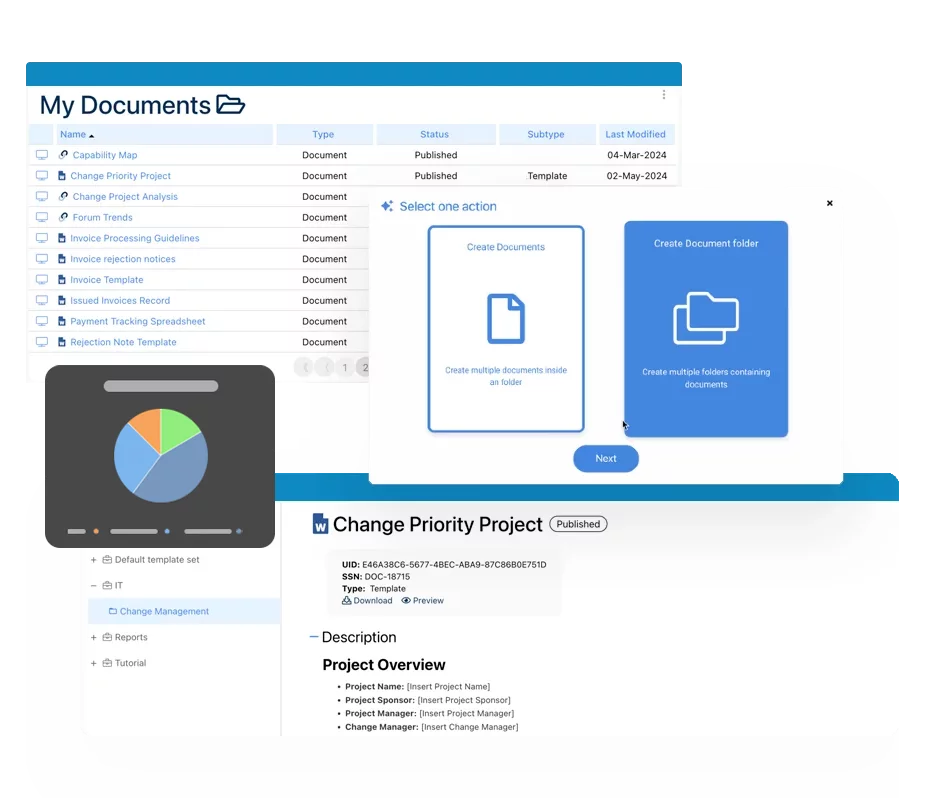
Interfacing’s Integrated Management System creates a connected repository for processes, documents, regulations, risks, controls, roles, systems, training, quality events, performance indicators, and workflow records.

Instead of managing these elements as isolated files or application records, organizations can establish governed relationships between them.

This supports:

  • upstream and downstream impact visibility
  • AI-assisted impact recommendations
  • process and regulatory change assessments
  • ownership and accountability
  • controlled endorsement and approval workflows
  • digital signatures and audit trails
  • role-based training and read confirmations
  • version comparison and restoration
  • risk and control reassessment
  • implementation tracking across affected objects


Interfacing has described its DTO approach as providing centralized management of organizational objects, complex interdependencies, impact analysis, and ongoing monitoring.

The result is more than a visual twin. It is a governed operating model that helps organizations understand how change moves, where it creates risk, and what must be updated before the change can be considered complete.

A Useful Digital Twin Makes Change Explainable

Organizations do not need another static representation of how work is supposed to happen.

They need a connected operational model that explains why a change matters, who it affects, what must be updated, which risks could emerge, and how implementation will be verified.

Dependency modeling is what makes that possible.

Without it, a digital twin can show leaders the organization they already have.

With it, the twin can help them understand the organization they are about to create.

Why Choose Interfacing?


With over two decades of AI, Quality, Process, and Compliance software expertise, Interfacing continues to be a leader in the industry. To-date, it has served over 500+ world-class enterprises and management consulting firms from all industries and sectors. We continue to provide digital, cloud & AI solutions that enable organizations to enhance, control and streamline their processes while easing the burden of regulatory compliance and quality management programs.

To explore further or discuss how Interfacing can assist your organization, please complete the form below.

Documentation: Driving Transformation, Governance and Control

• Gain real-time, comprehensive insights into your operations.
• Improve governance, efficiency, and compliance.
• Ensure seamless alignment with regulatory standards.

eQMS: Automating Quality & Compliance Workflows & Reporting

• Simplify quality management with automated workflows and monitoring.
• Streamline CAPA, supplier audits, training and related workflows.
• Turn documentation into actionable insights for Quality 4.0

Low-Code Rapid Application Development: Accelerating Digital Transformation

• Build custom, scalable applications swiftly
• Reducing development time and cost
• Adapt faster and stay agile in the face of evolving customer and business needs.


AI to Transform your Business!

The AI-powered tools are designed to streamline operations, enhance compliance, and drive sustainable growth. Check out how AI can:
• Respond to employee inquiries
• Transform videos into processes
• Assess regulatory impact & process improvements
• Generate forms, processes, risks, regulations, KPIs & more
• Parse regulatory standards into requirements


Learn more about EPC's AI Use Cases
CONTACT US

Request Free Demo

Document, analyze, improve, digitize and monitor your business processes, risks, regulatory requirements and performance indicators within Interfacing’s Digital Twin integrated management system the Enterprise Process Center®!
Trusted by Customers Worldwide!

More than 400+ world-class enterprises and management consulting firms