An approved SOP can still become operationally inaccurate after it has passed review and approval. Roles change, systems are replaced, controls are modified, regulations evolve, and processes are improved, often long before the procedure reaches its next scheduled review. Effective SOP governance therefore requires more than version control, it requires visibility into the operational relationships that determine whether the procedure is still correct.
Approval Captures a Moment in Time
Few quality leaders would argue against formal document control. In a regulated environment, an SOP needs clear ownership, defined reviewers and approvers, version history, access controls, revision cycles, and evidence that the right people were informed or trained when changes occurred.
Those controls establish governance around the document. They do not necessarily establish that the content inside the document will remain accurate until its next review.
That distinction is easy to miss because approval feels definitive. Once an SOP has completed review, received the required signatures, and been published as the current version, the organization naturally treats it as authoritative. From a document-control perspective, that is exactly what should happen.
The difficulty is that the environment described by the procedure continues to change.
An employee responsibility might move from one role to another. A supplier requirement may be revised. An application supporting a process may be replaced. A control may be strengthened after an audit finding. A regulatory obligation may change. A workflow may be redesigned to eliminate an unnecessary step.
None of these changes automatically makes the SOP invalid, but each can create a reason to reassess whether the approved procedure still reflects the way controlled work is expected to occur.
The core problem is therefore not approval itself. It is the assumption that approval and continuing operational accuracy are the same thing.
They are not.
The Weakness Appears Between Review Cycles
Periodic review is an essential part of document governance because procedures should not remain untouched indefinitely. Interfacing’s own governance model includes automated revision schedules, periodic reviews, version management, approval workflows, and confirmation or training activities as part of the document lifecycle.
The limitation is temporal.
A procedure may be approved in January and scheduled for review the following January. During those twelve months, the organization does not stop changing.
Suppose the process uses a particular application when the SOP is approved. Three months later, IT replaces that application. The process itself is adjusted to accommodate the new system, and employees begin following the revised workflow. Unless the application change is connected to the controlled procedure in a way that exposes the dependency, the SOP may remain formally current even though one of its underlying assumptions is no longer true.
The same issue can occur with responsibilities. If a role changes, the impact may extend well beyond an organizational chart. That role could appear in process steps, approval responsibilities, training requirements, risk controls, escalation procedures, quality workflows, and multiple SOPs.
The operational change may be obvious. Its documentation impact often is not.
This is why simply shortening review cycles is an incomplete solution. Reviewing every document more frequently may reduce the time during which an inconsistency can exist, but it also increases administrative burden and still depends heavily on people identifying what needs to be reconsidered.
A stronger approach is to make the relationships themselves visible.
An SOP Is Part of an Operating Model, Not an Isolated File
The traditional document-centric view treats an SOP primarily as controlled content.
A process-oriented view treats it as one representation of a much larger operating environment.
The procedure describes work performed by people, supported by systems, governed by rules and controls, influenced by risk, and often constrained by regulatory requirements. It may also determine who requires training, what evidence must be produced, which records must be retained, and which activities occur upstream or downstream.
Those relationships are what give the SOP meaning.
Interfacing’s Integrated Management System is designed around this type of connected model, bringing processes, procedures, roles, risks, controls, regulations, quality activities, training and other operational information into a shared governed environment rather than managing each exclusively as an independent file.
That creates an important shift in how organizations can think about document accuracy.
Instead of asking only, “When is this SOP due for review?”, they can also ask, “What has changed around this SOP since it was approved?”
That second question is often more valuable.
A system change can lead back to the procedures that depend on the system. A role change can reveal where that responsibility appears elsewhere. A control modification can expose related process activities or documentation. A regulatory change can identify downstream content requiring evaluation.
The organization is no longer relying solely on the document owner remembering every dependency.
It is using the operating model to help reveal them.
This aligns with Interfacing’s broader positioning around managing data and relationships rather than disconnected files, including impact analysis across process, risk, control, system, documentation, governance, responsibility and performance information.
For more on this connected approach, see:
https://interfacing.com/enterprise-management-system

Why This Matters More in Regulated Environments
The difference between a controlled document and an operationally accurate document becomes especially important when procedures provide evidence of compliance.
An auditor may confirm that a procedure has an owner, that the current version was approved correctly, and that employees received the appropriate training. Those controls are valuable and necessary.
But the deeper governance question is whether the approved procedure still represents the actual controlled process.
If operations have changed while the SOP has not, the organization can create a gap between documented intent and execution. In some cases, employees may be following the improved process while the procedure describes the old one. In others, employees may continue following an approved procedure even though an underlying system, requirement, or control has changed.
Neither situation is desirable.
The purpose of document governance should therefore extend beyond proving that a procedure passed through the correct approval workflow. It should help maintain alignment between documented requirements and operational reality.
This is one reason the shift from document-centric QMS thinking toward a more integrated quality operating model matters. Interfacing’s QMS positioning connects document control with processes, audit, CAPA, risk, training, controls and related governance rather than treating each as a completely isolated function. The internal QMS review identifies the main eQMS page as the central pillar for this connected quality-management model.
From Scheduled Review to Change-Aware Governance
This does not mean periodic review becomes unnecessary. Scheduled review remains an important control because not every source of obsolescence can be detected automatically.
The stronger model combines both approaches.
Periodic governance asks whether a procedure remains fit for purpose at defined intervals.
Change-aware governance asks whether something has occurred that should cause the procedure to be reconsidered before that interval arrives.
Together, they reduce dependence on a single review date.
AI-assisted impact analysis can add another layer by helping identify relationships that may deserve human attention when a process, rule, system, regulation, or other operational element changes. Interfacing’s product material explicitly describes intelligent suggested impact assessment alongside downstream impact analysis.
That capability should not be confused with autonomous compliance.
AI can suggest where teams should look. The process owner, quality leader, compliance professional, or other responsible person still determines whether the relationship is meaningful, whether the SOP needs revision, and what governance workflow should follow.
That human accountability is particularly important in regulated operations.
Executive Reality Check
An organization can have excellent document control and still experience SOP accuracy problems.
The issue is not necessarily a failed approval workflow. The issue may be that the organization governs the document lifecycle more effectively than it governs the operational dependencies surrounding the document.
A current version proves which SOP employees are supposed to use. It does not automatically prove that every role, process, application, risk, control, regulation, or training dependency reflected in that SOP is still current.
The more connected the organization becomes, the more important those relationships become.
How Interfacing Helps Keep SOPs Connected to Operations
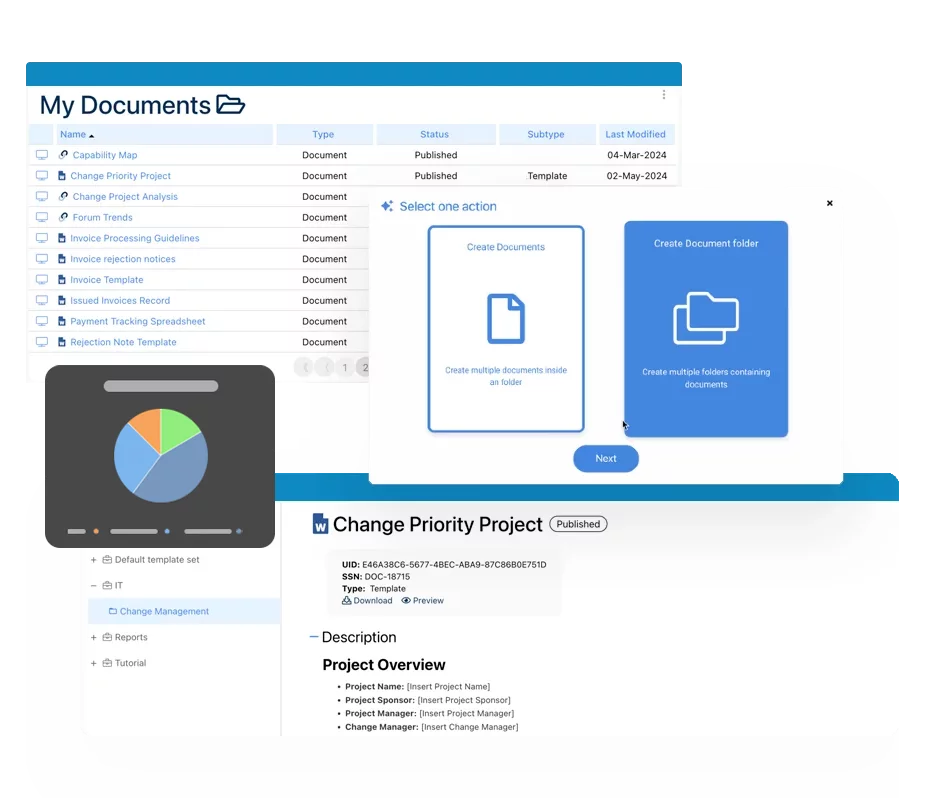
Interfacing treats SOP management as part of a connected operating model, not as a standalone document-control exercise. Within the Integrated Management System, procedures can be linked to the processes they govern, the roles responsible for execution, the risks and controls that apply, the regulatory requirements they support, the systems they depend on, and the training obligations created by change. That gives quality teams a much clearer view of whether an approved SOP still reflects the environment in which work is actually being performed.
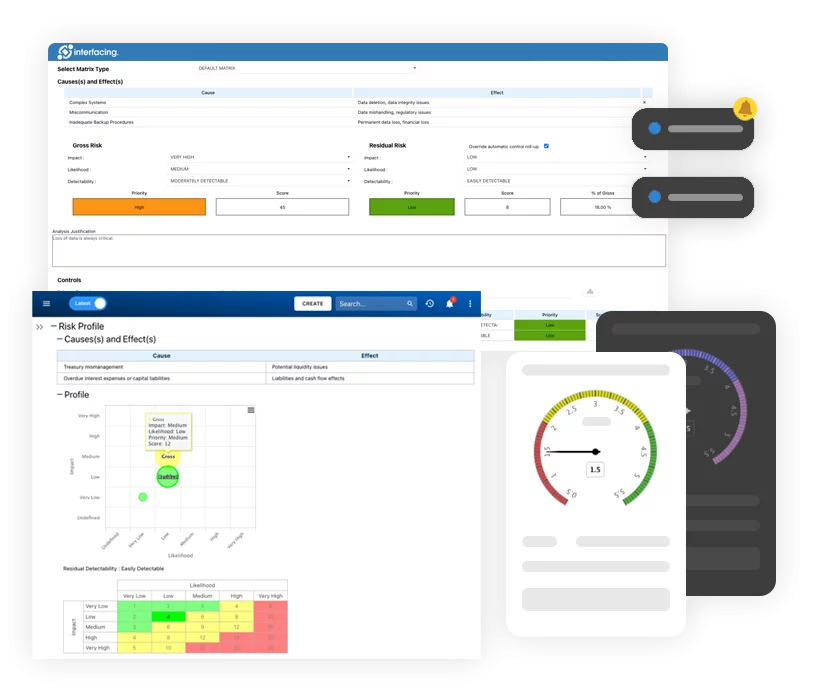
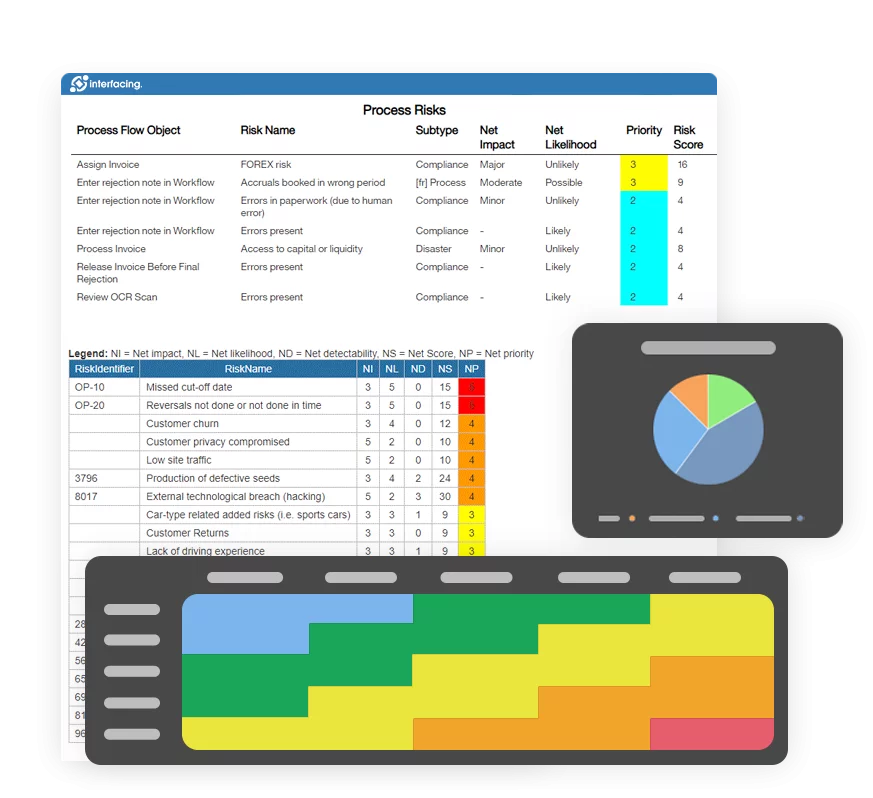
This matters because operational change rarely affects only one document. A new system can alter responsibilities and process steps. A revised regulation can create downstream impacts on procedures, controls, training, and evidence requirements. A role change can affect approvals, RASCI assignments, confirmation tasks, and multiple SOPs at once. Interfacing is designed to make those relationships visible so teams can assess the broader impact of a change instead of relying on manual searches or individual memory. The platform includes downstream impact visibility, AI-assisted impact suggestions, change workflows, periodic reviews, approval cycles, version control, and training assignment tied to process and procedure changes.
For regulated organizations, that creates a stronger governance model than simply proving that the latest document version was approved. Interfacing supports controlled review and approval workflows, electronic signatures, read confirmations, audit trails, version history, scheduled reviews, archive and restore controls, and role-based training assignment. These capabilities help organizations maintain traceability from the original change through review, approval, publication, communication, and employee acknowledgement.
The broader advantage is that Interfacing brings document control together with BPM, QMS, risk, compliance, training, audit, CAPA, regulatory management, and low-code workflows in the same Integrated Management System. Instead of investigating a change across several disconnected repositories, quality teams can work from a governed environment where the relationships between operational information are already maintained.
For a quality leader, this means fewer blind spots between what the SOP says and what the organization is actually doing. For compliance teams, it means stronger traceability when they need to demonstrate how a change was assessed and governed. For operations, it means less dependence on outdated procedures or manual follow-up when systems, responsibilities, controls, or regulations change.
That is the real value of connected SOP governance. The goal is not simply to keep documents current. It is to help ensure that approved procedures continue to represent the controlled operating reality they were created to govern.
This is a much stronger selling section because it answers why Interfacing matters, not just what it does. It also uses actual capabilities supported in your Interfacing materials, including process-linked documentation, downstream impact visibility, governance workflows, training assignment, audit trails, versioning, and the integrated QMS/BPM/GRC model.
Frequently Asked Questions
Can an approved SOP become outdated before its next review?
Yes. An SOP can remain formally approved while a related process, role, system, control, regulation, supplier requirement, or other dependency changes. This is why scheduled reviews are stronger when combined with change-impact visibility.
What is the difference between SOP approval and SOP accuracy?
Approval confirms that the designated governance process was completed for a specific version. Accuracy refers to whether the procedure continues to reflect current operational and regulatory requirements.
Are periodic SOP reviews enough?
Periodic reviews are important, but changes can occur between scheduled reviews. Change-aware governance helps identify situations where a procedure may require earlier reassessment.
What is a process-based SOP?
A process-based SOP is connected to the process and operational information it describes rather than being managed only as an isolated document. This can improve visibility into roles, controls, systems, risks and other dependencies.
How can impact analysis improve SOP governance?
Impact analysis helps teams identify related processes, procedures, roles, systems, controls, training requirements or regulatory obligations that may need evaluation after a change.
Can AI automatically determine when an SOP is inaccurate?
AI can assist by suggesting potential dependencies or affected content, but determining whether a procedure requires revision should remain subject to appropriate human review and governance.
Why Choose Interfacing?
With over two decades of AI, Quality, Process, and Compliance software expertise, Interfacing continues to be a leader in the industry. To-date, it has served over 500+ world-class enterprises and management consulting firms from all industries and sectors. We continue to provide digital, cloud & AI solutions that enable organizations to enhance, control and streamline their processes while easing the burden of regulatory compliance and quality management programs.
To explore further or discuss how Interfacing can assist your organization, please complete the form below.

Documentation: Driving Transformation, Governance and Control
• Gain real-time, comprehensive insights into your operations.
• Improve governance, efficiency, and compliance.
• Ensure seamless alignment with regulatory standards.

eQMS: Automating Quality & Compliance Workflows & Reporting
• Simplify quality management with automated workflows and monitoring.
• Streamline CAPA, supplier audits, training and related workflows.
• Turn documentation into actionable insights for Quality 4.0

Low-Code Rapid Application Development: Accelerating Digital Transformation
• Build custom, scalable applications swiftly
• Reducing development time and cost
• Adapt faster and stay agile in the face of
evolving customer and business needs.
AI to Transform your Business!
The AI-powered tools are designed to streamline operations, enhance compliance, and drive sustainable growth. Check out how AI can:
• Respond to employee inquiries
• Transform videos into processes
• Assess regulatory impact & process improvements
• Generate forms, processes, risks, regulations, KPIs & more
• Parse regulatory standards into requirements

Request Free Demo
Document, analyze, improve, digitize and monitor your business processes, risks, regulatory requirements and performance indicators within Interfacing’s Digital Twin integrated management system the Enterprise Process Center®!
Trusted by Customers Worldwide!
More than 400+ world-class enterprises and management consulting firms