Interfacing

Interfacing vs Ideagen Q-Pulse

Comparing a QMS-Centric Platform with an Integrated Management System

Organizations operating in regulated environments often evaluate quality management software as part of broader governance, risk, and compliance initiatives. While many platforms support quality activities, meaningful differences emerge when examining architectural scope, governance intent, and how quality is positioned within the overall operating model.

These differences are particularly clear when comparing Ideagen Q-Pulse and Interfacing.

Both solutions support compliance-driven objectives. However, they are designed to address different levels of organizational complexity and governance maturity.

Trusted by Regulated Industries Worldwide

  • Gartner® Recognized Digital Twin of an Organization (DTO)

  • ISO, FDA, and GxP Validated Platform

  • Global Deployments Across Life Sciences, Pharma & Healthcare

Ideagen Q-Pulse: A QMS-Centric Platform

Ideagen Q-Pulse is a quality management platform designed to support organizations in managing core quality and compliance activities. Its functionality is centered on areas such as audit management, corrective and preventive actions, document control, training records, and incident handling.

Q-Pulse follows a QMS-centric model, where quality workflows and compliance records form the primary system focus. This approach aligns with organizations that manage governance primarily through the quality function and require a structured environment for maintaining compliance artifacts and quality processes.

The Structural Boundaries of a QMS-Centric Model

Quality management systems are effective within the scope they are designed to address. However, as organizations grow in scale and regulatory exposure, quality outcomes are increasingly shaped by factors that exist outside traditional QMS boundaries.

In a QMS-centric architecture:

  • Processes may be referenced or documented, but are not governed as an enterprise process model

  • Risk is typically handled within quality contexts rather than embedded across operational workflows

  • Regulatory obligations are tracked, but not structurally linked to enterprise change

  • Quality data exists primarily within functional silos

These characteristics reflect architectural scope rather than functional limitations. They become relevant when organizations require broader governance visibility across operations.

Interfacing’s Integrated Management System Approach

Interfacing is designed around an Integrated Management System (IMS), where quality management operates as one governed component of a broader enterprise operating model.

Instead of treating quality as a standalone discipline, Interfacing structurally connects processes, risks, controls, documents, roles, systems, and regulatory requirements within a single environment. This enables organizations to understand how quality outcomes are influenced by operational design, change, and governance decisions.

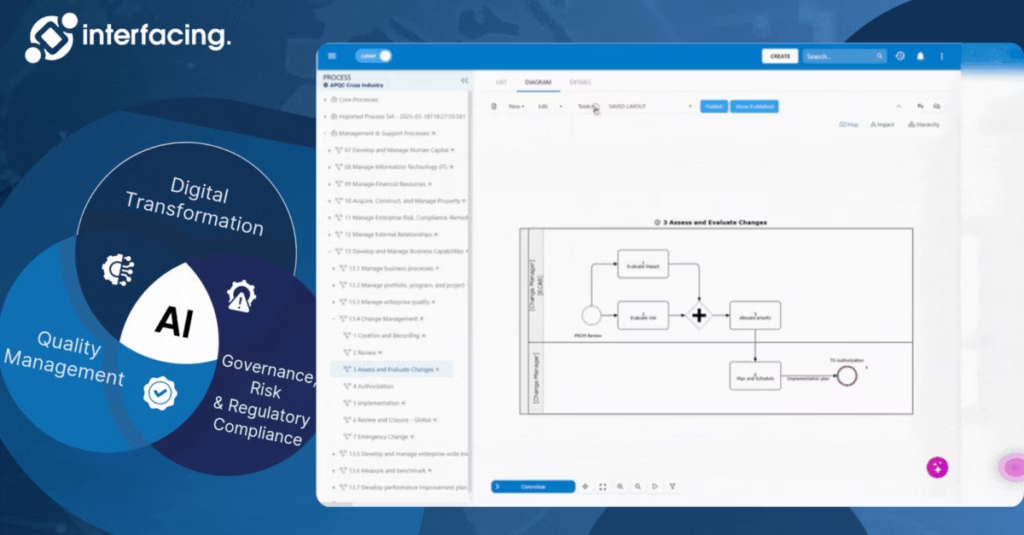
Interfacing supports a Digital Twin Organization approach, providing a structured representation of how work is performed across the enterprise. AI-assisted capabilities are used to support impact analysis and insight, augmenting governance and decision-making rather than replacing it.

High-Level Comparison: Scope and Design Intent

Feature Interfacing IMS Ideagen Q-Pulse
Platform Orientation Integrated Management System spanning process, quality, risk, and compliance Quality Management System centered on quality and compliance activities
AI Integration AI-assisted impact analysis and governance insight across domains Rule-based workflows and analytics within QMS scope
Unified IMS (QMS + BPM + GRC) Single connected environment with shared governance model QMS-focused modules; broader governance managed externally
Process Management Enterprise BPMN-based process modeling and governance Process references linked to quality records
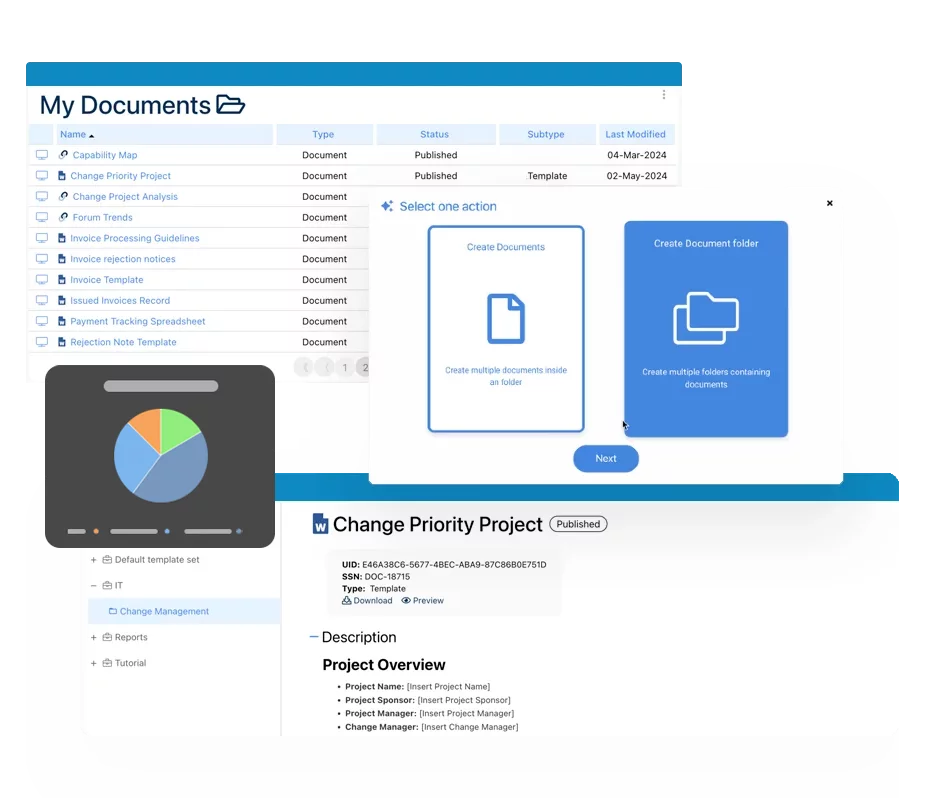
Document Control & Validation End-to-end governed lifecycle with traceability and audit evidence Document control within quality management context
Audit & Inspection Management Audit readiness linked directly to processes, risks, and controls Audit and inspection management within QMS workflows
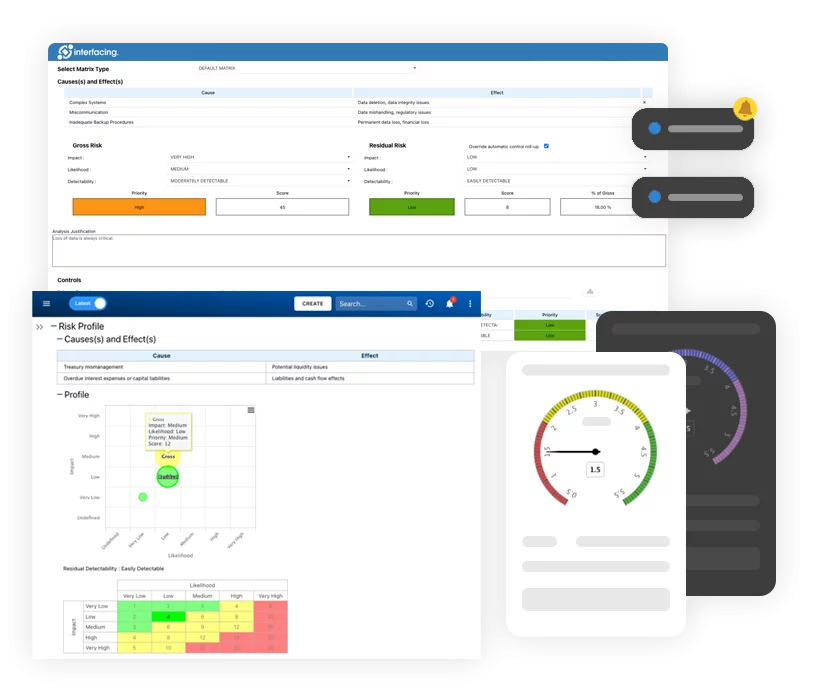
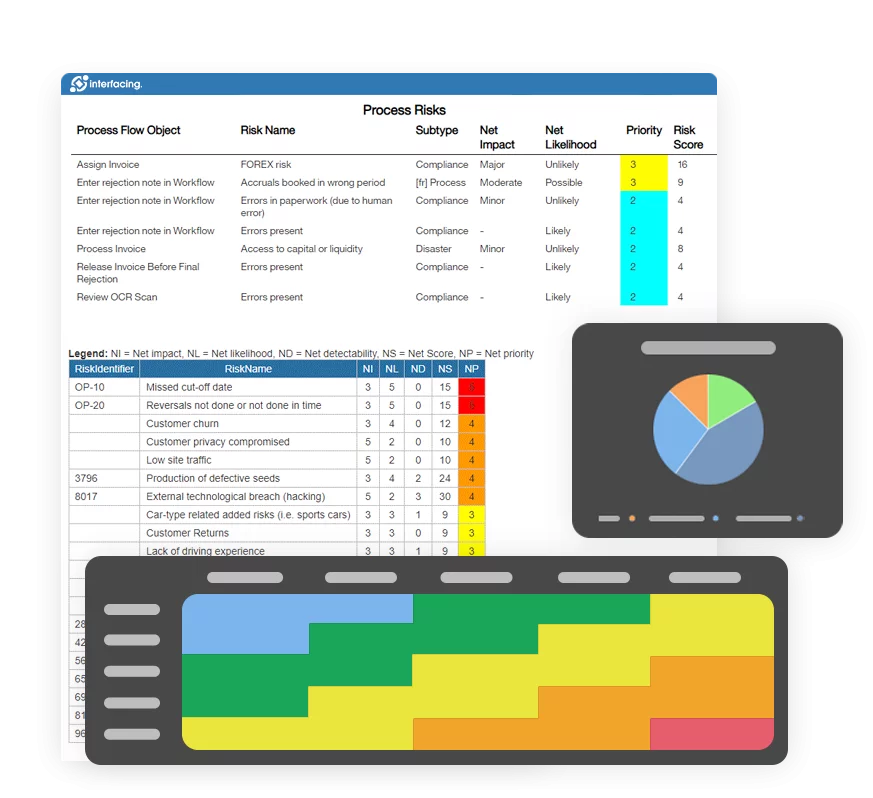
Risk & Control Management Enterprise risk and controls embedded into operational processes Risk handled primarily within quality-related activities

When a QMS-Centric Platform May Be Appropriate

A QMS-centric platform such as Q-Pulse may align with organizations where:

  • Quality management is the primary governance concern

  • Governance requirements are largely contained within the quality function

  • Enterprise process architecture is out of scope

  • The objective is to digitize and standardize quality workflows and records

These scenarios align with the design scope of a quality-focused system.


When Interfacing Is the Better Strategic Choice

Interfacing is designed for organizations that require governance beyond individual functions and view quality as an outcome of how the business operates as a whole.

This typically applies when:

  • Quality outcomes depend on process design and execution
    Organizations recognize that recurring quality issues are often rooted in upstream process structure, handoffs, and role accountability.

  • Governance spans multiple management disciplines
    Quality, risk, compliance, performance, and business continuity must operate within a single, coherent governance framework rather than as parallel systems.

  • Regulatory change must be assessed across the enterprise
    Regulatory updates need to be traced through processes, controls, documentation, and responsibilities to understand impact before implementation.

  • Leadership requires cross-domain visibility
    Decision-makers need confidence that operational or digital changes do not introduce unintended risk or compliance exposure.

  • Digital transformation is tied to control and traceability
    Automation initiatives must remain aligned with governed processes, validated documentation, and audit expectations.

  • The organization operates across regions or regulatory regimes
    Managing local variation while maintaining global governance requires structural traceability that extends beyond traditional QMS boundaries.

In these environments, an Integrated Management System provides a foundation for sustained operational governance rather than incremental quality optimization.


Final Perspective

The distinction between Ideagen Q-Pulse and Interfacing is not a question of product quality, but of governance scope and architectural intent.

Q-Pulse is designed to manage quality activities within a QMS-centric framework.

Interfacing is designed to govern how the enterprise operates, with quality integrated as one component of a broader, connected management system.

The appropriate choice depends on how broadly governance, risk, and compliance are expected to operate within the organization.

How Interfacing Helps

Interfacing’s AI-powered IMS combines QMS, BPM, GRC, and Low-Code into one environment.
Teams document, automate, and continuously improve operations while maintaining audit-ready traceability and regulatory alignment.

  • Unify systems: Processes, risks, training, and evidence in one connected model.

  • Automate compliance: AI links CAPA, audits, and training to SOPs automatically.

  • Accelerate improvement: Mining and dashboards surface inefficiencies and predict risks.

Request a Demo 

INTERFACING  VS THE OTHERS

Interfacing VS ARIS

Interfacing VS PEGA

Interfacing VS kissflow

Interfacing vs Appian

Interfacing VS APPIAN

Interfacing vs Nintex

Interfacing VS Nintex

Interfacing vs Camunda

Interfacing VS Camunda

Interfacing vs SAP Signavio

Interfacing VS SAP Signavio

Interfacing vs Bizagi

Interfacing VS Bizagi

Interfacing vs MasterControl

Interfacing VS MasterControl

Interfacing vs Ideagen

Interfacing VS Ideagen

Interfacing VS Adonis

Interfacing vs MasterControl

Interfacing VS MasterControl

¿Por qué elegir Interfacing?


Con más de dos décadas de experiencia en software de IA, Calidad, Procesos y Cumplimiento, Interfacing sigue siendo líder en el sector. Hasta la fecha, ha prestado servicio a más de 500 empresas de talla mundial y consultoras de gestión de todas las industrias y sectores. Seguimos ofreciendo soluciones digitales, en la nube y de IA que permiten a las organizaciones mejorar, controlar y agilizar sus procesos, al tiempo que alivian la carga de los programas de cumplimiento normativo y gestión de la calidad.

Para obtener más información o hablar sobre cómo Interfacing puede ayudar a su organización, rellene el siguiente formulario.

Documentación: Impulsando la Transformación, Gobernanza y Control

• Obtenga información integral en tiempo real sobre sus operaciones.

• Mejore la gobernanza, eficiencia y cumplimiento.

• Garantice la alineación fluida con los estándares regulatorios.


eQMS: Automatización de flujos de trabajo y reportes de calidad y cumplimiento

• Simplifique la gestión de calidad con flujos de trabajo automatizados y monitoreo..

• Optimice CAPA, auditorías de proveedores, capacitaciones y flujos relacionados..

• Transforme la documentación en información procesable para Calidad 4.0. .

Desarrollo rápido de aplicaciones low-code: Acelerando la transformación digital

• Cree aplicaciones personalizadas y escalables de forma ágil.

• Reduzca el tiempo y costo de desarrollo.

• Adáptese rápidamente y manténgase ágil frente a las necesidades cambiantes de clientes y negocios.


¡IA para transformar su negocio!

Las herramientas impulsadas por IA están diseñadas para optimizar operaciones, mejorar el cumplimiento y fomentar el crecimiento sostenible. Descubra cómo la IA puede:

• Responder a las consultas de los empleados.

• Transformar videos en procesos.

• Formular recomendaciones sobre el impacto de la regulación y la mejora de los procesos

• Generar formularios electrónicos, procesos, riesgos, regulaciones, KPIs y mucho más.

• Desglosar estándares regulatorios en requisitos desagregados.

CONTACT US

Request Free Demo

Document, analyze, improve, digitize and monitor your business processes, risks, regulatory requirements and performance indicators within Interfacing’s Digital Twin integrated management system the Enterprise Process Center®!

Con la confianza de Clientes en todo el mundo

Más de 400+ empresas y consultoras de gestión de talla mundial

Integración

Con la confianza de Clientes en todo el mundo Integración

Más de 400+ empresas y consultoras de gestión de talla mundial