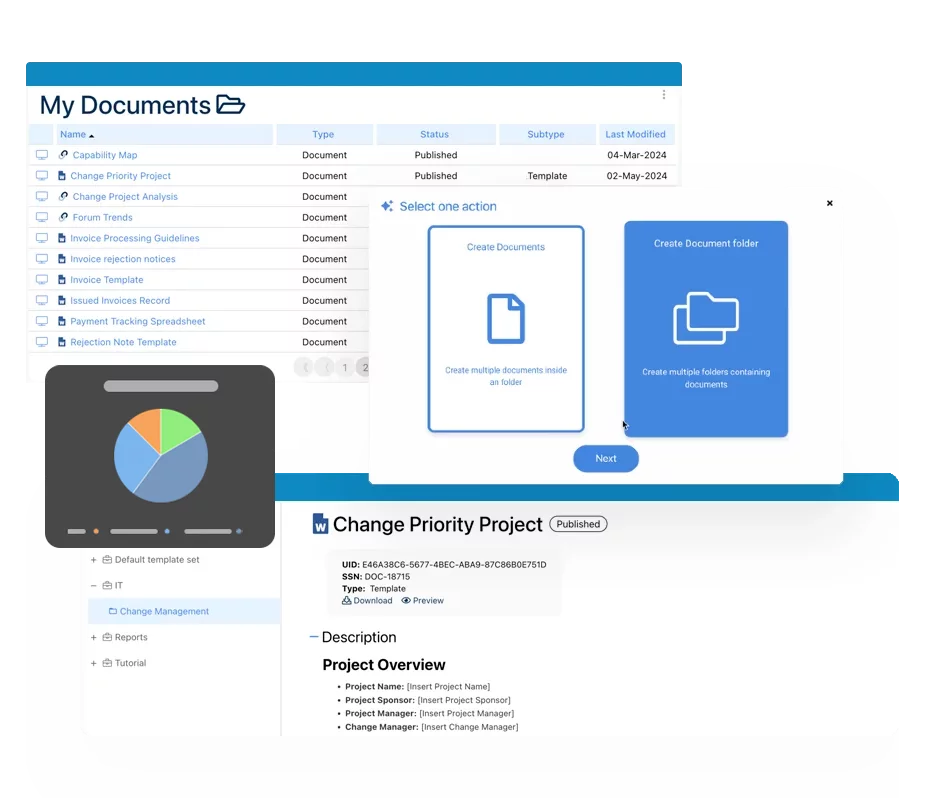
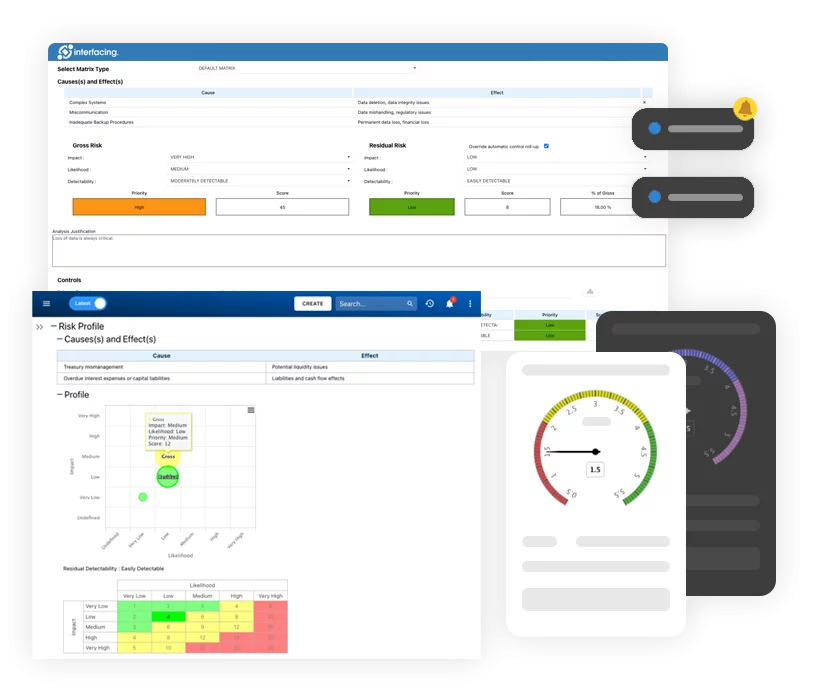
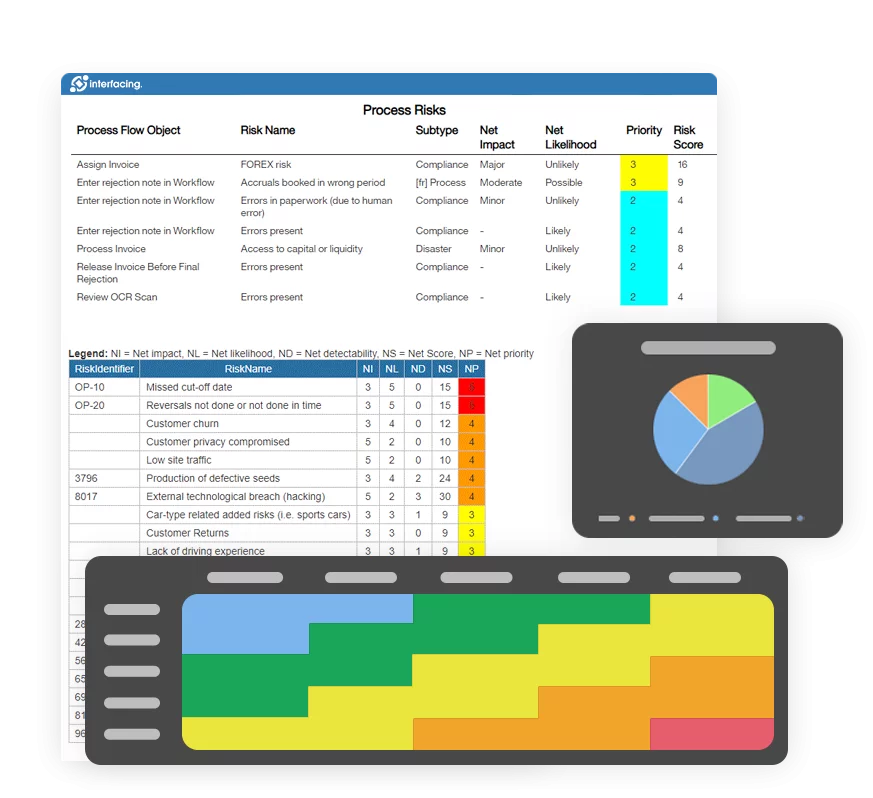
AI cannot reason across silos. When QMS and BPM operate in isolation, intelligence stops at the system boundary.
For more than two decades, organizations have invested heavily in standalone Quality Management Systems (QMS) and Business Process Management (BPM) tools. These platforms promised control, standardization, and visibility. And for a long time, they delivered just enough value to justify their place in the enterprise stack.
But something fundamental has changed.
Artificial intelligence is no longer an emerging capability. It is rapidly becoming the connective tissue of modern operations. And as AI matures, it is exposing a hard truth that many organizations are now confronting, often uncomfortably. Tools designed to operate in isolation are no longer fit for environments where insight, speed, and adaptability depend on context.
Standalone QMS and BPM tools are not failing because they are poorly built. They are failing because they were never designed for an AI-driven world.
The Hidden Cost of Siloed Systems
At first glance, separating quality from process management can seem logical. Quality teams manage audits, CAPAs, training, and documentation. Process teams model workflows, improve efficiency, and optimize performance. Each group has its own tools, dashboards, and metrics.
The problem is not ownership. The problem is fragmentation.
When quality events live in one system and business processes live in another, the organization loses the ability to understand cause and effect at scale. A deviation might be logged in the QMS, but the process context that explains why it happened often sits elsewhere. A process change might be approved in a BPM tool, but its downstream impact on compliance, risk, or training requirements is rarely visible in real time.
In a pre-AI world, this was inefficient but manageable. In an AI-driven environment, it becomes a structural limitation.
AI does not generate value from isolated data. It generates value from relationships.
Why AI Exposes the Cracks
Artificial intelligence thrives on connected information. To identify patterns, predict risk, or recommend corrective actions, AI needs to understand how processes, roles, documents, risks, controls, and performance indicators relate to one another.
Standalone systems break that chain of understanding.

A traditional QMS can tell you how many CAPAs are open. A BPM tool can show you how a process flows. But neither can answer higher-order questions without heavy manual effort:
- Why are the same quality issues recurring in different regions?
- Which process variations introduce the highest compliance risk?
- What operational changes will be impacted if a regulation changes tomorrow?
These are not edge cases anymore. They are the questions executives expect answers to, quickly and with confidence.
This is where AI quietly becomes a mirror. It reflects the limits of systems that were built to document reality, not to interpret it.
The Illusion of “AI-Enabled” Point Solutions
Many vendors have responded by layering AI features onto existing products. Automated tagging. Smarter search. Predictive alerts. These enhancements are not useless, but they are incremental.
The underlying architecture remains unchanged.
AI embedded in a silo can only optimize within that silo. It cannot reason across the organization. It cannot understand how a process deviation links to a regulatory requirement, a training gap, and a risk exposure unless those elements exist in a shared model.
This is why organizations often feel disappointed after initial AI pilots. The technology works, but the insight feels shallow. The problem is not the algorithm. It is the operating model.

Gestion proactive des risques et continuité des activités
La véritable résilience est le fruit d’une identification, d’une simulation et d’une atténuation proactives des risques.
InterfacingLes modules de gestion des risques et des contrôles et de planification de la continuité des activités permettent une modélisation prédictive des risques, des simulations de scénarios et des flux de travail CAPA automatisés.
Ces capacités offrent une visibilité unifiée et en temps réel de l’exposition au risque, ce qui est crucial pour les équipes interfonctionnelles qui travaillent dans plusieurs départements et sur plusieurs fuseaux horaires.
Sécurisé, validé et conçu pour être mis à l’échelle
Interfacing offre un environnement validé et sécurisé auquel les entreprises internationales font confiance. Les fonctionnalités comprennent les signatures numériques cryptées, les pistes d’audit, le contrôle des versions et la conformité au CRF Part 11.
Son analyseur de documents IA et son moteur NLP exclusifs garantissent que les mises à jour ne sont jamais manquées et que les anomalies sont rapidement signalées. Des modules de formation et des journaux de confirmation de lecture permettent aux utilisateurs de rester informés.
Construit sur une plateforme à code bas, Interfacing prend en charge la configuration rapide de nouveaux cas d’utilisation, ce qui est idéal pour les organisations dynamiques qui évoluent.
Comment Interfacing peut vous aider
Interfacing ne se contente pas d’offrir des outils, il propose une plateforme stratégique qui réunit la gestion des risques, de la conformité et de la performance.
Découvrez notre gamme complète de capacités alimentées par l’IA à l’adresse suivante : https://interfacing.com/artificial-intelligence
Du suivi intelligent des changements réglementaires à l’exploration et à l’automatisation des processus, Interfacing permet à votre entreprise de transformer les risques en opportunités.
À une époque de changements constants et de pressions croissantes, les stratégies de conformité statiques ne sont plus viables.
L’IA offre une meilleure voie – proactive, prédictive et précise. Interfacing aide les organisations à construire des systèmes plus intelligents qui s’adaptent, répondent et dirigent.
Les entreprises prêtes pour l’avenir ne se contentent pas de gérer les risques, elles les maîtrisent.
From Documentation to Decision Support
One of the most profound consequences of integration is how it changes decision-making.
In a fragmented environment, leaders rely on reports that explain what already happened. In an integrated, AI-enabled system, they gain foresight. They can see how a process change might impact compliance obligations. They can anticipate where quality risks are likely to emerge based on process behavior. They can prioritize improvements based on enterprise-wide impact, not departmental urgency.
This is where traditional BPM and QMS tools quietly fall behind. They were built to document work. AI demands systems that understand work.
Interfacing’s Business Process Management capabilities reflect this evolution, moving beyond static diagrams toward connected, analyzable process architectures that AI can interpret.
Likewise, its Quality Management Software positions quality not as a standalone function, but as an integrated outcome of how processes are designed, executed, and governed.
A Structural, Not Technological, Failure
It is tempting to frame this shift as a race to adopt AI features. That framing misses the point.
Standalone QMS and BPM tools are failing not because they lack AI, but because they lack integration. AI simply makes that absence impossible to ignore.
Organizations that continue to invest in disconnected systems will find themselves spending more time reconciling data than acting on insight. Those that rethink their management architecture will unlock something far more powerful than automation.
They will gain understanding.

The Real Question Leaders Should Be Asking
The future of quality and process management is not about replacing one tool with another. It is about replacing fragmentation with coherence.
As AI becomes embedded in daily decision-making, the organizations that succeed will be those that treat quality, process, risk, and compliance as interdependent elements of a single system, not as separate disciplines managed by separate tools.
The question is no longer whether AI belongs in QMS or BPM.
The question is whether your management systems are ready for AI at all.
How Interfacing Helps
The failure of standalone QMS and BPM tools is not a tooling problem. It is an architectural one. Interfacing was designed around this reality from the start.
Rather than treating quality, process, risk, and compliance as separate disciplines managed by separate systems, Interfacing delivers an AI-driven Integrated Management System that models how organizations actually operate. Processes are not isolated diagrams. They are living structures connected to roles, documents, risks, controls, regulatory requirements, and performance indicators.
This unified operating model is what allows AI to move beyond surface-level automation. When a deviation occurs, Interfacing does not simply log an event. It understands the process context behind it. When a process changes, the platform can immediately assess downstream impacts on compliance, training, and risk exposure. When regulations evolve, AI-powered impact analysis identifies what is affected and where action is required.
Because quality management is embedded directly into process architecture, CAPAs, audits, and management reviews are no longer reactive activities. They become part of a continuous, traceable improvement cycle supported by real operational intelligence.
At the same time, Interfacing’s Business Process Management capabilities move beyond static documentation. Processes are designed, governed, and analyzed within the same environment that manages compliance and risk, giving leaders a single source of truth for decision-making.
This integrated foundation is what enables Interfacing’s AI to deliver meaningful insight rather than isolated predictions. By connecting process, quality, and governance data within one system, organizations gain the context AI requires to identify patterns, anticipate issues, and support better decisions across the enterprise.
In short, Interfacing does not add AI to siloed tools. It removes the silos that prevent AI from working in the first place.
Pourquoi choisir Interfacing?
Avec plus de deux décennies de logiciels d'IA, de qualité, de processus et de conformité, Interfacing continue d'être un leader dans l'industrie. À ce jour, nous avons servi plus de 500+ entreprises de classe mondiale et des sociétés de conseil en gestion de toutes les industries et de tous les secteurs. Nous continuons à fournir des solutions numériques, cloud et IA qui permettent aux organisations d'améliorer, de contrôler et de moderniser leurs processus tout en allégeant le fardeau de la conformité réglementaire et des programmes de gestion de la qualité.
Pour en savoir plus ou discuter de la manière dont Interfacing peut aider votre organisation, veuillez remplir le formulaire ci-dessous.

Documentation : Piloter la transformation, la gouvernance et le contrôle
• Obtenez des informations complètes et en temps réel sur vos opérations.
• Améliorez la gouvernance, l'efficacité et la conformité.
• Assurez une conformité fluide avec les normes réglementaires.

eQMS : Automatiser les workflows de qualité et de conformité & rapports
• Simplifiez la gestion de la qualité avec des workflows automatisés et une traçabilité continue.
• Standardisez la gestion des CAPA, des audits fournisseurs, de la formation et des workflows associés.
• Transformez la documentation en informations exploitables pour la Qualité 4.0.

Développement rapide d'applications low-code : Accélérer la transformation numérique
• Créez rapidement des applications personnalisées et évolutives.
• Réduisez le temps et les coûts de développement.
• Adaptez-vous rapidement pour répondre aux besoins évolutifs des clients et de votre entreprise.
L’IA pour transformer votre entreprise !
Conçus pour optimiser les opérations, l'efficacité et renforcer la conformité. Découvrez nos solutions alimentés par l’IA :
• Répondre aux questions des employés.
• Transformer des vidéos en processus.
• Recommander des améliorations de processus et des impacts réglementaires.
• Générer des formulaire, processus, risques, réglementations, KPIs, et bien plus.
• Fragmenter les normes réglementaires

Request Free Demo
Document, analyze, improve, digitize and monitor your business processes, risks, regulatory requirements and performance indicators within Interfacing’s Digital Twin integrated management system the Enterprise Process Center®!
Approuvé par nos clients à travers le monde !
Plus de 400 entreprises de classe mondiale et cabinets de conseil en gestion.


INTEGRATION
Approuvé par les nos clients dans le monde entier !
Plus de 400 entreprises de classe mondiale et cabinets de conseil en gestion.