





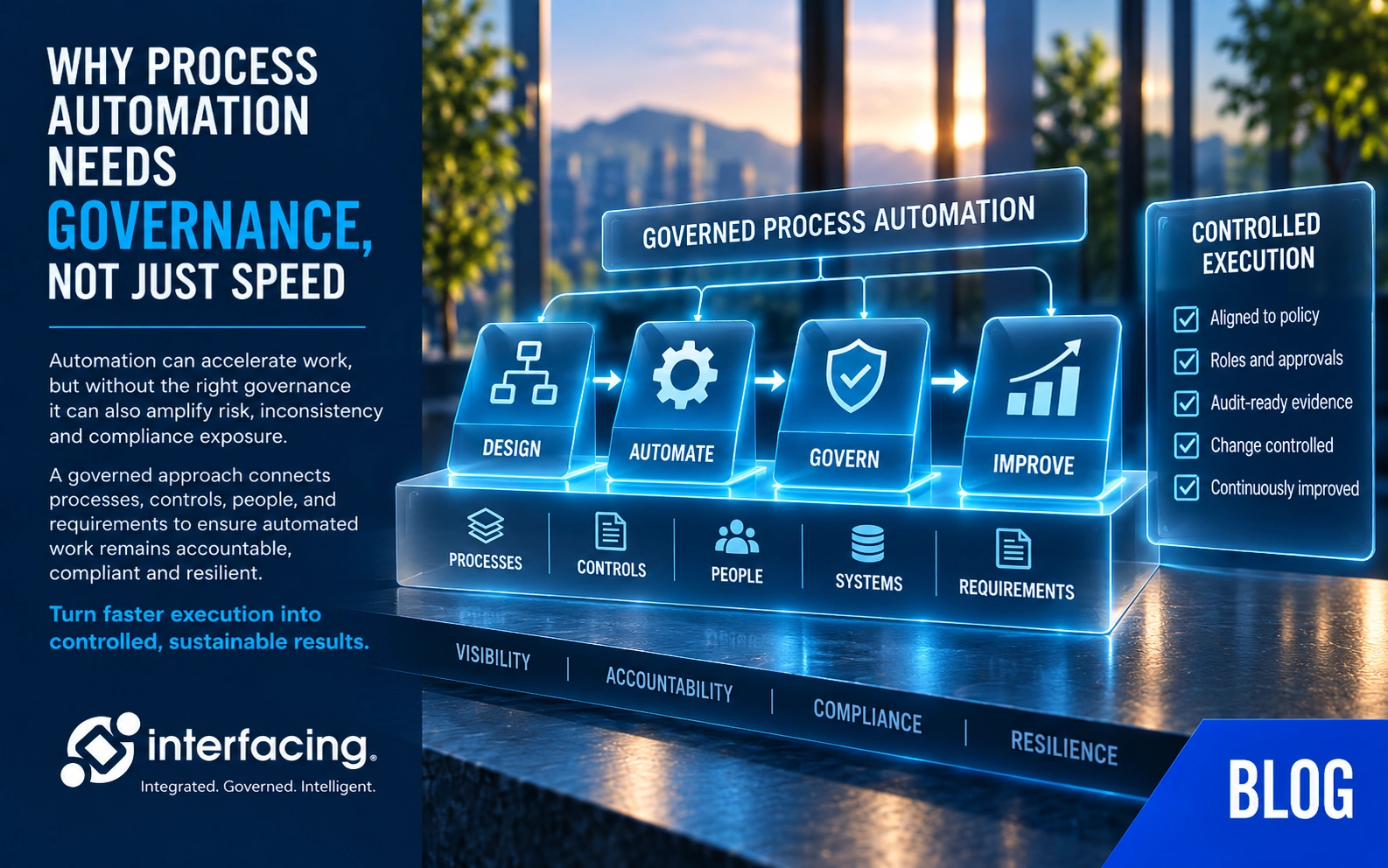
Process automation can accelerate work, but speed alone does not establish control. When an automated workflow is disconnected from policy, ownership and operational risk, it may repeat the same error faster and across more transactions. The more consequential the process, the more important it becomes to govern the decisions behind the automation.
Automating Work Is Not the Same as Governing It
A purchase request moves from submission to approval in minutes. A quality incident is routed to an investigator immediately. A new employee receives the right training task as soon as a role is assigned. Each looks like an automation success, especially when measured by turnaround time.
But consider what the dashboard does not show. Is the approval rule current? Does the person approving the request have the right authority? Is the exception pathway consistent with policy? If a procedure changes, who confirms that the workflow changes with it?
These are not implementation details. They determine whether the automated process remains aligned with how the organization intends to operate. A workflow can execute perfectly while enforcing an obsolete rule.
Efficiency measures how quickly work moves. Governance establishes whether it moves through the right decisions, controls and responsibilities.
That distinction is especially important in regulated environments. A digital record may demonstrate that an action occurred, but assessing whether the action was appropriate requires its policy, process and control context.

The Missing Layer Between Workflows and Accountability
Many automation initiatives start with a form or a queue. Teams examine where a task begins, who should receive it next and which notifications can be eliminated. That is useful, but it represents only one view of an enterprise process.
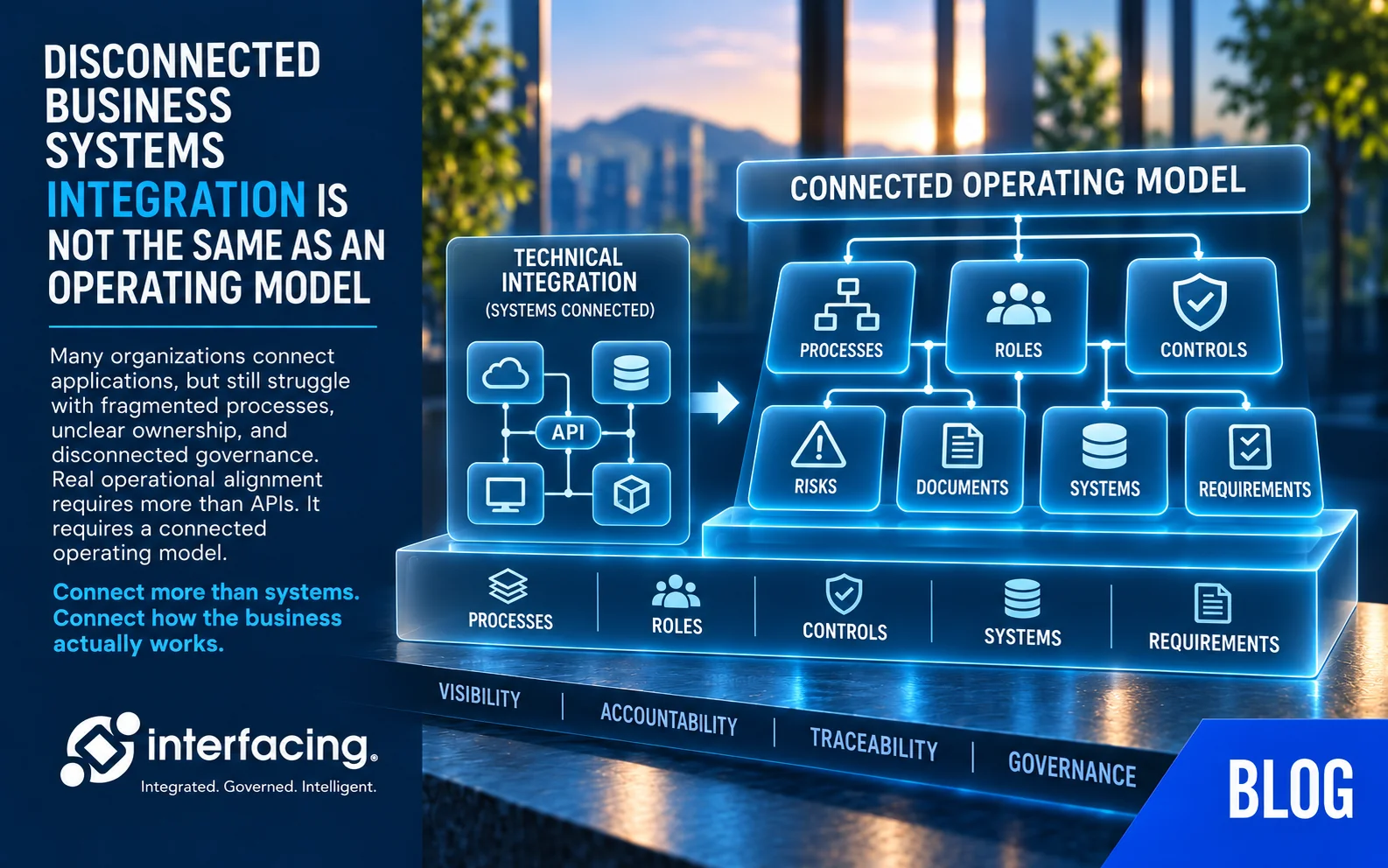
Work also depends on people, roles, systems, operating procedures, requirements, risks and controls. A connected Integrated Management System (IMS) can bring these elements into a shared context instead of treating the workflow as an isolated technical asset.
A Change to One Step Can Create Consequences Elsewhere
Imagine a life sciences organization replacing a manual deviation intake form with an automated submission and triage process. Routing becomes faster, yet the organization must still determine who can classify the deviation, when an escalation is required, how corrective action is initiated and which records must be retained.
If a process owner updates the SOP while the automation remains unchanged, employees may face two competing definitions of the correct procedure. If authority changes but the approval route does not, the workflow may produce an electronic record without the expected decision control.
The solution is not to slow every automation project with additional paperwork. It is to establish governed relationships that make the consequences of change visible and reviewable.
From Task Automation to Governed Execution
Illustrative operating model: each stage establishes a link that a workflow engine alone may not capture.
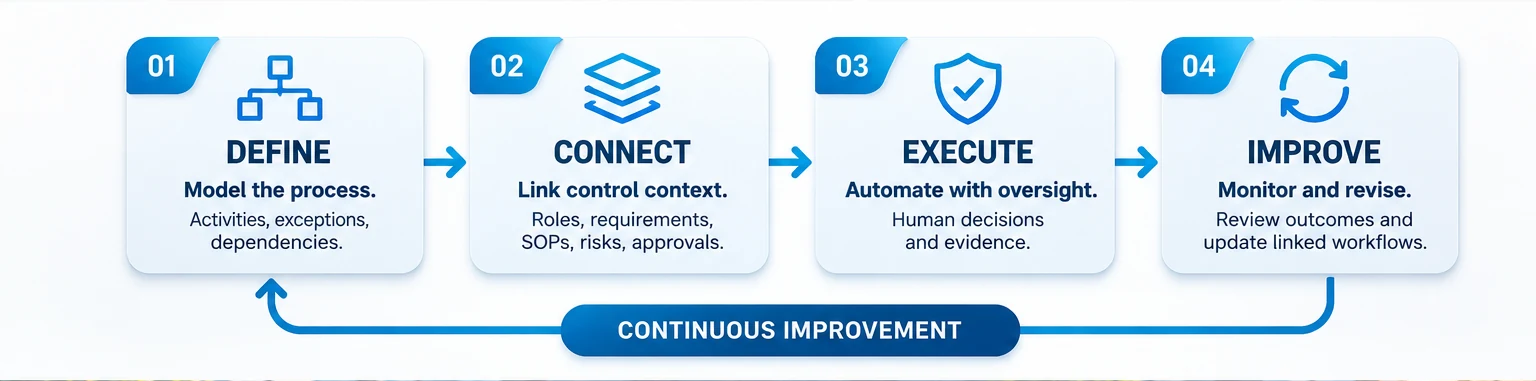
DEFINE: Model activities, exceptions and dependencies. CONNECT: Link roles, requirements, SOPs, risks and approvals. EXECUTE: Automate with human oversight and evidence. IMPROVE: Review outcomes and update connected workflows.
Conceptual framework for explaining governed automation, not a depiction of a specific product screen or a performance claim.
Human Oversight Belongs in the Process Design
Some decisions can follow approved rules with little intervention. Others require a qualified person to interpret evidence, assess exceptions or accept an organizational risk. The distinction should be made deliberately, not discovered after a workflow has gone live.

Human-in-the-loop design is particularly relevant when AI-assisted tools contribute analysis or recommendations. Interfacing's human-in-the-loop approach to a Digital Twin of an Organization describes assistance with dependency and impact analysis while maintaining human review and approval for consequential decisions.
Can the system make the decision and finish the task with fewer steps?
Which decisions can follow approved rules, which require review, and what evidence must remain?
Neither perspective should be ignored. The objective is to automate predictable work while preserving the authority and traceability that make its outcomes reliable.
Review the Process, Not Just Its Throughput
For a high-impact workflow, teams should monitor exceptions, control breaches, approval changes and downstream effects alongside processing time. IMS 16.0 highlights connected access to tasks, governed knowledge, quality applications and process mining insights. The value of this combination is the ability to examine execution in context, while respecting the release-specific scope of each capability.
What Changes When Automation Has Operating-Model Context?
Governance does not guarantee a particular outcome, but it changes the questions teams can answer when a process evolves.
Teams can investigate which related procedures, controls, roles and workflows may need review.
Process ownership and approval responsibility can be documented rather than inferred from task routing.
Records gain meaning when linked to the requirements and decisions they are meant to support.
Connect Automation to the Organization It Serves
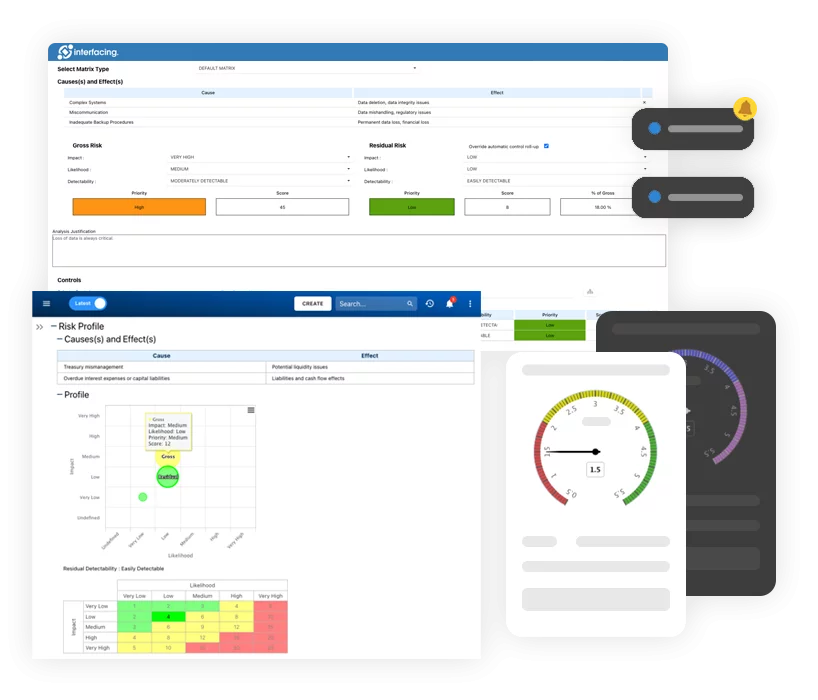
Interfacing approaches automation as part of an integrated operating model. Its IMS connects process information with controlled documentation, roles, risks, requirements and related governance objects. The organization can therefore consider a workflow not only as a sequence of tasks but also as a governed activity with defined accountability.
In quality environments, Interfacing's electronic Quality Management System covers areas such as CAPA, audits, quality events, document management, risk and training. These connected disciplines help teams align corrective work and supporting records with the processes they govern.
The broader direction is a Digital Twin of an Organization, a connected representation of organizational relationships that supports change analysis and traceability. It is not a substitute for accurate source information, disciplined process ownership or authorized human decisions.
For leaders evaluating automation, the useful question is no longer simply how many tasks can be removed. It is whether execution, accountability and evidence remain aligned as the organization changes.
Frequently Asked Questions
What is process automation governance?
Process automation governance is the set of ownership, approval, control, monitoring and change-management practices that ensure automated work follows defined organizational requirements.
Why can automation increase compliance risk?
Automation can execute an outdated rule or misconfigured workflow consistently and at scale. Without process context, assigned owners, controls and evidence, errors can become harder to identify and correct.
How is governed automation different from workflow automation?
Workflow automation moves work through predefined steps. Governed automation also links those steps to policies, process owners, risk controls, approval authority, version history and evidence.
Can AI replace human approval in regulated processes?
Not by default. AI-assisted analysis can inform reviews and suggest impacts, but consequential compliance decisions should remain subject to authorized human oversight and applicable requirements.
What should an organization assess before automating a process?
Assess the current process, exceptions, decision rights, risk exposure, data quality, controls, evidence requirements, change ownership and how performance will be monitored after deployment.

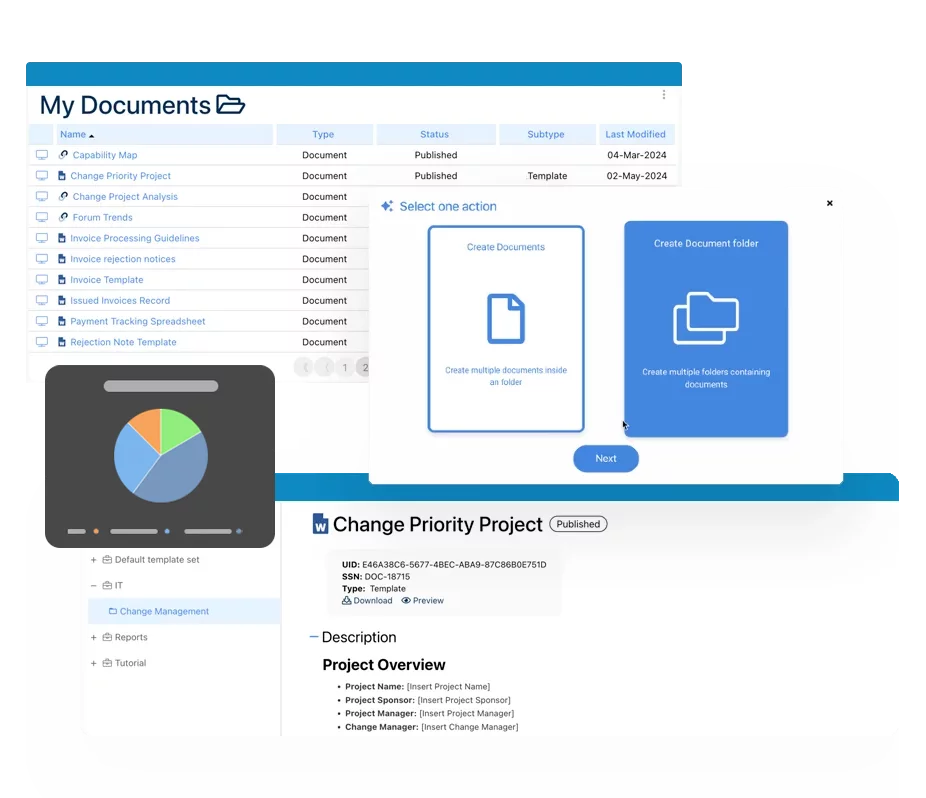
Documentation: Driving Transformation, Governance and Control
• Gain real-time, comprehensive insights into your operations.
• Improve governance, efficiency, and compliance.
• Ensure seamless alignment with regulatory standards.

eQMS: Automating Quality & Compliance Workflows & Reporting
• Simplify quality management with automated workflows and monitoring.
• Streamline CAPA, supplier audits, training and related workflows.
• Turn documentation into actionable insights for Quality 4.0

Low-Code Rapid Application Development: Accelerating Digital Transformation
• Build custom, scalable applications swiftly
• Reducing development time and cost
• Adapt faster and stay agile in the face of
evolving customer and business needs.
AI to Transform your Business!
The AI-powered tools are designed to streamline operations, enhance compliance, and drive sustainable growth. Check out how AI can:
• Respond to employee inquiries
• Transform videos into processes
• Assess regulatory impact & process improvements
• Generate forms, processes, risks, regulations, KPIs & more
• Parse regulatory standards into requirements