Interfacing

sales@interfacing.com

AI adoption is accelerating, but regulated organizations cannot measure success by speed alone. In quality, compliance, risk, and operations, the real question is whether AI-assisted recommendations can be traced, explained, reviewed, and governed. Without that foundation, AI may create more operational uncertainty than value.

Why Governed AI Beats Fast AI in Regulated Industries

Speed has become one of the easiest ways to sell artificial intelligence. A tool can generate a policy in seconds, summarize a procedure instantly, propose a workflow, draft an audit response, or analyze a large document faster than any human team could. For many organizations, that speed is impressive. For regulated organizations, it is only the beginning of the conversation.

The harder question is not whether AI can produce an answer quickly. The harder question is whether that answer can be trusted, reviewed, explained, approved, and connected to the controlled environment where the business actually operates. In regulated industries, an AI-assisted output does not exist in isolation. It may affect a process, a procedure, a risk control, a training requirement, a CAPA investigation, a supplier review, an audit record, or a regulatory obligation. If those relationships are not visible, the organization may move faster while becoming less certain about what changed and why.

That is where many AI initiatives begin to break down. They accelerate output before strengthening governance. They create recommendations before clarifying ownership. They summarize information before validating whether the source material is current, approved, and applicable. They automate parts of work without first connecting that work to processes, risks, controls, roles, SOPs, training, and evidence.

In a regulated environment, that is not transformation. It is exposure. Governed AI matters because it allows organizations to move faster without weakening the controls that make quality, compliance, and operational decisions defensible.

The Problem With Treating AI Adoption Like a Speed Race

The first wave of enterprise AI adoption has often been measured by productivity. Organizations want to know how much faster teams can write, summarize, search, analyze, document, and automate. These are valid goals. Quality, compliance, and process teams spend enormous time preparing documentation, reviewing procedures, investigating issues, coordinating approvals, updating training, and responding to audit requirements.

However, productivity is only one part of the equation. A faster document is not automatically a controlled document. A faster recommendation is not automatically a compliant recommendation. A faster workflow is not automatically a validated workflow. A faster answer is not automatically a defensible answer.

The assumption behind fast AI is that the main bottleneck is content creation or task execution. Sometimes that is true. But in quality, compliance, risk, and operations, the deeper bottleneck is often governance. Teams need to know who owns the process, which version is approved, which regulation applies, which control is affected, which roles require training, and which downstream documents or systems may be impacted by a change.

If AI is not connected to those relationships, it may produce something that looks useful but does not reflect the organization’s real operating model. That creates a dangerous illusion of progress. The work appears faster, but the organization has not improved its ability to prove control.

Why Fast AI Breaks Down Under Compliance Pressure

The weakness of fast AI becomes visible when someone asks a simple audit-style question: how do you know?

How do you know the AI-assisted recommendation used the approved procedure? How do you know it considered the correct regulatory requirement? How do you know the proposed change did not create a conflict with another process, control, or training obligation? How do you know the right owner reviewed it? How do you know the final decision was approved and recorded with the required evidence?

In a non-regulated setting, those questions may be treated as operational details. In a regulated industry, they are central to trust. A quality or compliance team cannot rely on a recommendation simply because it is well-written or quickly produced. The recommendation must be explainable. It must be traceable. It must be reviewed by accountable people. It must fit inside an approved governance structure.

This is why AI governance frameworks are becoming more important. NIST describes its AI Risk Management Framework as voluntary guidance to help organizations manage risks and incorporate trustworthiness into the design, development, use, and evaluation of AI systems. ISO/IEC 42001 provides a management system approach for organizations that provide or use AI, with attention to governance, risk, transparency, and continual improvement. The EU AI Act also reflects the growing shift toward risk-based AI governance, with obligations that vary depending on how AI is used and the level of risk involved. 

The message for regulated organizations is clear. AI is not only a technology issue. It is a governance issue. That governance cannot live only in an acceptable-use policy or a steering committee charter. It has to show up in how processes are modeled, how risks are assessed, how documents are controlled, how approvals are captured, how training is assigned, how changes are evaluated, and how evidence is maintained.

Governed AI Starts With the Operating Model

One of the most common mistakes organizations make is trying to govern AI separately from the business. They create AI policies, tool approval lists, internal guidance, and review committees. These are useful steps, but they do not solve the core operational challenge.

AI does not create risk in the abstract. It creates risk when it influences real work. A recommendation may affect a process. A generated procedure may affect training. A proposed control may affect audit readiness. A summarized regulation may affect compliance interpretation. An AI-assisted CAPA suggestion may affect root cause analysis, corrective action, and effectiveness verification.

That means AI governance has to be connected to the operating model. A governed operating model links the elements that determine how work is performed and controlled, including processes, roles, systems, documents, risks, controls, regulatory requirements, KPIs, training, audits, quality events, and change workflows.

This is where an Integrated Management System becomes more than a repository. Interfacing’s Integrated Management System is designed to help organizations connect process management, quality management, risk, compliance, document control, low-code automation, and operational intelligence in a single environment. Instead of treating these areas as separate systems, IMS provides the structure needed to understand how operational change moves across the business. 

That structure matters because AI becomes more reliable when it is grounded in governed business context. Without that context, AI can generate outputs. With that context, AI can support better decisions.

AI-Assisted Does Not Mean AI-Owned

For regulated organizations, one of the most important distinctions is the difference between AI-assisted and AI-owned work. AI can help identify patterns, summarize information, propose improvements, accelerate documentation, and support impact analysis. It can help surface weak signals across quality events, audits, risks, training gaps, supplier issues, and operational data.

But accountability cannot be delegated to a model.

A quality leader still owns the decision. A process owner still owns the process. A compliance leader still owns the interpretation. An approver still owns the approval. The organization still owns the evidence.

This is not a limitation of AI. It is the foundation of responsible adoption. In practice, human-in-the-loop governance allows AI to accelerate the work while the organization preserves review, approval, versioning, segregation of duties, audit trails, and accountability.

This is especially important for quality management. Quality leaders are often trying to move from document-heavy systems toward data-driven quality ecosystems, but they must do so without weakening regulatory control. The real opportunity is not to replace human judgment. It is to give accountable people better insight, better traceability, and better visibility into the operational impact of their decisions.

The Real Risk Is Not Slow AI Adoption

Many executives worry that their organizations are moving too slowly with AI. That concern is understandable. Competitors are experimenting. Vendors are embedding AI into almost every platform. Employees are already using AI to draft, summarize, search, and analyze. The pressure to move quickly is real.

But in regulated industries, the bigger risk is unmanaged adoption.

Unmanaged AI creates shadow workflows. Shadow workflows create inconsistent decisions. Inconsistent decisions create audit and compliance exposure. Over time, that exposure becomes operational risk. This is the same pattern organizations have seen with spreadsheets, uncontrolled documents, local workarounds, and disconnected point solutions. These tools often begin as productivity aids, but eventually become parallel systems of record.

AI makes that problem more serious because it can generate outputs that appear polished, confident, and complete even when the underlying context is incomplete. A document summary may omit an important exception. A process recommendation may ignore a local variation. A compliance response may sound accurate but fail to reference the approved source. A workflow suggestion may improve speed while bypassing the controls that make the workflow valid.

That is why governed AI should not be framed as a brake on innovation. It is what allows innovation to scale without losing control.

What Regulated Organizations Should Look For Instead

The better question is not, “How fast can this AI tool produce an output?” The better question is, “Can this AI-assisted output survive governance?”

For regulated organizations, that means AI should be evaluated against operational criteria. The organization should be able to trace source information, identify impacted processes and documents, route recommendations to the right owner, preserve approvals and audit trails, assign training where needed, and show what changed, when it changed, who approved it, and why.

These are not secondary requirements. They are the difference between a useful AI experiment and an enterprise-ready AI capability.

Interfacing’s IMS approach supports this kind of governance by connecting the operating model with controlled workflows, approvals, e-signatures, version control, scheduled reviews, audit trails, impact visibility, risk and control management, document control, training management, CAPA, audit management, and regulatory management. This creates an environment where AI-assisted work can be evaluated within the same governance structure that already controls the organization.

For regulated industries, that is the point. AI should not sit outside the system of control. It should support the system of control.

Governed AI Turns Compliance Into Operational Intelligence

The strongest use case for AI in regulated industries may not be automation. It may be impact intelligence.

When a regulation changes, which policies and procedures are affected? When a process changes, which SOPs, roles, risks, controls, systems, and training requirements need review? When a CAPA identifies a root cause, which controls should be reassessed? When a deviation repeats across sites, which process variations explain the pattern? When a supplier issue emerges, which products, locations, records, and obligations are affected?

These questions are difficult because the answers sit across functions. Quality owns part of the picture. Compliance owns part of the picture. Operations owns part of the picture. IT, risk, training, documentation, audit, and process excellence each hold another piece.

Governed AI becomes valuable when it helps interpret those relationships inside a connected operating model. It can help teams understand impact, prioritize action, and identify weak signals before they become larger issues. But that value depends on the quality of the operating model underneath it.

Fast AI says, “We can generate the answer faster.” Governed AI says, “We can understand the impact better.” For a regulated organization, the second statement is far more valuable.

How Interfacing Helps

Interfacing helps regulated organizations use AI in a way that is connected, traceable, and operationally defensible. Instead of treating AI as a standalone productivity tool, Interfacing grounds AI-assisted work inside its Integrated Management System, where processes, procedures, risks, controls, documents, training, workflows, quality events, audits, and compliance evidence are managed together.

This matters because AI is only as useful as the context it can access. A recommendation about a procedure is stronger when it can be evaluated against the approved process, related risks, applicable controls, responsible roles, training requirements, and impacted documents. A suggested CAPA action is more valuable when it is connected to the original quality event, root cause analysis, affected process, corrective actions, effectiveness checks, and audit trail. A regulatory or policy change becomes easier to manage when teams can see which downstream SOPs, controls, forms, roles, and training obligations may require review.

Interfacing IMS provides the governed structure behind that work. Organizations can manage controlled documents, process models, risk and control libraries, quality events, CAPA, audit findings, inspections, training assignments, management reviews, approvals, e-signatures, version history, dashboards, and KPIs within one connected operating model. This gives quality, compliance, risk, and process teams a clearer view of how a decision or change moves across the business.

AI-assisted capabilities can then support the work without replacing accountability. Teams can use AI-informed suggestions to help identify possible impacts, summarize complex information, surface relationships, accelerate documentation, and support process improvement. But the final decision remains with accountable owners, reviewers, and approvers. This is especially important in regulated environments where organizations must preserve human review, segregation of duties, audit trails, version control, read-and-understood confirmations, training evidence, and approval records.

For example, if a procedure changes, Interfacing can help teams evaluate related processes, impacted roles, linked risks and controls, dependent documents, required training, approval workflows, and evidence needed for audit readiness. If a recurring deviation or nonconformance appears, teams can connect the event to process context, CAPA actions, root cause analysis, risk reassessment, and performance indicators instead of treating the issue as an isolated record. If a regulatory requirement changes, the organization can manage the change through governed review, impact assessment, approval, communication, and monitoring.

The result is not AI for the sake of automation. It is AI-assisted operational intelligence inside a governed management system. Interfacing helps organizations move faster while preserving the controls that make quality, compliance, and risk decisions explainable, traceable, and defensible.

Speed Creates Momentum. Governance Creates Trust.

AI will continue to get faster. That is not the hard part. The hard part is making AI useful in environments where decisions must be explainable, evidence must be retained, approvals must be controlled, and operational change must be traceable.

Fast AI can help teams produce more. Governed AI helps teams prove more.

For regulated industries, that distinction matters. The organizations that succeed with AI will not simply be the ones that adopt the newest tools first. They will be the ones that connect AI to the operating model, preserve accountability, and turn AI-assisted insight into governed execution.

That is where AI becomes more than a productivity layer. It becomes part of how the organization manages quality, compliance, risk, and continuous improvement.

Why Choose Interfacing?


With over two decades of AI, Quality, Process, and Compliance software expertise, Interfacing continues to be a leader in the industry. To-date, it has served over 500+ world-class enterprises and management consulting firms from all industries and sectors. We continue to provide digital, cloud & AI solutions that enable organizations to enhance, control and streamline their processes while easing the burden of regulatory compliance and quality management programs.

To explore further or discuss how Interfacing can assist your organization, please complete the form below.

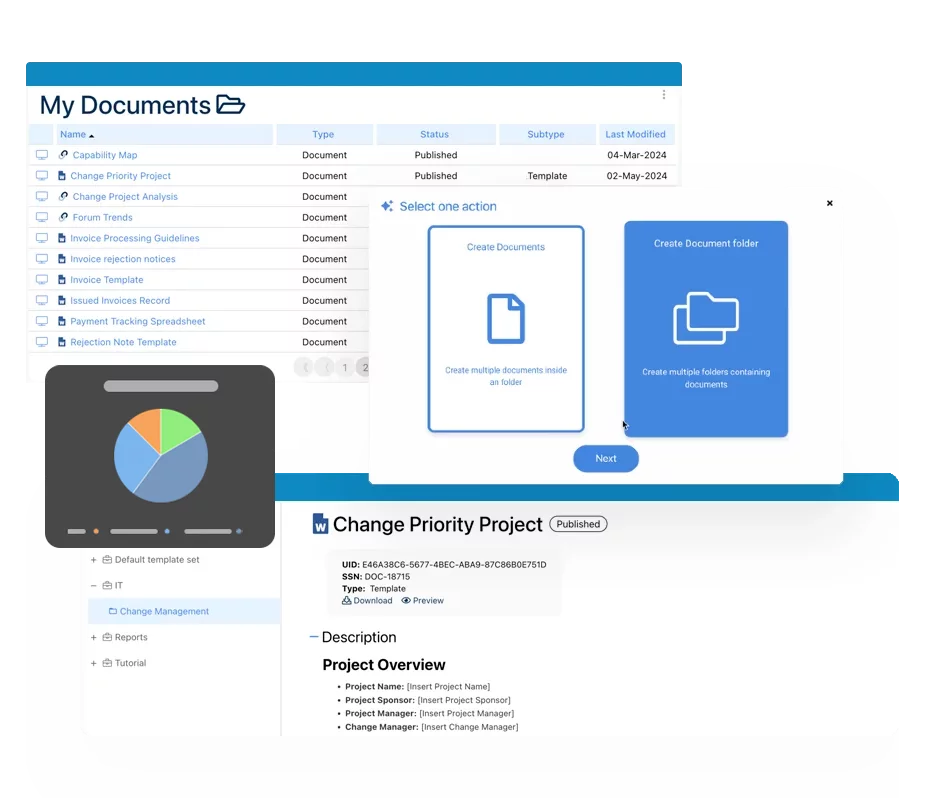
Documentation: Driving Transformation, Governance and Control

• Gain real-time, comprehensive insights into your operations.
• Improve governance, efficiency, and compliance.
• Ensure seamless alignment with regulatory standards.

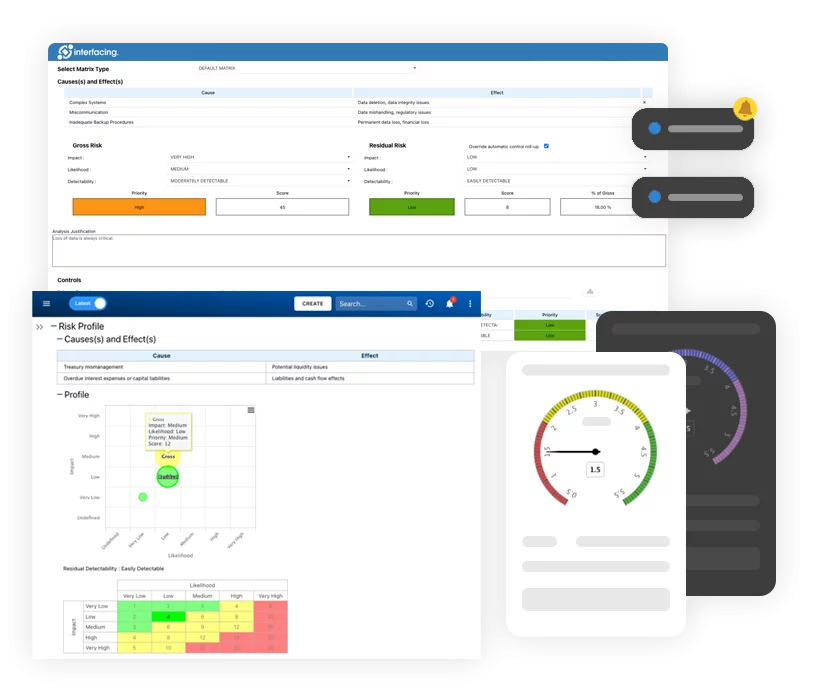
eQMS: Automating Quality & Compliance Workflows & Reporting

• Simplify quality management with automated workflows and monitoring.
• Streamline CAPA, supplier audits, training and related workflows.
• Turn documentation into actionable insights for Quality 4.0

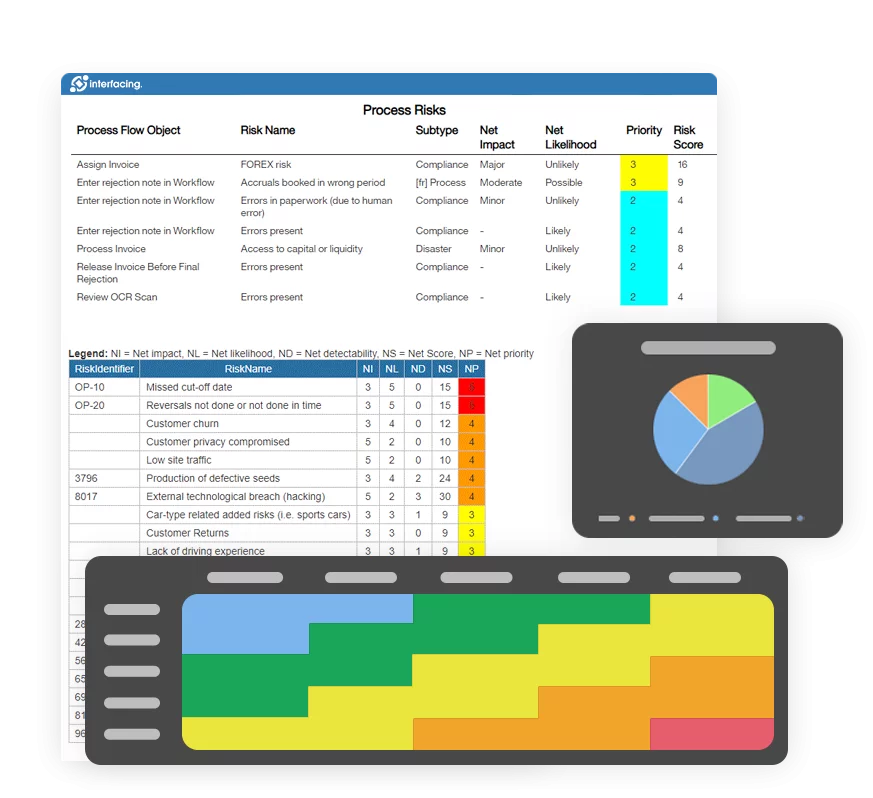
Low-Code Rapid Application Development: Accelerating Digital Transformation

• Build custom, scalable applications swiftly
• Reducing development time and cost
• Adapt faster and stay agile in the face of evolving customer and business needs.


AI to Transform your Business!

The AI-powered tools are designed to streamline operations, enhance compliance, and drive sustainable growth. Check out how AI can:
• Respond to employee inquiries
• Transform videos into processes
• Assess regulatory impact & process improvements
• Generate forms, processes, risks, regulations, KPIs & more
• Parse regulatory standards into requirements

Learn more about EPC's AI Use Cases
CONTACT US

Request Free Demo

Document, analyze, improve, digitize and monitor your business processes, risks, regulatory requirements and performance indicators within Interfacing’s Digital Twin integrated management system the Enterprise Process Center®!

Trusted by Customers Worldwide!

More than 400+ world-class enterprises and management consulting firms