

Interfacing

sales@interfacing.com

Agentic AI permission controls define what an AI agent can access, recommend, change, approve, or execute. Once AI can use tools, access records, and initiate workflows, policies alone are not enough. Identity, least privilege, human approval, and traceable actions keep AI-assisted work controlled, accountable, and auditable.

Agentic AI Needs Permission Controls, Not Just Policies

An AI policy can state that sensitive information must be protected and important decisions require human oversight. But a policy cannot stop an AI agent from accessing the wrong system, modifying a controlled record or advancing a workflow it was never authorized to touch.

As AI moves from generating answers to performing actions, governance must move with it. Organizations need to define not only how AI should behave, but what each agent is technically and operationally permitted to do.


What Are Agentic AI Permission Controls?

Agentic AI permission controls define which information, systems, tools and actions an AI agent may access or use. Effective controls apply least privilege, distinguish recommendations from execution, require human approval for higher-risk actions and maintain a traceable record of agent activity.

For example, an agent might be permitted to review quality records, identify related procedures and recommend a corrective action. It should not necessarily be permitted to close the CAPA, change an approved procedure or apply an electronic signature. That authority should remain with an accountable person.

A Policy Describes Intent, but It Does Not Enforce Authority

AI governance frequently begins with a policy. The policy may address acceptable use, confidentiality, human oversight, data protection and accountability. These are necessary foundations, but they describe organizational expectations. They do not necessarily enforce them at the moment an AI agent attempts an action.

This distinction matters because an agent is not simply another employee reading the policy. It is a software-based actor that may be able to retrieve records, call applications, create content, update fields, initiate workflows or communicate with other systems.

The NIST AI Agent Standards Initiative reflects this transition. NIST describes AI agents as systems capable of autonomous actions and is examining standards needed for agents to operate securely and reliably on behalf of users.

Once an agent can act, governance can no longer stop at principles. It must be translated into identity, authorization, workflow and evidence.

The First Governance Question Is Not “What Can the Agent Do?”

The more important question is: “What is this particular agent authorized to do in this particular situation?”

A capable agent might technically be able to search an entire document repository, update a supplier record or launch a corrective action workflow. That does not mean it should have unrestricted permission to do so.

NIST’s work on AI agent identity and authorization identifies questions involving agent identity, authentication, least privilege, delegation of authority, human authorization and verifiable logs. These are not only cybersecurity questions. They are operating-model questions.

An organization must be able to determine:

  • Which agent is requesting access
  • Which person, role or process authorized the request
  • What information the agent may retrieve
  • Which tools and systems it may use
  • Which actions it may recommend, initiate or execute
  • When its authority expires or must be revoked

Without these boundaries, an agent may inherit the permissions of the person who launched it or receive broad system access for convenience. That can create a gap between what the organization intended and what the technology can actually perform.

OWASP describes a related risk as “excessive agency,” which can arise through excessive functionality, excessive permissions or excessive autonomy. OWASP guidance reinforces an important point: an agent does not need malicious intent to create harm. An ambiguous instruction, incorrect output, compromised integration or unexpected workflow condition may be enough.

Permission Must Follow the Business Process

Traditional access control often asks whether a user can enter an application or open a file. Agentic AI requires a more contextual question: what action is allowed at this exact point in the process?

Consider an AI-assisted quality agent reviewing a nonconformance. It might be permitted to retrieve related procedures, identify similar events, suggest potential root causes and draft a CAPA record. Those activities support human analysis.

The same agent should not automatically be allowed to approve its own recommendation, close the investigation, modify the governing procedure or confirm that corrective action was effective. Those steps carry different levels of operational and regulatory consequence.

The permission model therefore needs to distinguish between:

  • Reading and summarizing
  • Drafting and recommending
  • Creating or initiating a record
  • Modifying controlled information
  • Executing an operational action
  • Approving, signing or closing the action


This is where human-in-the-loop AI for business process management becomes more than a review concept. Human oversight must be connected to specific process stages, decision rights and risk thresholds.

An agent may be allowed to proceed independently when retrieving low-risk information. A higher-risk action may require review from a process owner, quality manager, compliance officer or system administrator. An irreversible, regulated or externally visible action may require an electronic signature or a second independent approval.

Permission controls should follow the risk of the action, not simply the perceived intelligence of the agent.

Human Oversight Must Occur Before the Consequence

Organizations can truthfully say that humans remain responsible while still placing the human too far away from the actual decision.

A monthly review of agent activity is not meaningful human oversight if the agent has already released a supplier payment, changed a controlled procedure or communicated an incorrect compliance decision.

Effective oversight occurs at the point where intervention still matters.

For example, an agent might prepare an impact assessment after detecting a regulatory change. It could identify affected processes, documents, risks, controls, roles and training requirements. Before those changes become operational, accountable owners should review the proposed relationships, approve the interpretation and authorize implementation.

This does not require people to approve every low-risk task. It requires organizations to define where autonomy ends and accountable decision-making begins.

The goal is controlled acceleration. Low-risk activities can move quickly, while consequential actions encounter deliberate checkpoints.

Agents Need Their Own Identity and Traceable Authority

If an AI agent uses a shared service account or acts entirely through an employee’s credentials, the audit trail may show that an action occurred without clearly showing who or what performed it.

A governed environment should distinguish between the person requesting the activity, the agent performing the work and the person approving the result.

This separation supports accountability. It also makes it possible to suspend one agent, change its authority or investigate its activity without affecting every user connected to the same system.

A useful agent activity record should show:

  • The agent and applicable version or configuration
  • The user, role or process that initiated the activity
  • The information and systems accessed
  • The tools or integrations used
  • The recommendation or action produced
  • Any human review, rejection, modification or approval
  • The resulting change and its operational outcome


The purpose is not to collect technical logs that no one can interpret. It is to create evidence that connects an agent’s activity to the organization’s processes, controls and accountable owners.

NIST has similarly highlighted the need to trace the tools, decisions and supporting evidence involved in agent activity as these systems enter higher-stakes environments.

The Permission Model Cannot Be Static

An agent’s purpose, tools and data access may change after deployment. A new integration can expand what the agent can reach. A revised workflow can give an existing action greater significance. Combining information from several sources can also create a more sensitive result than any individual source contained.

Permission controls must therefore be reviewed through change management.

Adding a tool, changing an instruction, expanding a data source or increasing an agent’s ability to execute actions should trigger an assessment of affected processes, risks, controls and responsibilities. The agent’s permissions should also be removable. An organization needs a practical way to suspend activity when a risk, incident or unexpected behaviour is identified.

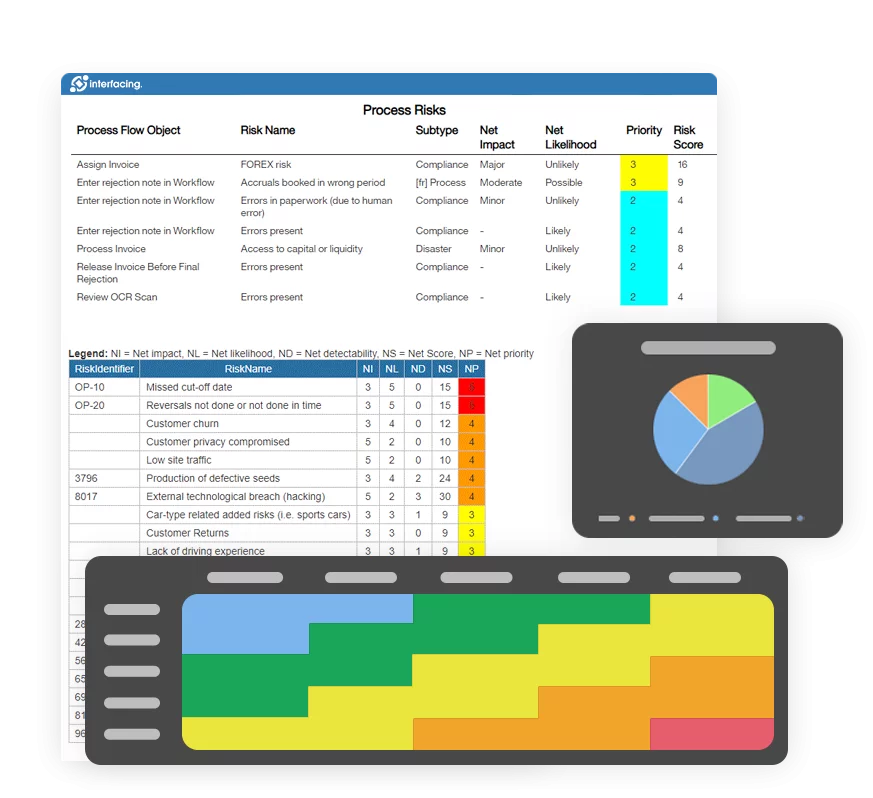
This is why an isolated AI inventory or risk register is not sufficient. As explained in Why Risk Registers Fail Without Process Context, risks become actionable when they are connected to the processes, controls, evidence and roles responsible for managing them.

Permission Controls Do Not Have to Eliminate Speed

A common concern is that governance will slow agentic AI down until its operational value disappears. That can happen if every activity is assigned the same level of risk and routed through the same approval process.

The better approach is risk-based authority.

Retrieving an approved procedure may require no additional approval. Drafting a proposed revision may require review. Publishing that revision should require an authorized owner. Applying an electronic signature must remain tied to the accountable individual.

This tiered model preserves efficiency where the consequences are limited and introduces stronger control where the organization could face operational, financial, safety or regulatory harm.

Governance is not the opposite of speed. It is what allows organizations to increase speed without losing control.

How Interfacing Helps Establish the Governance Foundation

Interfacing helps organizations establish the operating context required for governed AI-assisted work.

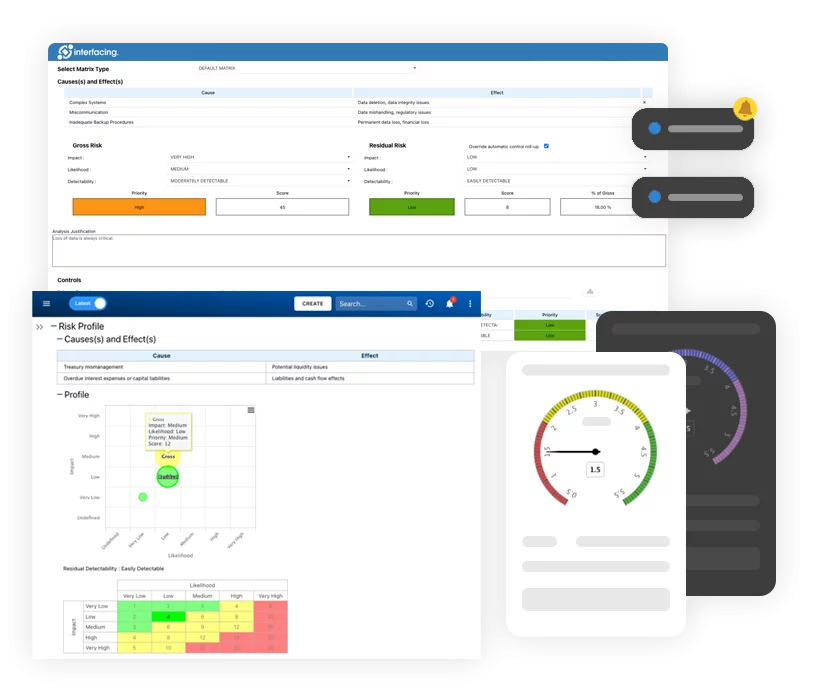
Within Interfacing’s Integrated Management System, organizations can connect processes, procedures, roles, responsibilities, risks, controls, documents, quality events, CAPA, training, audits, workflows and approvals. This provides the context needed to determine where AI may assist, where a human decision is required and what evidence must be retained.

Interfacing’s business process governance capabilities support role-based access control and centralized user authentication. Its process compliance capabilities provide digital signatures, time-stamped audit trails and accountability for roles and responsibilities.

Combined with workflow orchestration, impact analysis and end-to-end traceability, these capabilities help organizations move beyond a general AI policy toward enforceable operational governance.

The objective is not to grant an agent unlimited autonomy. It is to give AI-assisted capabilities carefully defined responsibilities within a governed operating model, while accountable people retain authority over consequential decisions.

Speed Creates Momentum. Governance Creates Trust.

AI will continue to get faster. That is not the hard part. The hard part is making AI useful in environments where decisions must be explainable, evidence must be retained, approvals must be controlled, and operational change must be traceable.

Fast AI can help teams produce more. Governed AI helps teams prove more.

For regulated industries, that distinction matters. The organizations that succeed with AI will not simply be the ones that adopt the newest tools first. They will be the ones that connect AI to the operating model, preserve accountability, and turn AI-assisted insight into governed execution.

That is where AI becomes more than a productivity layer. It becomes part of how the organization manages quality, compliance, risk, and continuous improvement.

Why Choose Interfacing?


With over two decades of AI, Quality, Process, and Compliance software expertise, Interfacing continues to be a leader in the industry. To-date, it has served over 500+ world-class enterprises and management consulting firms from all industries and sectors. We continue to provide digital, cloud & AI solutions that enable organizations to enhance, control and streamline their processes while easing the burden of regulatory compliance and quality management programs.

To explore further or discuss how Interfacing can assist your organization, please complete the form below.

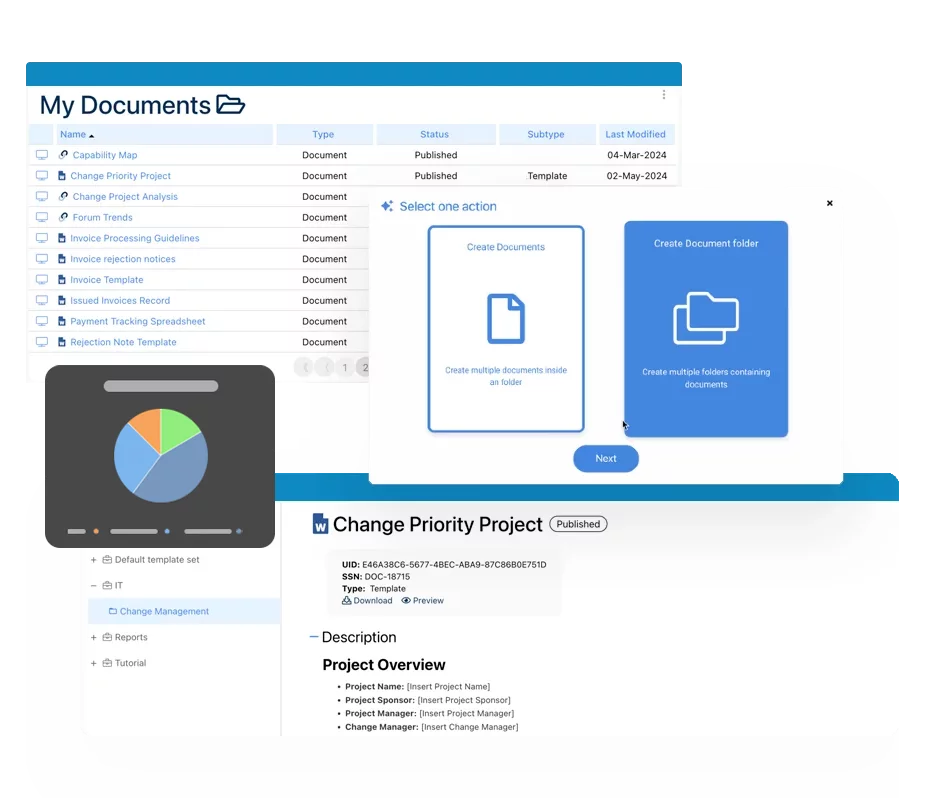
Documentation: Driving Transformation, Governance and Control

• Gain real-time, comprehensive insights into your operations.
• Improve governance, efficiency, and compliance.
• Ensure seamless alignment with regulatory standards.

eQMS: Automating Quality & Compliance Workflows & Reporting

• Simplify quality management with automated workflows and monitoring.
• Streamline CAPA, supplier audits, training and related workflows.
• Turn documentation into actionable insights for Quality 4.0

Low-Code Rapid Application Development: Accelerating Digital Transformation

• Build custom, scalable applications swiftly
• Reducing development time and cost
• Adapt faster and stay agile in the face of evolving customer and business needs.


AI to Transform your Business!

The AI-powered tools are designed to streamline operations, enhance compliance, and drive sustainable growth. Check out how AI can:
• Respond to employee inquiries
• Transform videos into processes
• Assess regulatory impact & process improvements
• Generate forms, processes, risks, regulations, KPIs & more
• Parse regulatory standards into requirements


Learn more about EPC's AI Use Cases
CONTACT US

Request Free Demo

Document, analyze, improve, digitize and monitor your business processes, risks, regulatory requirements and performance indicators within Interfacing’s Digital Twin integrated management system the Enterprise Process Center®!

Trusted by Customers Worldwide!

More than 400+ world-class enterprises and management consulting firms