

Interfacing

sales@interfacing.com

The FDA’s ELSA artificial intelligence platform does not create a new regulation for life sciences companies. It changes something potentially just as important: how quickly the regulator can read, compare and analyze the information those companies submit.

For pharmaceutical, biotechnology and medical device organizations, the resulting challenge is not simply adopting more AI. It is ensuring that quality records, submissions, processes and AI-assisted decisions remain consistent, governed and reconstructable when reviewed at machine-assisted speed.

What is FDA ELSA?

ELSA is an internal, large language model-powered artificial intelligence tool developed for employees of the U.S. Food and Drug Administration. It is not a system that regulated companies purchase or access.

The FDA launched ELSA agency-wide in June 2025 to support tasks involving reading, writing and summarization. Publicly described use cases include summarizing adverse-event information, comparing product labels, reading scientific documents and generating code for internal databases.

In May 2026, the agency announced ELSA 4.0 alongside HALO, the Harmonized AI and Lifecycle Operations for Data platform. HALO consolidated more than 40 application and submission data sources, systems and portals across FDA centres. Its integration with ELSA is intended to allow FDA staff to query agency information without repeatedly uploading documents into separate tools.

The significance of this development is easy to underestimate.

ELSA does not rewrite the fundamental responsibilities of a regulated organization. Companies must still maintain accurate records, validated systems, controlled documents, effective CAPA programs and appropriate human oversight.

What changes is the regulator’s capacity to locate contradictions, compare records and investigate patterns.

The Regulatory Rules May Be Familiar, but the Review Environment Is Not

Regulated organizations have historically prepared for inspections and submissions around a practical constraint: human review capacity.

Reviewers and investigators could not manually examine every record, compare every previous submission or trace every relationship between an adverse event, procedure, deviation, training assignment and corrective action. Sampling and prioritization were unavoidable.

AI does not eliminate the need for professional judgment. It can, however, reduce the time required to locate relevant information and identify areas that warrant closer human examination.

The FDA has reported that an AI-assisted scientific review pilot enabled certain review tasks that previously took days to be completed in minutes. That does not mean every FDA review will suddenly be completed in minutes. It does demonstrate how AI can compress some of the document-intensive work surrounding regulatory analysis.

This creates an important shift for regulated companies.

A contradiction that once required hours of manual searching may now be surfaced much faster. A deviation pattern spread across sites may be easier to identify. An inconsistency between a current submission and an earlier record may be less likely to remain buried in separate systems.

The problem is no longer limited to whether a company can produce a requested document.

The question becomes whether its complete regulatory and quality history tells a coherent story.

ELSA Makes Fragmented Quality Systems More Exposed

A pharmaceutical manufacturer may maintain SOPs in one repository, deviations in an eQMS, employee training in another application, supplier findings in spreadsheets and regulatory commitments inside departmental documents.

Each system may appear functional when evaluated independently.

The weakness becomes visible when someone asks how the information connects.

Was an employee trained on the correct version of the procedure when an incident occurred?

Did a CAPA result in an approved process change?

Were affected risks and controls reassessed?

Did the change apply across every relevant site?

Was the revised procedure communicated, approved and electronically signed?

Does the information in the latest submission reconcile with previous filings and internal quality records?

These are relationship questions, not document-retrieval questions.

An AI-equipped regulator is better positioned to surface inconsistencies across large volumes of information. Therefore, companies that still depend on disconnected applications, isolated records and manual reconciliation face a growing structural disadvantage.

This is particularly relevant for life sciences organizations attempting to move from document-based quality management toward a connected, data-driven quality ecosystem.

From Data Integrity to Decision Traceability

Data integrity remains foundational to GxP operations. Records must be accurate, attributable, contemporaneous, original and reliable throughout their lifecycle.

AI-assisted work adds another layer of accountability.

Suppose an AI tool summarizes a complaint, proposes a deviation description, recommends a CAPA classification or identifies a possible regulatory impact. The final record may look complete, but an inspector or internal auditor may reasonably ask:

  • What information was provided to the AI?
  • What did the system produce?
  • Who reviewed the response?
  • What was changed by the reviewer?
  • Who approved the final decision?
  • Which model or system version was used?
  • What related records were affected?


The TrustBridge series describes this as “decision integrity.” The term is useful because it distinguishes the reliability of the underlying information from the traceability of the judgment made using that information.

This does not mean every prompt must automatically become a permanent GxP record. The appropriate evidence will depend on the intended use, risk, system classification and effect of the AI output.

However, when AI materially contributes to a regulated decision, organizations should be able to reconstruct how that decision was reached.

That requirement aligns with the FDA’s broader risk-based direction for AI used in drug and biological product development. The agency has emphasized credibility, context of use, lifecycle risk management and trustworthy AI practices when AI-generated information supports regulatory decision-making.

Your Vendor’s AI Can Become Your Compliance Responsibility

One of the most easily overlooked risks is AI functionality introduced through existing suppliers.

An organization may not have formally implemented an AI platform, yet AI may already be present inside its document management system, analytics application, eQMS, complaint platform or productivity tools.

A software update may add summarization, automated classification, drafting, scoring or recommendation capabilities. Employees may begin using those features before Quality, IT or Regulatory Affairs has determined whether the output affects GxP records.

The regulated organization remains accountable for the processes and records it relies upon.

Supplier qualification should therefore extend beyond conventional questions about hosting, cybersecurity, support and system availability. For AI-enabled functionality, organizations may also need to understand:

  • The intended use and limitations of the capability
  • The records and decisions it can influence
  • Whether the model is fixed or changes over time
  • How updates are communicated and controlled
  • What customer data the system processes
  • Whether outputs can be independently reviewed
  • How errors, drift and performance issues are monitored
  • What evidence is available for validation and audit purposes


This is not solely an IT procurement issue. It sits between IT, Quality, Regulatory Affairs, Legal, Information Security and operational process owners.

Faster Regulatory Analysis Does Not Mean Companies Should Rush AI

A predictable reaction to Elsa is to conclude that industry must adopt AI as quickly as the regulator.

That reasoning is incomplete.

The FDA operates ELSA for its own internal purposes, within its own security, governance and human-review environment. A pharmaceutical manufacturer using generative AI to create or modify GxP records faces a different risk profile.

The correct response is not an AI arms race.

It is governed adoption.

Organizations should use AI where it creates measurable value, but surround higher-impact uses with appropriate permissions, human review, version control, validation, change management and audit evidence.

An AI-assisted process that produces faster but poorly governed records may increase rather than reduce regulatory exposure.

As discussed in Why Governed AI Beats Fast AI in Regulated Industries, the quality of AI adoption depends on how the technology is connected to ownership, approval and operational accountability.

What Life Sciences Organizations Should Do Now

Preparing for an AI-accelerated FDA does not begin with purchasing another standalone AI application. It begins by identifying where fragmented information and weak traceability already exist.

Establish an inventory of AI use

Document the AI capabilities being used across regulated processes, including features embedded inside existing software.

The inventory should identify the system, intended purpose, affected records, process owner, data used, level of human review and potential GxP impact.

Unofficial employee use should also be considered. Shadow AI can create regulated content outside approved workflows even when the organization has not formally deployed an enterprise AI platform.

Reconcile related quality and regulatory records

Organizations should examine whether information remains consistent across submissions, SOPs, quality events, audit findings, CAPAs, training records, risk assessments and supplier records.

The objective is not merely to clean up documentation before an inspection. It is to establish a repeatable method for identifying contradictions before they reach the regulator.

Connect CAPA to its operational context

A CAPA record should not exist as an isolated quality case.

Effective CAPA management connects the original issue to root cause evidence, affected processes, applicable risks, procedures, owners, training requirements and effectiveness checks.

When these relationships are maintained, organizations can demonstrate not only that an action was completed, but that the underlying operational weakness was addressed.

Strengthen change and document governance

Controlled documents should be connected to the processes, roles, regulations and training assignments they affect.

When a procedure changes, the organization should be able to identify downstream impacts, trigger the correct reviews and approvals, communicate the revision and retain evidence that affected personnel understood the change.

Reassess AI-enabled suppliers

Existing supplier agreements may not address functionality that was added after the original contract was signed.

Quality and IT teams should review whether AI-related responsibilities, data handling, model changes, validation support, notification obligations and audit rights are adequately covered.

Test inspection readiness across complete record populations

Traditional inspection preparation often focuses on likely samples.

A stronger readiness exercise examines broader populations of deviations, CAPAs, audit trails, overdue actions, training records and document revisions. The purpose is to discover what automated analysis could surface when inconsistencies are evaluated across systems and time periods.

How Interfacing Helps

Interfacing helps regulated organizations prepare for faster, more connected oversight by bringing quality, process, risk, compliance, documentation and workflow evidence into a governed Integrated Management System.

Rather than treating an SOP, deviation, CAPA, audit finding, risk assessment and training record as unrelated files, the platform connects them within a common operating model.

Interfacing IMS supports organizations in:

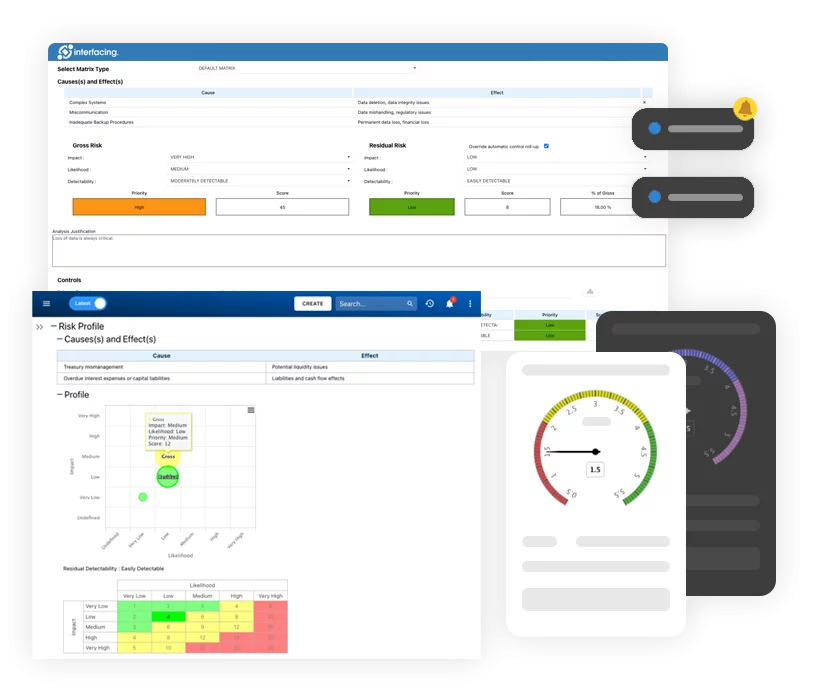
  • Connecting processes, procedures, regulations, risks and controls
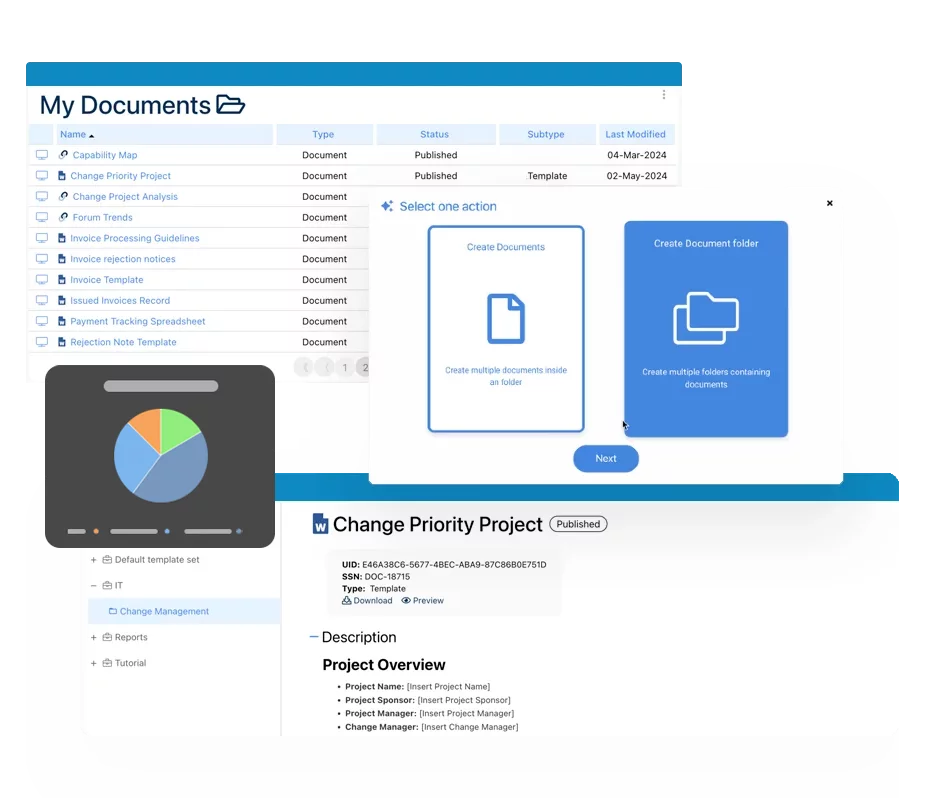
  • Managing document review, approval, publication and periodic revision
  • Linking deviations and quality events to CAPA and root cause analysis
  • Assigning and monitoring role-based training
  • Maintaining audit trails, version histories and electronic approvals
  • Identifying downstream impacts when regulated content changes
  • Managing supplier, audit and regulatory information
  • Applying AI-assisted capabilities within controlled governance workflows
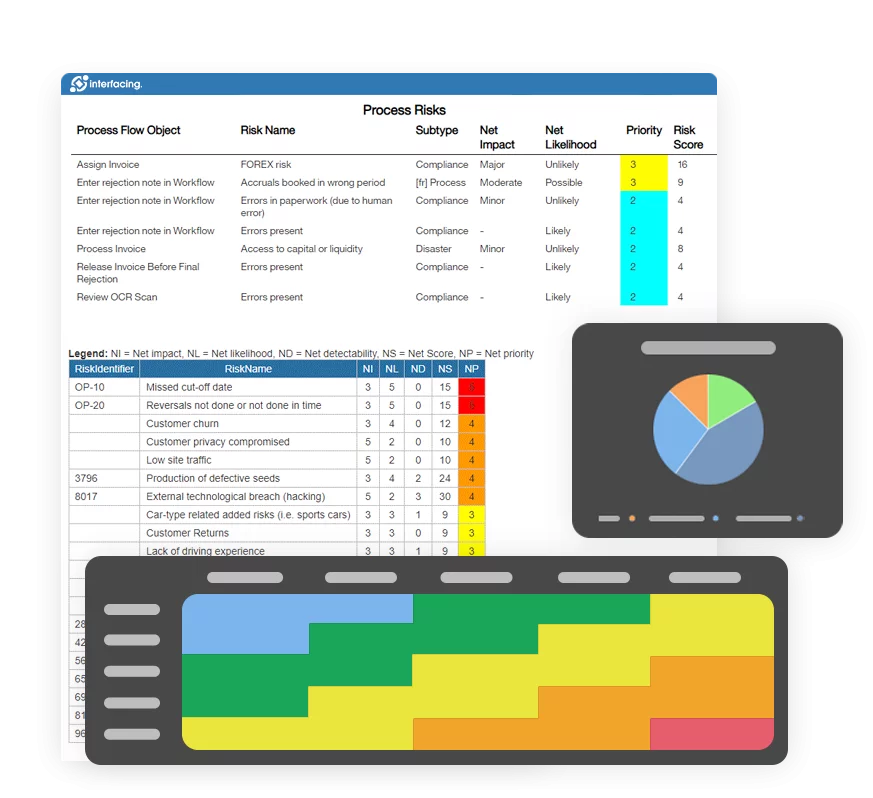
  • Creating dashboards that expose overdue actions, recurring issues and compliance gaps

Interfacing’s life sciences QMS capabilities are designed to support GxP-regulated operations, including traceability across documentation, quality workflows and compliance evidence. The platform’s life sciences and healthcare QMS positioning specifically connects SOPs, risks, controls, CAPA, training, audits and regulatory requirements within one secure environment.

The goal is not to predict every question ELSA may help an FDA reviewer ask.

The goal is to ensure the organization can answer those questions from controlled, connected and defensible records.

The Real ELSA Readiness Test

Elsa should not be treated as a new regulation or another technology trend.

It is evidence of a regulator improving its ability to work across information at scale.

For regulated companies, the practical response is to reduce the contradictions, disconnected records and undocumented decisions that machine-assisted analysis can expose.

Organizations that can connect every significant quality event to its process, owner, evidence, decision, approval and resulting improvement will be better prepared for regulatory scrutiny, whether that scrutiny is performed manually or supported by AI.

The advantage will not belong to the company with the most AI tools.

It will belong to the company whose quality and regulatory records remain coherent when someone can finally read all of them.

Why Choose Interfacing?


With over two decades of AI, Quality, Process, and Compliance software expertise, Interfacing continues to be a leader in the industry. To-date, it has served over 500+ world-class enterprises and management consulting firms from all industries and sectors. We continue to provide digital, cloud & AI solutions that enable organizations to enhance, control and streamline their processes while easing the burden of regulatory compliance and quality management programs.

To explore further or discuss how Interfacing can assist your organization, please complete the form below.

Documentation: Driving Transformation, Governance and Control

• Gain real-time, comprehensive insights into your operations.
• Improve governance, efficiency, and compliance.
• Ensure seamless alignment with regulatory standards.

eQMS: Automating Quality & Compliance Workflows & Reporting

• Simplify quality management with automated workflows and monitoring.
• Streamline CAPA, supplier audits, training and related workflows.
• Turn documentation into actionable insights for Quality 4.0

Low-Code Rapid Application Development: Accelerating Digital Transformation

• Build custom, scalable applications swiftly
• Reducing development time and cost
• Adapt faster and stay agile in the face of evolving customer and business needs.


AI to Transform your Business!

The AI-powered tools are designed to streamline operations, enhance compliance, and drive sustainable growth. Check out how AI can:
• Respond to employee inquiries
• Transform videos into processes
• Assess regulatory impact & process improvements
• Generate forms, processes, risks, regulations, KPIs & more
• Parse regulatory standards into requirements


Learn more about EPC's AI Use Cases
CONTACT US

Request Free Demo

Document, analyze, improve, digitize and monitor your business processes, risks, regulatory requirements and performance indicators within Interfacing’s Digital Twin integrated management system the Enterprise Process Center®!
Trusted by Customers Worldwide!

More than 400+ world-class enterprises and management consulting firms