Interfacing

sales@interfacing.com

Compliance rarely fails because an organization does not know that a regulation, standard, policy, or contractual obligation exists. The harder problem is proving how that obligation is actually implemented across the organization.

A DTO for compliance changes that perspective. Instead of treating compliance as a collection of requirements, documents, and audit evidence, a Digital Twin of an Organization connects obligations to the processes, controls, roles, systems, procedures, training, and records through which compliance is actually achieved.

Compliance Exists in the Operation, Not in the Requirement

Most organizations have systems for storing regulatory requirements.

They may maintain regulatory libraries, policies, compliance registers, spreadsheets, document repositories, or specialized applications. These tools can answer an important question:

What are we required to do?

But that is only the beginning.

Executives, compliance leaders, and auditors eventually need answers to much more difficult questions.

Which processes satisfy the requirement? Which controls enforce it? Who owns those controls? Which procedures tell employees what to do? Which systems support the process? What training is required? What records demonstrate that the activity occurred? And what happens if any of those elements change?

This is where compliance becomes an operating-model problem.

A Digital Twin of an Organization connects processes with capabilities, roles, resources, systems, risks, controls, regulations, policies, quality events, performance indicators, and other operational elements. That connected model provides the context needed to move compliance beyond a static requirements repository.

What Does a DTO for Compliance Actually Do?

A DTO for compliance creates traceability between an obligation and the operational mechanisms used to satisfy it.

Instead of simply recording that a requirement applies, the organization can model how that requirement is implemented, who is accountable, which controls support it, where evidence is generated, and what other parts of the organization depend on it.

That distinction matters.

A requirement may say that a particular activity must be controlled, reviewed, documented, retained, or periodically assessed. Knowing that the requirement exists does not demonstrate that the organization is complying with it.

Compliance becomes defensible when the organization can trace the requirement through execution.

Interfacing’s process compliance approach reflects this relationship by connecting regulations, procedures, controls, processes, responsibilities, records, governance workflows, and downstream impact analysis.

The Compliance Gap Is Usually Between Policy and Execution

Organizations often assume that an approved policy or SOP means a requirement has been implemented.

It may not.

A procedure can be perfectly controlled in a document management system while the underlying process changes around it. A system can be replaced. Responsibilities can shift. A control can become ineffective. A supplier can change. Employees can move into new roles without completing the appropriate training.

The document may still appear compliant.

The operation may no longer be.

This explains why document control alone cannot provide complete compliance assurance. Compliance depends on relationships between documentation and execution.

A Digital Twin of an Organization makes those relationships explicit.

For example, a regulatory requirement can be connected to a policy, the policy to a business process, the process to individual controls, the controls to responsible roles and supporting systems, and those roles to required training. Records generated through execution then become evidence that the requirement is being followed.

The resulting model does more than show what the organization intended to implement. It creates a traceable structure for understanding whether compliance has actually been operationalized.

Traceability Changes the Compliance Question

Traditional compliance programs frequently ask:

Are we compliant with this requirement?

A DTO encourages a more useful set of questions.

Where is the requirement implemented? What controls provide assurance? Which processes depend on those controls? Who is accountable? What evidence demonstrates effectiveness? What downstream obligations could be affected if something changes?

This is a significant shift because compliance stops being represented as a binary status.

It becomes a network of operational relationships that can be examined, governed, monitored, and improved.

That also exposes weaknesses earlier.

If a requirement has no mapped control, there may be a design gap. If a control has no accountable owner, there is a governance gap. If a procedure changes but the affected training has not been reassigned, there may be an implementation gap. If the required evidence cannot be located, there may be an assurance gap.

The DTO makes those relationships visible before they have to be reconstructed during an audit or investigation.

Regulatory Change Becomes Easier to Contain

Compliance becomes particularly difficult when regulations change.

A revised requirement rarely affects one document. It may affect policies, SOPs, controls, system configurations, forms, training, supplier requirements, reporting, record retention, or audit procedures.

That is why regulatory change impact analysis depends so heavily on the relationships already modeled inside the operating environment. If the relationship between a requirement and a process has never been recorded, reliably identifying that process as affected becomes far more difficult.

A compliance-oriented DTO therefore provides value before and after the regulatory change.

Before the change, it establishes traceability.

After the change, those relationships provide the foundation for impact analysis, change requests, reassessment, document revision, retraining, testing, and evidence collection.

Compliance Evidence Should Be Generated by the System of Work

Another weakness in traditional compliance programs is the separation between doing the work and proving that the work was done.

Evidence is often assembled after the fact.

Emails are located. Screenshots are taken. Training reports are exported. Documents are retrieved. Control owners are contacted. Records from several applications are pulled together shortly before an audit.

The organization may be compliant, but proving it becomes an expensive reconstruction exercise.

A connected DTO changes the model by linking evidence to the operating context that produced it.

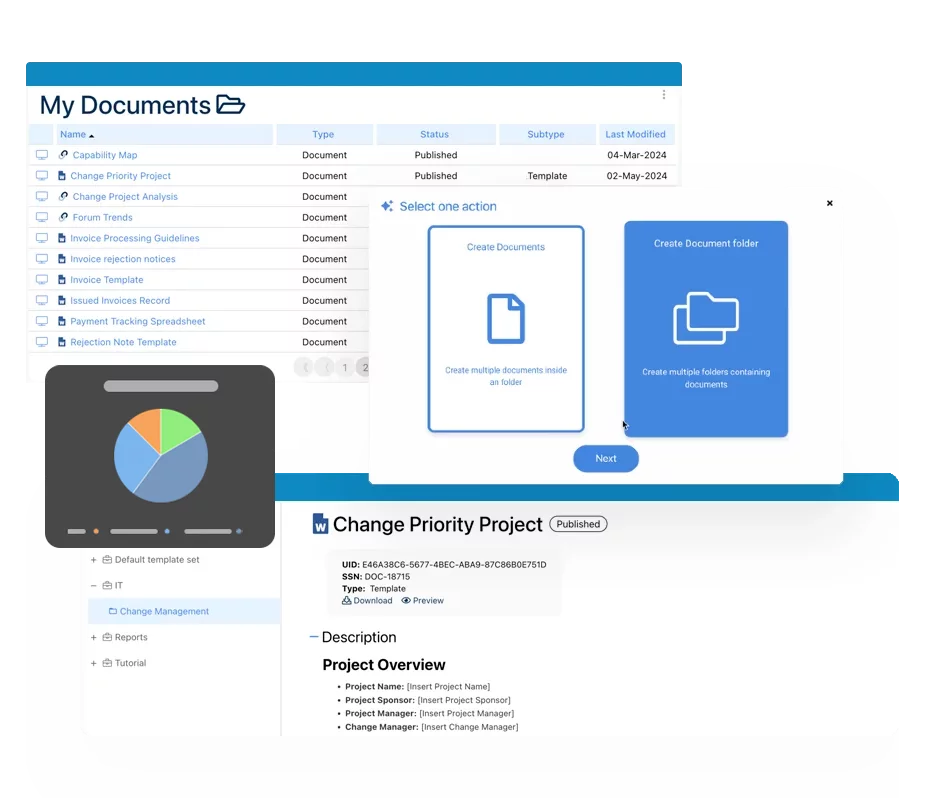
Controlled documents can maintain ownership, version history, review and approval status. Training records can be associated with roles and procedures. Audit results can connect directly to requirements, processes, risks, controls, findings, and remediation. Quality events and CAPAs can be traced back to the affected operational environment.

Interfacing’s eQMS, for example, connects controlled documents, lifecycle workflows, records, training, and related quality activities rather than treating them as isolated administrative functions. Explore Interfacing eQMS capabilities

That makes compliance evidence part of execution rather than something assembled separately to satisfy an auditor.

Continuous Compliance Requires More Than Continuous Monitoring

The phrase “continuous compliance” is sometimes interpreted primarily as dashboards, alerts, or automated monitoring.

Those capabilities are useful, but monitoring disconnected information does not solve the underlying problem.

Before an organization can monitor compliance intelligently, it needs to understand what should be connected.

A compliance indicator must relate to something. A control must protect against a specific risk or support a particular obligation. An audit result needs operational context. A training status matters because a role performs regulated work. A document matters because a process relies on its instructions.

The relationships give the data meaning.

This is where the DTO becomes particularly important. It provides the operating context against which monitoring, analytics, process mining, AI-assisted analysis, and human review can be applied.

Executive Reality Check

If compliance status depends on people manually combining information from regulatory registers, process repositories, document systems, training platforms, risk tools, spreadsheets, and audit applications, the organization does not have continuous compliance visibility. It has distributed compliance information.

The distinction matters because the burden of reconstructing those relationships appears whenever a requirement changes, a control fails, an incident occurs, or an auditor asks for evidence.

A DTO reduces that reconstruction problem by making the relationships part of the operating model itself.

Audit Readiness Becomes an Outcome of the Model

Audit readiness should not begin when an audit is announced.

When compliance obligations are already linked to processes, controls, policies, roles, training, evidence, and remediation activity, much of the context an auditor needs already exists.

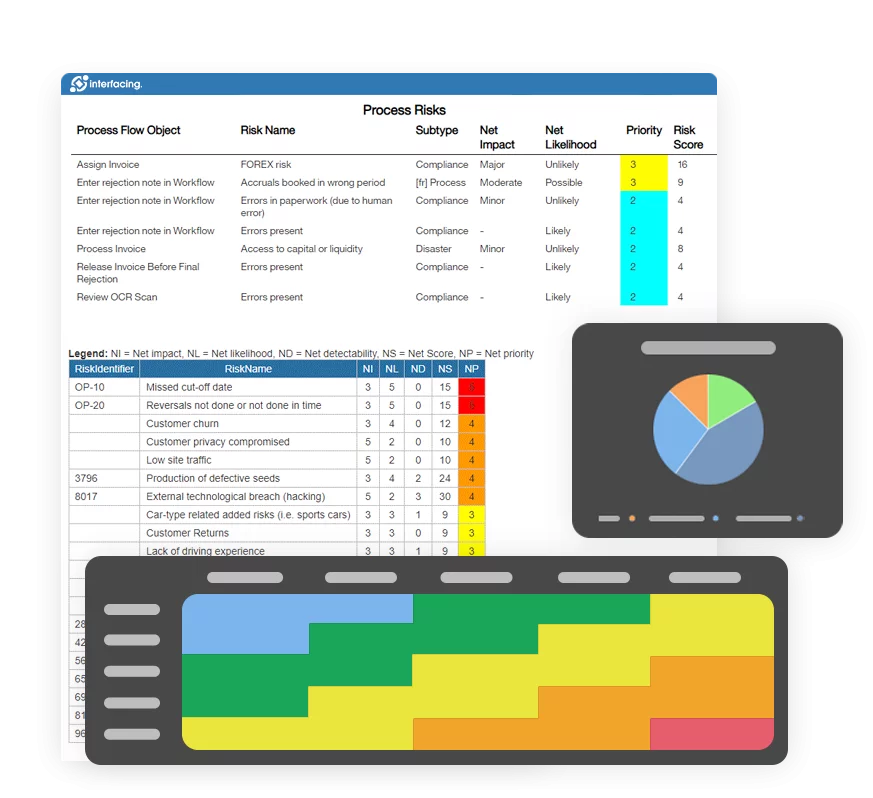
Interfacing’s Audit Management capabilities connect audits with regulatory requirements, process execution, control effectiveness, risk exposure, training, documentation, evidence, findings, CAPA, and other remediation workflows.

This does not eliminate the need for audit preparation or human judgment.

It changes where the work is performed.

Instead of repeatedly rebuilding the compliance story for each audit, the organization maintains the relationships throughout normal operations.

How Interfacing Helps Turn Compliance Into an Operating Capability

Interfacing’s approach goes beyond storing regulations or automating isolated compliance tasks.

The Interfacing Integrated Management System creates a governed environment where processes, regulatory requirements, policies, SOPs, risks, controls, roles, systems, documents, training, audits, quality events, CAPAs, evidence, and performance information can be connected within the same operating model.

That provides the foundation for a Digital Twin of an Organization focused on compliance.

The practical value is the ability to follow compliance from obligation through implementation and evidence.

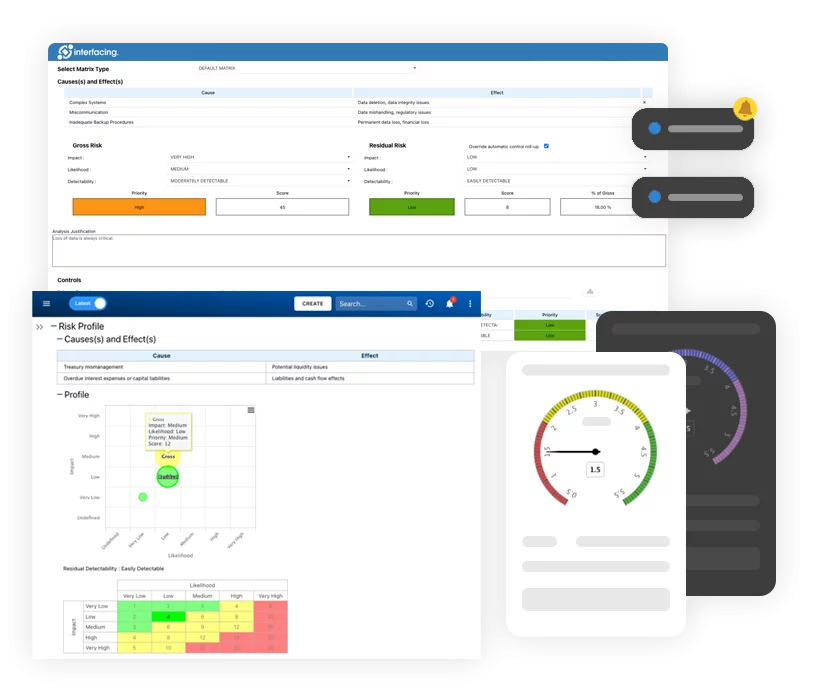
A regulatory requirement can be mapped to the processes it governs. Those processes can be connected to risks and controls. Controls can have assigned ownership and assessment criteria. Procedures and controlled documents can follow structured review, approval, publication, revision, and change workflows. Training requirements can follow affected roles and procedures. Audit findings and quality events can initiate remediation, CAPA, retraining, risk reassessment, or document changes.

Interfacing also supports AI-assisted impact analysis so teams can identify potentially affected processes, controls, documents, roles, and other dependencies when requirements or operating conditions change. Human owners remain responsible for evaluating those recommendations, approving changes, and determining whether compliance has been adequately maintained.

The proposition is therefore broader than compliance automation.

It is compliance architecture.

Instead of asking teams to prove compliance by assembling information from disconnected systems, Interfacing provides the structure for compliance to be designed, executed, governed, monitored, changed, and evidenced within the same connected environment. This gives compliance leaders stronger traceability, quality leaders clearer operational context, and executives a more defensible view of how obligations are being translated into actual business practice.

What is a DTO for compliance?

A DTO for compliance is a Digital Twin of an Organization that connects regulatory and policy requirements to the processes, controls, roles, systems, procedures, training, and evidence used to satisfy them. It provides an operational view of compliance rather than treating requirements as isolated records.

How does a Digital Twin of an Organization support regulatory compliance?

A DTO supports regulatory compliance by modeling the relationships between requirements and the parts of the organization responsible for implementing them. This enables traceability, impact analysis, ownership, governance, monitoring, and evidence management across the compliance lifecycle.

How is a DTO different from compliance management software?

Traditional compliance software may focus primarily on requirements, assessments, controls, or reporting. A DTO extends compliance into the broader operating model by connecting obligations with processes, people, systems, risks, documents, training, performance, and operational evidence.

Can a DTO help with regulatory change?

Yes. When requirements are connected to internal processes, controls, documents, systems, roles, and training, a DTO can support impact analysis when a regulation changes. Teams can identify potentially affected operational elements and route required changes through governance workflows.

Does a DTO replace a GRC or QMS system?

Not necessarily. The objective is not simply to replace individual functional capabilities. A DTO provides the connected operating context in which quality, GRC, compliance, process management, documents, risks, controls, and other operational information can work together. Interfacing’s IMS integrates these capabilities within one governed platform.

How does a DTO improve audit readiness?

A DTO improves audit readiness by maintaining traceability between requirements, controls, processes, responsible roles, training, documents, evidence, findings, and remediation. Auditors and internal teams can follow those relationships without reconstructing them manually for each audit.

Can AI be used in a DTO for compliance?

Yes. AI-assisted analysis can help identify dependencies, assess potential change impacts, surface gaps, and recommend areas requiring review. Human owners should remain responsible for interpreting regulatory context, evaluating recommendations, approving consequential changes, and confirming compliance.

Why Choose Interfacing?


With over two decades of AI, Quality, Process, and Compliance software expertise, Interfacing continues to be a leader in the industry. To-date, it has served over 500+ world-class enterprises and management consulting firms from all industries and sectors. We continue to provide digital, cloud & AI solutions that enable organizations to enhance, control and streamline their processes while easing the burden of regulatory compliance and quality management programs.

To explore further or discuss how Interfacing can assist your organization, please complete the form below.

Documentation: Driving Transformation, Governance and Control

• Gain real-time, comprehensive insights into your operations.
• Improve governance, efficiency, and compliance.
• Ensure seamless alignment with regulatory standards.

eQMS: Automating Quality & Compliance Workflows & Reporting

• Simplify quality management with automated workflows and monitoring.
• Streamline CAPA, supplier audits, training and related workflows.
• Turn documentation into actionable insights for Quality 4.0

Low-Code Rapid Application Development: Accelerating Digital Transformation

• Build custom, scalable applications swiftly
• Reducing development time and cost
• Adapt faster and stay agile in the face of evolving customer and business needs.


AI to Transform your Business!

The AI-powered tools are designed to streamline operations, enhance compliance, and drive sustainable growth. Check out how AI can:
• Respond to employee inquiries
• Transform videos into processes
• Assess regulatory impact & process improvements
• Generate forms, processes, risks, regulations, KPIs & more
• Parse regulatory standards into requirements

Learn more about EPC's AI Use Cases
CONTACT US

Request Free Demo

Document, analyze, improve, digitize and monitor your business processes, risks, regulatory requirements and performance indicators within Interfacing’s Digital Twin integrated management system the Enterprise Process Center®!

Trusted by Customers Worldwide!

More than 400+ world-class enterprises and management consulting firms