Organizations evaluating quality, environmental, health, safety, and compliance software are often comparing platforms that appear similar at the application level.
Both Intelex and Interfacing support regulated operations, quality management, risk management, document control, audits, corrective actions, training, reporting, and workflow automation.
The more important distinction is not whether both platforms contain these capabilities. It is how those capabilities are structured and how far their governance model extends across the organization.
Intelex is primarily positioned as an Environmental, Health, Safety, and Quality platform built around configurable EHSQ applications.
Interfacing is designed as an Integrated Management System that connects quality and compliance activities to the processes, roles, systems, risks, controls, documents, regulations, resources, and performance measures that make up the wider operating model.
The right choice depends on whether the organization is primarily digitizing EHSQ programs or building a governed, connected model of how the enterprise operates.
Gartner® Recognized Digital Twin of an Organization (DTO)
ISO, FDA, and GxP Validated Platform
Global Deployments Across Life Sciences, Pharma & Healthcare

Intelex is a cloud-based platform for managing Environmental, Health, Safety, Quality, and sustainability programs.
Its published product portfolio includes applications for audit management, CAPA, document control, nonconformance reporting, inspections, supplier management, training, operational risk, incident management, environmental compliance, health and safety, and ESG reporting.
Intelex also offers configurable workflows and a low-code/no-code application builder that allows organizations to adapt forms and applications to their EHSQ requirements.
This makes Intelex particularly relevant to organizations that want to consolidate multiple environmental, safety, quality, and sustainability programs into a shared platform.
Its application-oriented structure allows teams to select and configure the functions needed for specific EHSQ programs, business units, sites, or regulatory obligations.
Intelex may be a compatible fit when an organization’s central priorities include:
Intelex’s breadth across EHSQ is significant. It should not be characterized as a simple document control system or narrow QMS application.
However, application breadth is not the same as operating-model depth.
Â
Environmental, safety, and quality outcomes do not occur independently from the rest of the organization.
They are affected by:
An EHSQ platform can capture incidents, audits, corrective actions, inspections, training records, and compliance tasks.
An operating-model-based Integrated Management System goes further by connecting those records to the enterprise structures that caused, influenced, or must respond to them.
This distinction becomes especially important when recurring quality, safety, or compliance problems cannot be resolved within the boundaries of a single application.
Â
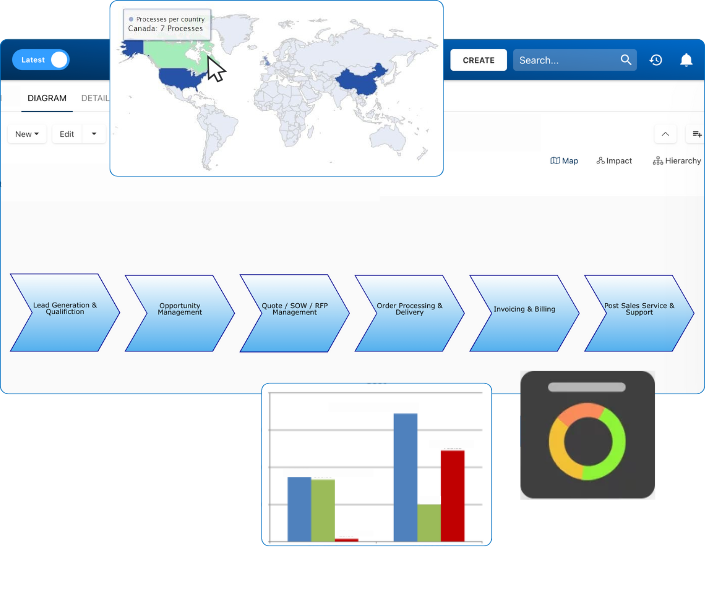
Interfacing treats quality, safety, risk, compliance, and governance as connected parts of how the organization operates.
Its Integrated Management System combines:
Rather than storing these areas as isolated records, Interfacing connects them through a reusable enterprise repository.
A process can be linked to its responsible roles, systems, policies, procedures, risks, controls, regulatory requirements, KPIs, training obligations, documents, applications, suppliers, assets, and quality events.
When one element changes, organizations can evaluate what else may be affected before implementing the change.
This creates a governed digital representation of the organization, often described as a Digital Twin of an Organization.
| Feature | Interfacing IMS | Intelex |
|---|---|---|
| Platform Orientation | Integrated Management System connecting process, quality, risk, compliance, documents, and automation | Environmental, Health, Safety, Quality, and ESG platform built around configurable applications |
| Core Design Approach | Connected enterprise operating model with shared governance and reusable repository objects | Configurable EHSQ applications, forms, records, and workflows |
| AI Integration | AI-assisted process discovery, document parsing, impact analysis, and governed operational insight | AI-assisted EHSQ data quality, safety intelligence, compliance inputs, and field workflows |
| Unified IMS | Single connected environment spanning QMS, BPM, GRC, document control, risk, compliance, and low-code automation | Broad EHSQ application suite focused on environmental, safety, quality, sustainability, and related compliance programs |
| Process Management | Enterprise BPMN-based process modeling, hierarchy, governance, ownership, variants, and operational relationships | Configurable workflows and process-related application logic within EHSQ use cases |
| Enterprise Operating Model | Connects processes, roles, systems, resources, risks, controls, regulations, documents, capabilities, and performance measures | Primarily structured around EHSQ programs, applications, records, workflows, and reporting |
| Quality Management | Quality events, CAPA, audits, inspections, supplier quality, training, risk, and documents connected to operational processes | Broad quality management suite including CAPA, nonconformance, audits, supplier quality, document control, and quality planning |
| Environmental and Safety Management | EHS governance supported through connected processes, risks, controls, documents, incidents, audits, training, and workflows | Major platform focus with dedicated environmental, occupational health, safety, incident, hazard, and sustainability applications |
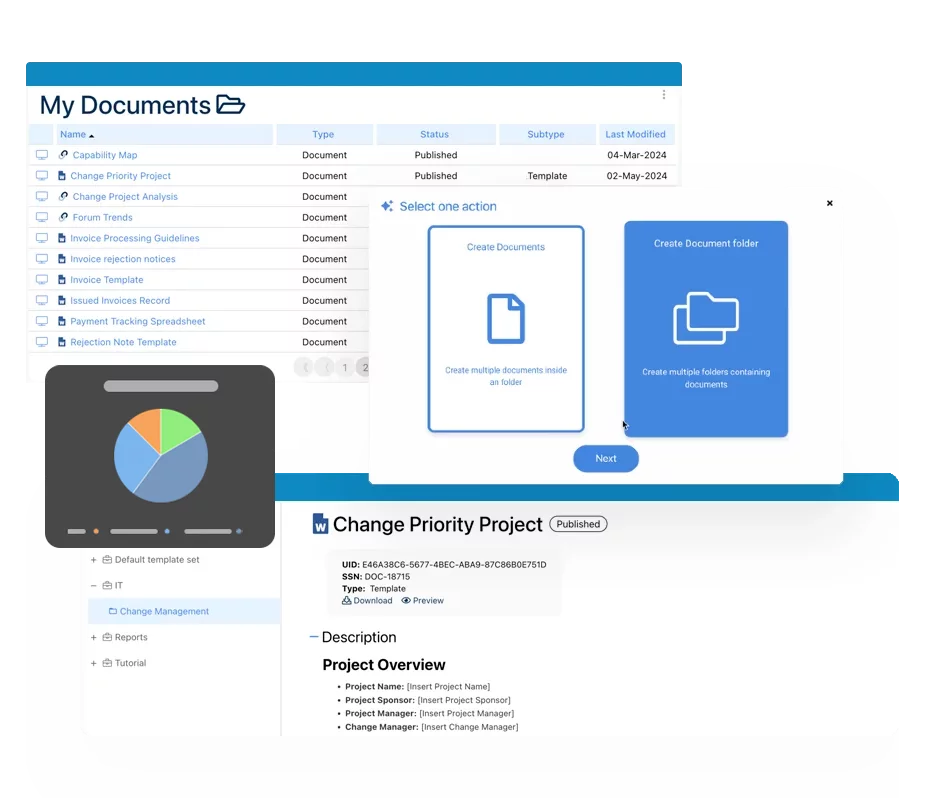
| Document Control and Validation | Governed document and process lifecycle with versioning, approvals, impact assessment, training, confirmation, and audit-ready traceability | Document lifecycle management with approvals, access controls, version control, audit trails, and retention |
| Audit and Inspection Management | Audits and inspections linked directly to processes, risks, controls, requirements, findings, CAPAs, and evidence | Dedicated audit and inspection applications with workflow, mobile data collection, findings, and reporting |
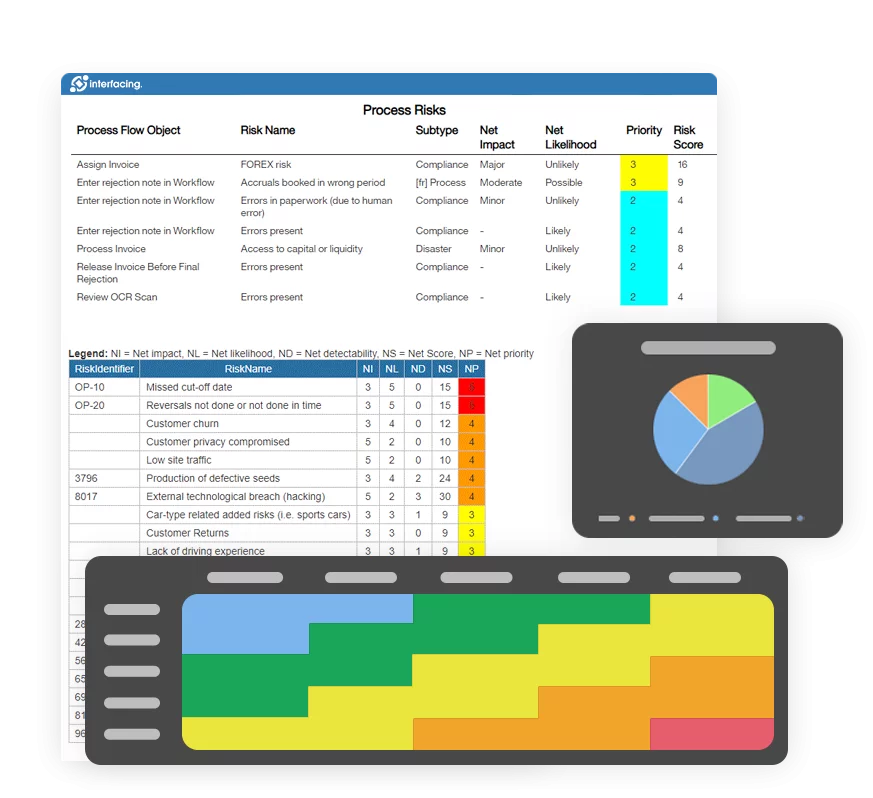
| Risk and Control Management | Enterprise risks and controls embedded within processes, activities, systems, roles, regulations, assets, and continuity structures | Risk management embedded across EHSQ applications, incidents, audits, compliance, and operational programs |
| Low-Code Automation | Low-code forms, applications, and workflows connected to the governed enterprise repository | Low-code and no-code application builder for configuring EHSQ forms, workflows, and applications |
| Process Mining and Simulation | Process mining, operational analysis, scenario testing, and predictive simulation linked to the process model | Not prominently positioned as a core platform category in the public product materials reviewed |
| Change Impact Analysis | Downstream impact visibility across processes, documents, roles, risks, controls, systems, regulations, and training | Management of change and configurable EHSQ workflow capabilities |
| Best Aligned With | Enterprise-wide process, quality, risk, compliance, governance, and digital transformation programs | Environmental, health, safety, quality, ESG, and sustainability program digitization |
Both Intelex and Interfacing support workflows.
However, workflow automation and enterprise process architecture serve different purposes.
A workflow routes tasks, records, approvals, notifications, and decisions through a defined sequence.
A process architecture explains how work across the enterprise is structured, how one process relates to another, who is accountable, which systems and resources are involved, and how risk, controls, regulations, documents, and performance measures connect to execution.
Organizations may have well-configured EHSQ workflows and still lack a governed view of the end-to-end processes that produce quality, safety, environmental, or compliance outcomes.
Interfacing is designed to make that wider operational context visible and governable.
Â
Intelex publicly positions risk as deeply embedded across incidents, audits, training, and compliance. That is a legitimate strength.
The difference is the breadth of context in which risk is modeled.
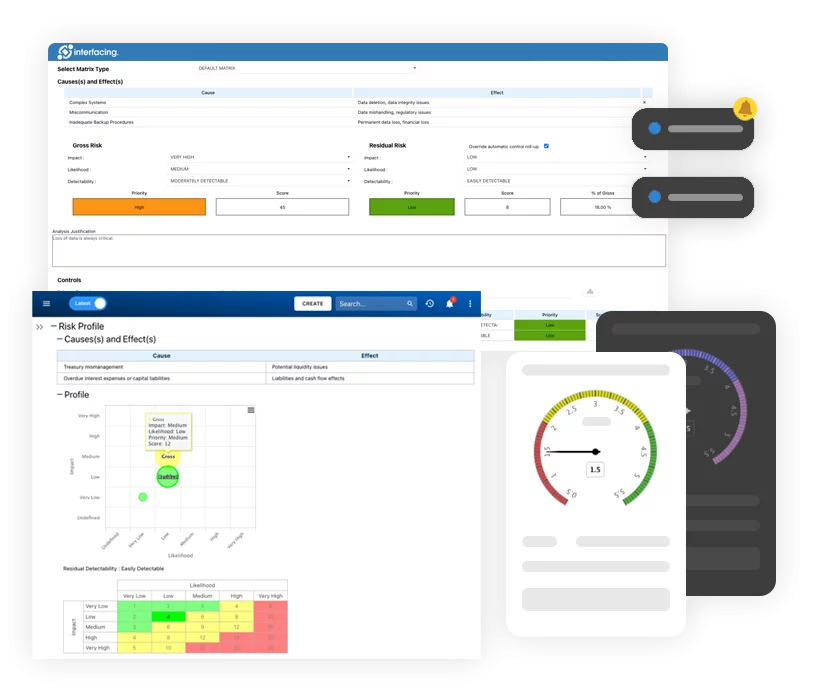
Within Interfacing, risk can be connected to:
Â
This enables teams to see not only that a risk exists, but also where it originates, what it affects, which controls mitigate it, and what downstream components may be exposed when conditions change.
Â
Low-code tools allow both platforms to adapt workflows and forms.
The strategic question is what those applications are connected to.
When low-code applications are created separately from the organization’s process architecture, governance model, documentation, risk structure, and responsibilities, automation can reproduce existing fragmentation in a more digital form.
Interfacing connects low-code execution to the same governed repository used to manage processes, documents, roles, risks, controls, regulations, and performance.
This helps ensure that digital applications remain aligned with approved operating procedures and governance requirements.
Â
Intelex may be the more appropriate choice when:
Â
These scenarios align closely with Intelex’s stated platform focus and application portfolio.
Â
Interfacing is better aligned when the organization needs to connect quality, risk, compliance, documentation, and automation to the wider operating model.
This is especially relevant when:
Recurring nonconformances, incidents, audit findings, and CAPAs often reflect upstream process design, handoff, system, training, or accountability issues.
Interfacing helps teams trace those events back to the processes and operating structures that influence them.
Organizations may need more than configurable workflows. They may require process hierarchies, BPMN models, variants, roles, systems, documentation, risk, controls, KPIs, and approval governance within one repository.
A new or revised requirement may affect multiple procedures, controls, systems, training programs, business units, and operational processes.
Interfacing supports structured relationships and AI-assisted impact recommendations to help teams identify and manage those dependencies.
Quality, information security, operational risk, business continuity, compliance, and process governance may need to function as a unified management system rather than separate programs.
Executives may need visibility into how processes, people, systems, controls, risks, resources, documents, and performance measures interact across the enterprise.
Process mining, simulation, low-code automation, and AI-assisted analysis are more valuable when they remain connected to approved processes, responsibilities, controls, and compliance obligations.
Â
Intelex and Interfacing overlap across quality, risk, compliance, document control, audits, training, workflows, and reporting.
However, they approach these requirements from different starting points.
Intelex is an established EHSQ platform with broad environmental, safety, quality, supplier, ESG, risk, and sustainability applications. It is particularly well aligned with organizations whose transformation priorities are led by EHSQ programs.
Interfacing is an Integrated Management System designed to connect process management, quality, risk, compliance, documentation, analytics, and automation within a single governed operating model.
The decision should therefore not be based only on the number of applications each vendor offers.
It should be based on the organizational question the platform is expected to answer:
Do you primarily need to manage an EHSQ program(s), or do you need to govern how the enterprise operates and understand how quality, risk, compliance, and change move through it?
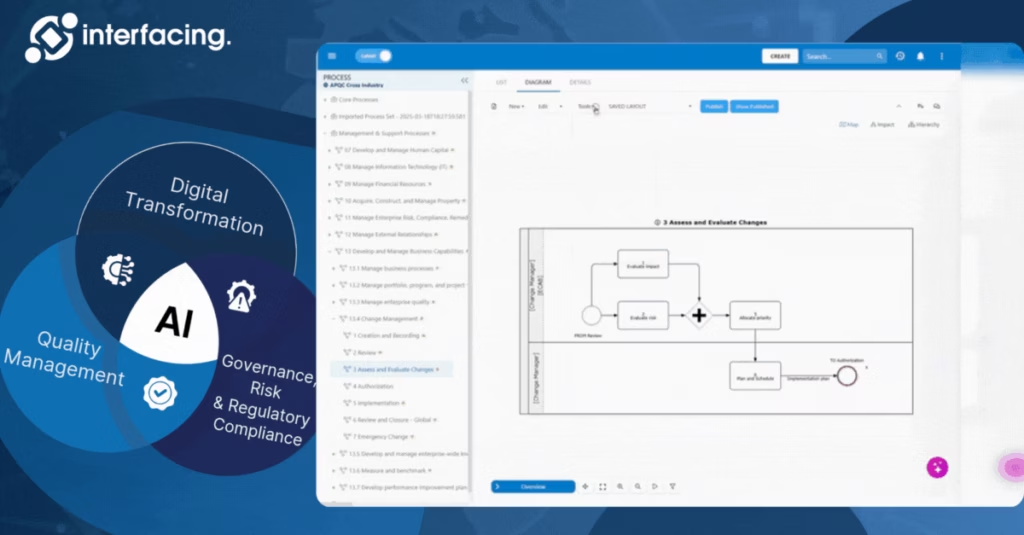
Interfacing’s AI-powered IMS combines QMS, BPM, GRC, and Low-Code into one environment.
Teams document, automate, and continuously improve operations while maintaining audit-ready traceability and regulatory alignment.
Unify systems: Processes, risks, training, and evidence in one connected model.
Automate compliance: AI links CAPA, audits, and training to SOPs automatically.
Accelerate improvement: Mining and dashboards surface inefficiencies and predict risks.
Request a DemoÂ
With over two decades of AI, Quality, Process, and Compliance software expertise, Interfacing continues to be a leader in the industry. To-date, it has served over 500+ world-class enterprises and management consulting firms from all industries and sectors. We continue to provide digital, cloud & AI solutions that enable organizations to enhance, control and streamline their processes while easing the burden of regulatory compliance and quality management programs.
To explore further or discuss how Interfacing can assist your organization, please complete the form below.

• Gain real-time, comprehensive insights into your operations.
• Improve governance, efficiency, and compliance.
• Ensure seamless alignment with regulatory standards.

• Simplify quality management with automated workflows and monitoring.
• Streamline CAPA, supplier audits, training and related workflows.
• Turn documentation into actionable insights for Quality 4.0

• Build custom, scalable applications swiftly
• Reducing development time and cost
• Adapt faster and stay agile in the face of
evolving customer and business needs.
The AI-powered tools are designed to streamline operations, enhance compliance, and drive sustainable growth. Check out how AI can:
• Respond to employee inquiries
• Transform videos into processes
• Assess regulatory impact & process improvements
• Generate forms, processes, risks, regulations, KPIs & more
• Parse regulatory standards into requirements

Document, analyze, improve, digitize and monitor your business processes, risks, regulatory requirements and performance indicators within Interfacing’s Digital Twin integrated management system the Enterprise Process Center®!
More than 400+ world-class enterprises and management consulting firms