Interfacing

Interfacing vs GBTEC

Comparing a Process Transformation Suite with an Integrated Management System

GBTEC and Interfacing both support business process management, governance, workflow automation, risk management, and enterprise transformation.

The key difference is not whether both vendors offer process-related software. It is how far each platform extends beyond process design and whether the organization’s wider management requirements are connected natively within the same environment.

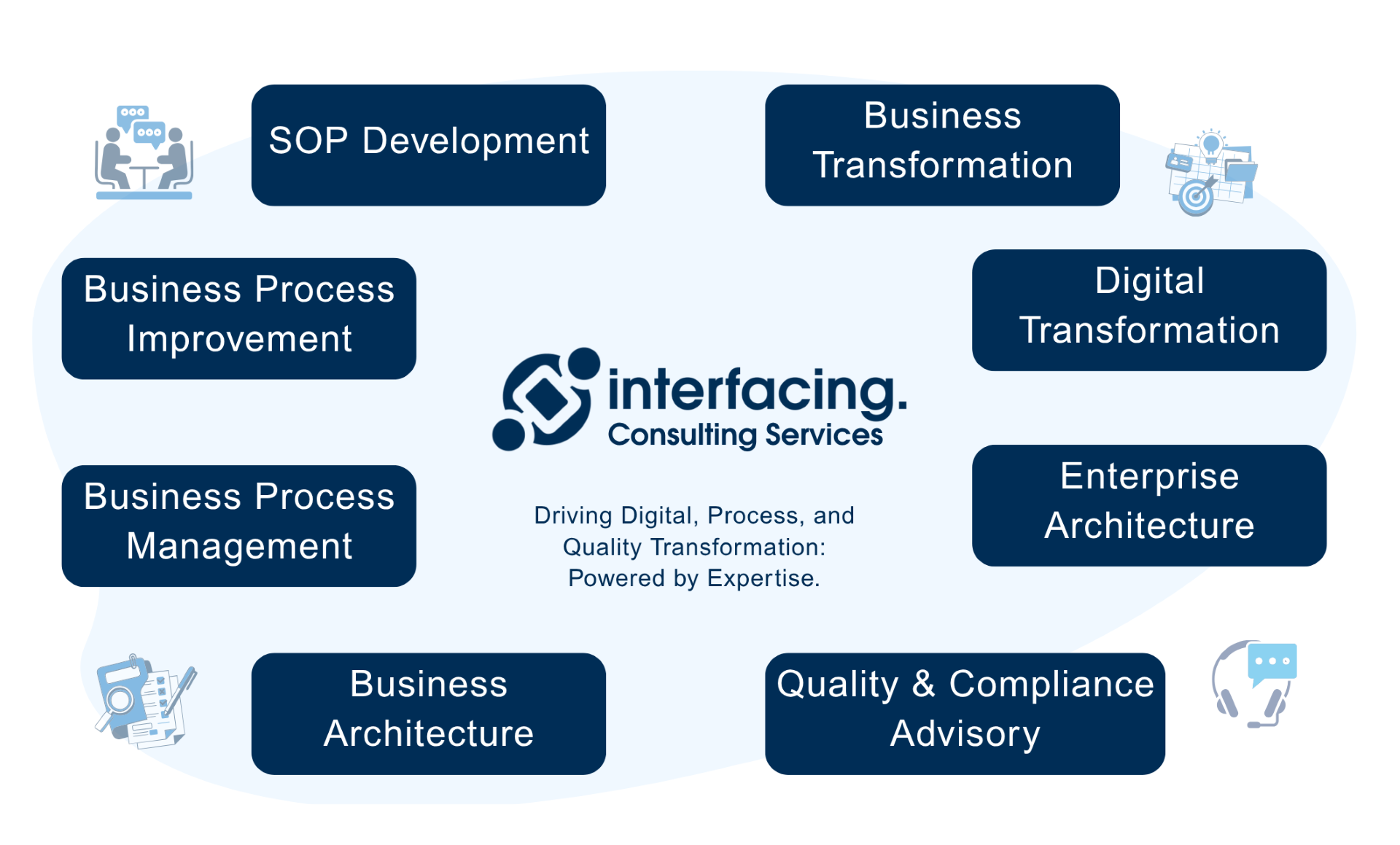
GBTEC’s BIC Platform is organized around products for process design, enterprise architecture, workflow execution, GRC, and process mining. Interfacing provides an Integrated Management System that natively connects BPM, QMS, GRC, document control, regulatory management, business continuity, enterprise architecture, training, low-code automation, process intelligence, and operational governance.

For organizations that must manage process, quality, compliance, risk, documentation, and execution together, Interfacing provides the more complete enterprise platform.

Trusted by Regulated Industries Worldwide

  • Gartner® Recognized Digital Twin of an Organization (DTO)

  • ISO, FDA, and GxP Validated Platform

  • Global Deployments Across Life Sciences, Pharma & Healthcare

GBTEC: A Process-Centred Transformation Suite

GBTEC positions the BIC Platform as a business transformation suite covering process design, enterprise architecture management, workflow automation, GRC, and process mining.

Its principal products include BIC Process Design, BIC EAM, BIC Process Execution, BIC GRC, and Apromore Process Mining. These products support process modelling, architectural planning, workflow execution, risk and compliance activities, and the analysis of process data.

This approach may address organizations whose transformation initiatives are primarily centred on process management, enterprise architecture, or modular governance applications.

However, process transformation becomes more complex when it must also include controlled documents, quality events, CAPA, training, regulatory change, supplier quality, audit evidence, business continuity, risk, controls, and operational execution.

That is where the difference between a process transformation suite and a fully integrated management system becomes important.


Interfacing’s Integrated Management System Approach

Interfacing is designed around a connected enterprise operating model.

Processes do not sit apart from quality, compliance, risk, documentation, systems, responsibilities, and performance. They are managed as related elements within the same Integrated Management System.

A process can be connected directly to:

  • Its owner and participating roles
  • Supporting systems, assets, and applications
  • Policies, SOPs, and controlled records
  • Risks and mitigating controls
  • Regulatory and contractual requirements
  • Quality events, audits, and corrective actions
  • Training and competency requirements
  • Suppliers, products, and equipment
  • KPIs, costs, cycle times, and operational results


This creates traceability across the complete management lifecycle, from process discovery and design through governance, execution, monitoring, improvement, and audit evidence.

Interfacing unifies QMS, BPM, GRC, document control, business continuity, and Low-Code capabilities within one platform, rather than treating them as separate management disciplines.

High-Level Comparison: Scope and Design Intent

Compare the overall scope, architecture, and design intent of each platform.

Comparison Area Interfacing Integrated Management System GBTEC BIC Platform
Platform Orientation Integrated Management System connecting process, quality, risk, compliance, documents, automation, and operational intelligence. Business transformation suite focused on process management, enterprise architecture, workflow automation, GRC, and process mining.
Core Design Approach One connected operating model built around reusable processes, roles, risks, controls, documents, systems, regulations, and data. A portfolio of BIC products addressing different transformation and governance disciplines.
Process Management Process modelling, governance, analysis, simulation, execution, localization, documentation, and improvement connected to the IMS. Process modelling, analysis, simulation, publication, and employee collaboration through BIC Process Design.
Quality Management Embedded eQMS supporting quality events, CAPA, audits, inspections, supplier quality, training, document control, and management review. Quality-related use cases supported through process management, document workflows, risk, control, and GRC capabilities.
Risk and Compliance Risks, controls, requirements, evidence, processes, documents, assets, and quality events managed as connected enterprise objects. Enterprise risk, internal control, information security, business continuity, and compliance applications through BIC GRC.
Document Governance Controlled document lifecycle with approval, electronic signature, versioning, training, confirmation, retention, and audit evidence. Documents can be linked to processes and managed through process and workflow capabilities.
Process Intelligence Process mining and simulation connected to governed process models, risks, controls, roles, documents, KPIs, and improvement actions. Process mining is provided through Apromore Process Mining alongside the BIC product portfolio.
Low-Code Automation Low-code forms, workflows, applications, rules, and dashboards reuse governed IMS data and enterprise objects. No-code and low-code workflow automation through BIC Process Execution.
Change Impact Downstream impact visibility across processes, documents, regulations, roles, systems, risks, controls, and training. Change is managed through process, architecture, workflow, and governance capabilities.
Best Aligned With Organizations seeking one platform for process, quality, compliance, risk, documentation, automation, and transformation. Organizations primarily pursuing process-led transformation, enterprise architecture, workflow, or modular GRC initiatives.

A Suite Is Not Necessarily a Unified IMS

Placing several products under one platform name does not automatically create a single management system.

A software suite may still require different applications, repositories, product configurations, integrations, licensing arrangements, and technical dependencies. These distinctions can affect how information is shared, how change is governed, and how accountability is maintained across the organization.

GBTEC describes its products as independently usable, freely combinable, and automatically synchronizable. Its published platform structure separates Process Design, EAM, Process Execution, GRC, and Apromore Process Mining into identifiable product areas.

Interfacing takes a different approach.

Its Integrated Management System is built around one connected repository in which processes, risks, controls, regulations, documents, roles, systems, assets, quality records, and performance information can be reused across management disciplines.

This reduces the need to duplicate information or maintain separate relationships in different products.


Process Governance Is Not the Same as Integrated Management

Process governance helps organizations document, approve, publish, and improve how work should be performed.

Integrated management goes further.

It connects the process to the quality, risk, compliance, documentation, training, technology, and operational requirements that govern its execution.

For example, when a controlled procedure changes, an integrated management system should be able to show:

  • Which processes and activities are affected
  • Which risks and controls require reassessment
  • Which employees must review or be trained on the change
  • Which systems, suppliers, assets, or products may be impacted
  • Which approvals and electronic signatures are required
  • Which regulatory requirements triggered the change
  • Which records must be retained as audit evidence

Interfacing maintains these relationships within the same management environment.

The organization can move from identifying a required change to assessing its impact, approving updates, publishing controlled content, assigning training, and preserving evidence without separating process governance from quality and compliance execution.


Where Platform Scope Becomes the Deciding Factor

The question is not whether GBTEC can support process modelling, enterprise architecture, workflow automation, or GRC activities. It can.

The more important question is whether those capabilities cover the complete operational and regulatory scope of the organization.

Process transformation increasingly extends into quality events, CAPA, document governance, regulatory change, training, supplier quality, audits, risk, controls, business continuity, and operational execution.

When these areas are managed through separate product layers or external technology, organizations may introduce additional integration requirements, duplicated information, fragmented ownership, and inconsistent governance.

Interfacing is designed to avoid that separation.

Its IMS connects process, quality, compliance, risk, documentation, automation, and operational intelligence within one governed environment.


Why Interfacing Is the Stronger Strategic Choice


Process and quality operate together

Quality problems rarely exist independently of the processes that created them.

Interfacing connects deviations, nonconformities, complaints, audit findings, inspections, CAPA, root cause analysis, supplier quality, training, and document control directly to the operating processes and responsibilities involved.

Regulatory change creates downstream impact

A new or updated requirement may affect policies, procedures, controls, systems, roles, suppliers, training, and operational records.

Interfacing helps organizations identify those dependencies and manage the resulting changes through governed workflows.

Multiple management disciplines work as one system

Interfacing brings BPM, QMS, GRC, document control, business continuity, regulatory management, and Low-Code automation into one connected IMS.

This allows organizations to manage enterprise governance without maintaining separate sources of truth for each discipline.

Process intelligence leads to governed action

Identifying a bottleneck or process deviation is only the beginning.

Interfacing connects process mining and simulation results to controlled process models, risks, responsibilities, improvement actions, documents, and performance measures so that insight can lead to governed operational change.

Leadership gains a Digital Twin of the Organization

Interfacing connects processes, people, systems, capabilities, risks, controls, documents, assets, regulations, and performance within a Digital Twin of the Organization.

This provides leaders with a connected view of how the enterprise operates, how its dependencies interact, and how proposed changes may affect the wider organization.


Final Perspective

GBTEC and Interfacing overlap across process management, enterprise architecture, workflow automation, GRC, and process intelligence.

The difference lies in platform scope and design.

GBTEC is structured around a suite of products supporting process-led transformation, enterprise architecture, automation, governance, and process analysis.

Interfacing provides an Integrated Management System designed to connect processes with quality, compliance, risk, documents, regulations, roles, systems, training, automation, and operational performance.

The decision should therefore not be based only on whether both vendors offer BPM, GRC, workflow, or process intelligence.

It should be based on whether the organization primarily needs a suite of transformation tools or one connected IMS for governing how the enterprise operates, changes, and continuously improves.


How Interfacing Helps

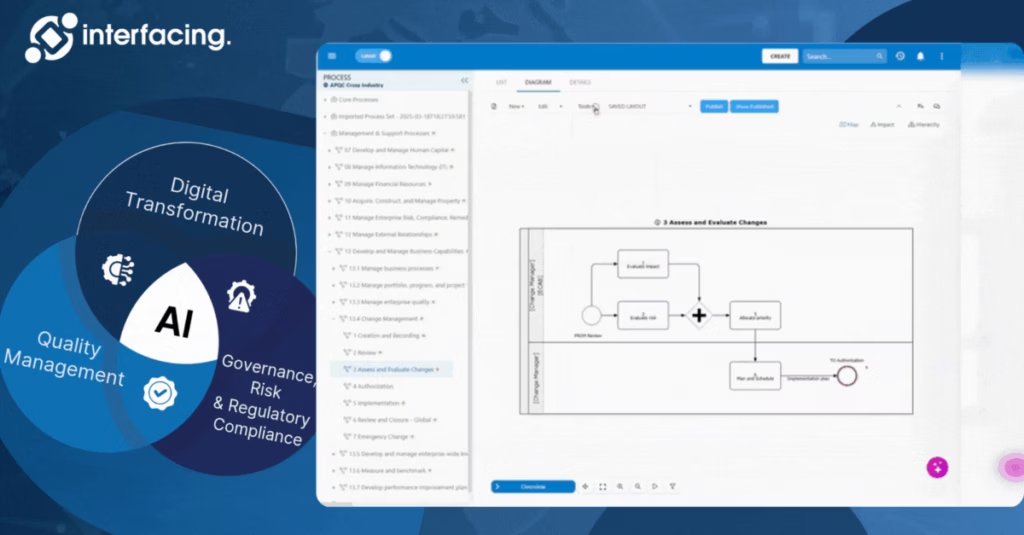
Interfacing provides an AI-assisted Integrated Management System for organizations that need process transformation to extend beyond modelling and documentation.

The platform brings BPM, QMS, GRC, document and records control, regulatory management, business continuity, enterprise architecture, training, process intelligence, and low-code automation into one governed environment.

Instead of managing these areas through separate tools and disconnected repositories, organizations can establish a single source of truth for their operating model.

Processes, procedures, risks, controls, regulations, documents, roles, systems, assets, suppliers, quality events, training requirements, and performance measures can be connected and reused throughout the IMS.

This allows organizations to:

  • Standardize processes, procedures, policies, roles, and operational knowledge across departments, sites, and regions
  • Connect quality events, CAPA, audits, inspections, supplier quality, and training directly to the processes where issues occur
  • Manage the full document lifecycle, including review, endorsement, approval, electronic signature, publication, confirmation, training, periodic review, archiving, and retention
  • Identify downstream impacts when a process, regulation, document, system, supplier, role, risk, or control changes
  • Use AI-assisted capabilities to support process creation, content parsing, impact analysis, risk assessment, and continuous improvement
  • Compare documented processes with actual execution using process mining, analysis, animation, and simulation
  • Create low-code workflows and applications that reuse existing IMS data, roles, rules, and governance structures
  • Maintain traceable relationships between requirements, actions, responsibilities, controlled records, and audit evidence
  • Reduce the number of disconnected tools, duplicated repositories, integrations, and manual handoffs required to manage enterprise transformation
  • Build a Digital Twin of the Organization that provides a connected view of operational performance, risk, quality, compliance, and change


For regulated and operationally complex organizations, this creates a stronger foundation for audit readiness, accountability, operational resilience, and continuous improvement.

Interfacing does not simply add quality, compliance, or automation around process management.

It provides one integrated environment for governing how the organization operates.

How Interfacing Helps

Interfacing’s AI-powered IMS combines QMS, BPM, GRC, and Low-Code into one environment.
Teams document, automate, and continuously improve operations while maintaining audit-ready traceability and regulatory alignment.

  • Unify systems: Processes, risks, training, and evidence in one connected model.

  • Automate compliance: AI links CAPA, audits, and training to SOPs automatically.

  • Accelerate improvement: Mining and dashboards surface inefficiencies and predict risks.

Request a Demo 

INTERFACING  VS THE OTHERS

Interfacing VS ARIS

Interfacing VS PEGA

Interfacing VS kissflow

Interfacing vs Appian

Interfacing VS APPIAN

Interfacing vs Nintex

Interfacing VS Nintex

Interfacing vs Camunda

Interfacing VS Camunda

Interfacing vs SAP Signavio

Interfacing VS SAP Signavio

Interfacing vs Bizagi

Interfacing VS Bizagi

Interfacing vs MasterControl

Interfacing VS MasterControl

Interfacing vs Ideagen

Interfacing VS Ideagen

Interfacing VS Adonis

Interfacing vs MasterControl

Interfacing VS Intelex

Interfacing vs GBtec

Interfacing VS GBTEC

Interfacing VS Adonis

Interfacing vs MasterControl

Interfacing VS Intelex

Why Choose Interfacing?


With over two decades of AI, Quality, Process, and Compliance software expertise, Interfacing continues to be a leader in the industry. To-date, it has served over 500+ world-class enterprises and management consulting firms from all industries and sectors. We continue to provide digital, cloud & AI solutions that enable organizations to enhance, control and streamline their processes while easing the burden of regulatory compliance and quality management programs.

To explore further or discuss how Interfacing can assist your organization, please complete the form below.

Documentation: Driving Transformation, Governance and Control

• Gain real-time, comprehensive insights into your operations.
• Improve governance, efficiency, and compliance.
• Ensure seamless alignment with regulatory standards.

eQMS: Automating Quality & Compliance Workflows & Reporting

• Simplify quality management with automated workflows and monitoring.
• Streamline CAPA, supplier audits, training and related workflows.
• Turn documentation into actionable insights for Quality 4.0

Low-Code Rapid Application Development: Accelerating Digital Transformation

• Build custom, scalable applications swiftly
• Reducing development time and cost
• Adapt faster and stay agile in the face of evolving customer and business needs.


AI to Transform your Business!

The AI-powered tools are designed to streamline operations, enhance compliance, and drive sustainable growth. Check out how AI can:
• Respond to employee inquiries
• Transform videos into processes
• Assess regulatory impact & process improvements
• Generate forms, processes, risks, regulations, KPIs & more
• Parse regulatory standards into requirements

Learn more about EPC's AI Use Cases
CONTACT US

Request Free Demo

Document, analyze, improve, digitize and monitor your business processes, risks, regulatory requirements and performance indicators within Interfacing’s Digital Twin integrated management system the Enterprise Process Center®!

Trusted by Customers Worldwide!

More than 400+ world-class enterprises and management consulting firms